Chinese Man Loses Thumb After Hand Feeding Pet Viper Sparks Warning on Exotic Pets
A routine interaction turns life altering
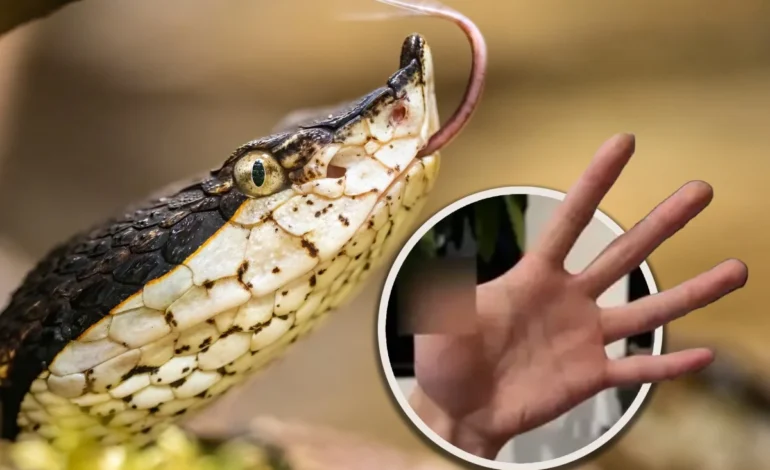
A Chinese man’s affection for his exotic pet took a devastating turn after he was bitten while hand feeding a venomous snake, ultimately leading to the amputation of his thumb. The incident has drawn renewed attention to the serious risks associated with keeping dangerous animals at home, even for experienced reptile enthusiasts.
The man, described in local reports as a long time snake lover, was feeding his pet viper by hand when the animal suddenly struck. What appeared at first to be a manageable injury rapidly escalated into a medical emergency, exposing the unpredictable danger posed by venomous reptiles.
Venom overwhelms the body’s defences
Doctors treating the man said the viper’s venom severely disrupted his blood clotting ability, allowing the toxin to spread rapidly through his system. Viper venom is known to interfere with coagulation, causing internal bleeding, tissue damage, and organ stress if not neutralised quickly.
Despite emergency treatment, the infection and tissue necrosis in his thumb worsened. Physicians were left with no option but to amputate the digit in order to prevent the venom related damage from spreading further and threatening his life.
Medical experts involved in the case noted that even prompt hospital care cannot always reverse the effects of powerful snake venom, particularly when the bite occurs on an extremity where tissue damage can progress quickly.
Familiarity breeds dangerous confidence
According to people familiar with the incident, the man had handled snakes for years and believed he understood their behaviour. This sense of familiarity may have contributed to his decision to feed the animal directly rather than using tools designed to keep a safe distance.
Animal behaviour specialists warn that reptiles do not form bonds or recognise caretakers in the way mammals do. Even well fed and seemingly calm snakes can strike without warning, driven by instinct rather than emotion.
Hand feeding, in particular, increases risk because it places human flesh directly in the snake’s striking range, making it difficult for the animal to distinguish between food and hand.
Exotic pets and hidden dangers
The case has reignited debate in China over the keeping of exotic and potentially dangerous animals as pets. While snakes, spiders, and other reptiles are popular among niche hobbyists, experts stress that these animals require specialised handling, secure environments, and strict safety protocols.
Unlike common household pets, venomous reptiles pose a lethal threat not only to owners but also to family members, neighbours, and emergency responders. Antivenom availability can also be limited, especially outside major cities, increasing the risk of fatal outcomes.
Veterinarians and wildlife experts emphasise that fascination with rare animals should not outweigh safety considerations.
Legal and ethical questions emerge
In some regions, the private ownership of venomous snakes exists in a legal grey area. While certain species are restricted, enforcement varies, and online trading has made access easier than ever.
Incidents like this one raise ethical questions about whether individuals should be allowed to keep animals capable of causing severe harm. Critics argue that such pets serve no essential purpose and expose both humans and animals to unnecessary danger.
Supporters of regulated ownership counter that education and licensing could reduce risks, though cases like this highlight how even informed owners can make fatal misjudgements.
A cautionary message from medical experts
Doctors treating snakebite victims stress that prevention is far more effective than treatment. Once venom enters the bloodstream, outcomes can be unpredictable, even with modern medicine.
They urge the public to avoid direct contact with venomous animals and to reconsider keeping exotic pets altogether. The emotional appeal of rare creatures, they say, does not justify the permanent injuries or loss of life that can result from a single mistake.
A life changed in seconds
For the man who lost his thumb, the incident has permanently altered daily life. Beyond the physical injury, recovery involves adapting to reduced hand function and coping with the psychological impact of a preventable accident.
His case now serves as a stark warning. What began as a moment of trust and routine care ended in irreversible harm, underscoring a simple truth repeated by experts.