China Online Shop Turns Everyday Items Into Clothing Tags and Doubles Sales
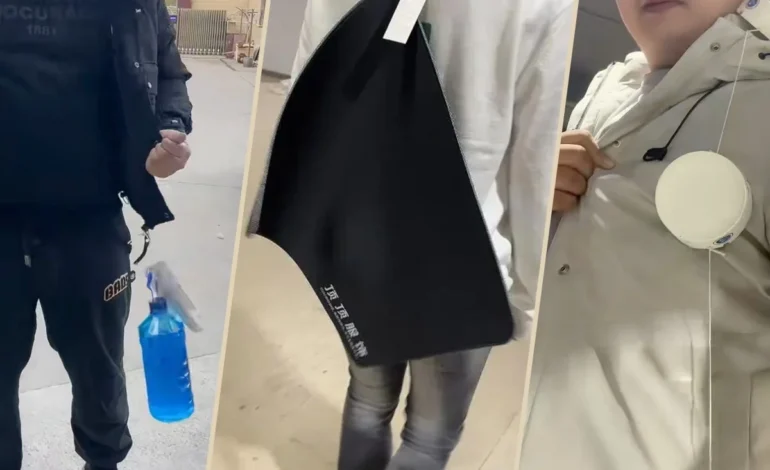
A creative response to return culture
An online clothing seller in eastern China has gone viral after transforming ordinary household items into clothing tags, a move that has not only reduced returns but also significantly boosted sales. The businessman, surnamed Wang, operates from Changzhou and has earned widespread praise for a strategy that blends practicality with humour in response to a common e commerce challenge.
Chinese online retail platforms typically offer a seven day no reason return policy to protect consumers. While popular with shoppers, the policy has also been exploited by some buyers who wear clothes briefly and then return them. Wang decided to tackle the problem not through complaints or stricter rules, but through creativity.
From bankruptcy to reinvention
Wang’s journey into menswear was not planned. After his piano business collapsed, he turned to online clothing sales as a way to rebuild his livelihood. Like many small sellers, he quickly encountered the problem of high return rates, which eroded margins and increased operational costs.
Instead of accepting the losses as unavoidable, Wang began experimenting with ways to discourage abuse of the return system while keeping customer rights intact. His solution was simple but unconventional. He replaced traditional paper clothing tags with everyday items that customers would be reluctant to remove or damage if they planned to return the product.
Everyday objects become sales tools
Among the items Wang has used as tags are mouse pads, socks, plastic bottles, paper box ashtrays, and containers that once held windshield wiper fluid. Each item is attached in a way that makes removing it inconvenient without affecting the garment itself.
The most talked about design involved using a pair of underwear as a tag. The logic was straightforward. If a customer removes such a tag, returning the clothing becomes awkward if not impossible. The novelty of the idea also caught attention online, turning the tags themselves into a talking point.
Customers began sharing photos and videos of the unusual tags, generating free publicity and curiosity driven traffic to Wang’s store.
Balancing deterrence and consumer trust
Wang has emphasised that his approach is not meant to restrict legitimate returns. Customers can still send items back within the allowed period as long as the tag remains intact. The difference is psychological rather than contractual.
By attaching items that feel personal or useful, Wang subtly encourages buyers to think twice before treating the return policy casually. Many customers have said they found the idea amusing rather than offensive, noting that it made the shopping experience more memorable.
This balance between deterrence and respect for consumer rights has helped maintain trust while addressing a real business problem.
Sales growth through novelty and function
The strategy has delivered tangible results. Wang reported that sales have roughly doubled since he introduced the unconventional tags. The boost came not only from fewer exploitative returns, but also from increased visibility on social media and word of mouth promotion.
In a crowded online marketplace where small sellers struggle to stand out, the tags became a form of branding. Shoppers began associating Wang’s store with creativity and honesty, qualities that can be difficult to communicate through standard product listings.
The tags themselves have also been refined over time, with Wang planning more elaborate versions that may even cost more than the clothing they are attached to.
Reflections on China e commerce culture
The story highlights a broader issue within China’s online retail ecosystem. Generous consumer protection policies have supported rapid growth, but they have also created friction for sellers operating on thin margins.
Wang’s approach demonstrates how individual creativity can adapt to systemic challenges without directly confronting platform rules. Rather than calling for policy changes, he worked within existing frameworks and found a solution that benefited both his business and many customers.
It also shows how humour and originality resonate strongly with online audiences, turning a practical fix into a cultural moment.
A small idea with wider implications
While not every seller can replicate Wang’s exact method, his success offers a lesson in problem solving. Addressing operational pain points does not always require complex technology or legal reform. Sometimes, a simple shift in perspective can unlock unexpected results.
By turning clothing tags into everyday objects, Wang transformed a cost centre into a marketing asset. In doing so, he reminded many observers that innovation in commerce does not always come from scale or capital, but from attention to human behaviour.