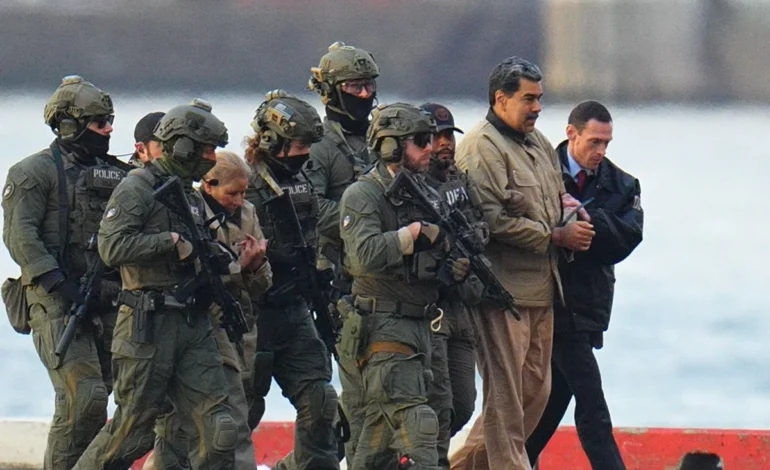
US Strike on Venezuela Raises Fears in Taiwan of Similar Tactics Being Studied by China
A reported US decapitation style strike targeting Venezuela’s leadership has triggered unease in Taiwan, where security analysts and commentators are debating whether such an operation could influence future military thinking in Beijing. While Taiwan’s government has publicly downplayed the likelihood of a similar scenario, the episode has nonetheless sharpened anxieties about how modern conflicts are evolving and what that could mean for the island’s security.
The operation against Venezuela has been widely interpreted by analysts as a demonstration of how quickly and precisely a major power can attempt to neutralise political and military leadership at the outset of a crisis. For many in Taiwan, the concern is not the immediate situation in Latin America but the precedent it may set. Observers warn that such actions provide real world case studies for other militaries, including the People’s Liberation Army, as they assess options for high intensity conflicts.
Taiwan occupies a uniquely sensitive position in global geopolitics. Beijing views the island as part of its territory and has never ruled out the use of force to achieve unification. Although China has consistently said it prefers peaceful means, its military modernisation and frequent drills around the island have kept tensions high. The idea that a rapid leadership focused strike could be used to sow confusion or paralyse decision making has therefore struck a nerve in Taiwanese strategic circles.
Officials in Taipei have sought to reassure the public. Government representatives emphasise that Taiwan’s political system, geography and defence posture differ significantly from Venezuela’s. They also stress that Taiwan maintains close coordination with partners and has invested heavily in decentralised command structures designed to function even under severe pressure. Publicly, leaders argue that comparisons between the two situations are exaggerated and risk unnecessary alarm.
Nonetheless, analysts say it would be unrealistic to assume that global military developments are ignored in Beijing. The PLA closely studies conflicts worldwide, from Ukraine to the Middle East, and adapts lessons to its own planning. A US strike that appears to bypass prolonged conflict and target leadership directly may be examined as part of a broader toolkit rather than as a standalone model.
From Beijing’s perspective, however, Taiwan presents a far more complex challenge. Any military move would carry enormous political, economic and military risks, including the potential involvement of the United States and regional allies. This reality limits how easily lessons from Venezuela could be applied to the Taiwan Strait. Even so, experts note that the psychological impact of decapitation strategies is increasingly discussed in modern warfare.
The episode also highlights how actions taken in one part of the world can reverberate globally. A strike intended to pressure or remove a government in Latin America can reshape threat perceptions thousands of kilometres away. For Taiwan, the key challenge lies in balancing calm public messaging with quiet preparation for a security environment that continues to grow more uncertain.