Maduro Brought Before New York Court as Unprecedented US Case Unfolds
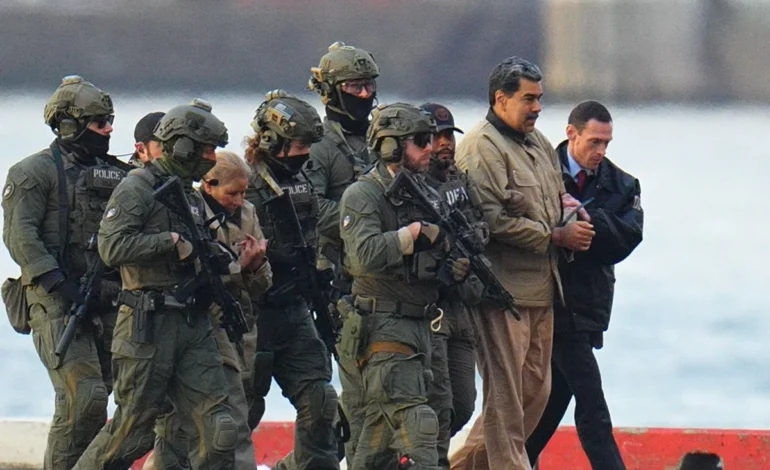
Venezuela’s President Nicolás Maduro appeared at a federal courthouse in New York on Monday, marking a dramatic and unprecedented moment in modern international politics. The appearance followed his forcible transfer into United States custody after a targeted operation at his Caracas residence roughly sixty hours earlier, according to officials familiar with the case.
US prosecutors said Maduro was formally arraigned on charges including narcoterrorism, drug trafficking conspiracy and possession of illegal military grade weapons. The case stems from a long running US investigation that accuses the Venezuelan leader of overseeing networks allegedly linked to cocaine shipments destined for North America, as well as providing protection to armed groups designated by Washington as terrorist organisations. Maduro has repeatedly denied all allegations and has described the charges as politically motivated.
Security around the courthouse was tight, with heavy federal presence and restricted access as Maduro was brought inside. The hearing itself was procedural, with prosecutors outlining the charges and the court setting a schedule for future proceedings. Legal experts say the case could take months or even years, given its complexity and the diplomatic issues involved.
The US government framed the arrest as the result of years of intelligence gathering and law enforcement coordination. Officials stressed that the move was aimed at upholding international drug laws rather than effecting regime change. Nonetheless, the circumstances surrounding Maduro’s detention have sent shockwaves through diplomatic circles, as sitting heads of state are rarely brought before foreign courts under such conditions.
In Caracas, the reaction was swift and angry. Senior Venezuelan officials condemned the arrest as a violation of national sovereignty and accused Washington of carrying out what they called a kidnapping under the guise of justice. Supporters of Maduro gathered in parts of the capital, while opposition figures offered mixed responses, with some welcoming accountability and others warning of further instability.
International reaction has been sharply divided. Several US allies expressed cautious support for the legal process, emphasising the seriousness of the allegations. Others urged restraint, warning that the case could escalate tensions and set a controversial precedent in international relations. At the United Nations, diplomats privately acknowledged concern about the broader implications for how global disputes are handled.
For Venezuela, the immediate impact is uncertainty. With Maduro in US custody, questions remain about governance, succession and the country’s already fragile economy. Analysts warn that markets, oil production and humanitarian conditions could all be affected as the political situation evolves.
As the legal process begins in New York, the case against Maduro is set to test not only the strength of US narcotics laws but also the boundaries between domestic justice and global politics. Whatever the outcome, it is likely to reshape debates about accountability, sovereignty and power in the international system.