Attack in Venezuela seen as wake up call for China to strengthen air defences and counter-intelligence
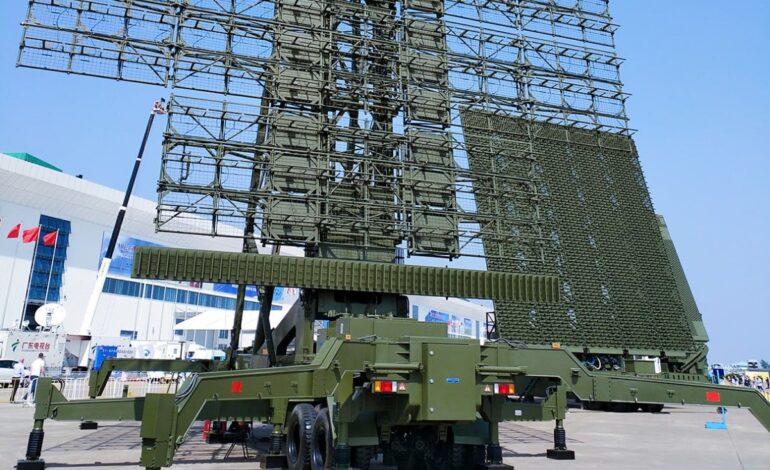
Recent developments in Venezuela have triggered renewed discussion among Chinese security analysts about the importance of strengthening air defence systems and tightening counter intelligence safeguards. The incident, which exposed vulnerabilities in Venezuela’s ability to detect and respond to a sudden external operation, is being viewed in Beijing as a cautionary example rather than a distant regional event.
Chinese commentators note that the operation demonstrated how modern military actions increasingly rely on speed, precision and intelligence superiority rather than prolonged conflict. In this case, gaps in early warning capabilities and internal security protections played a decisive role. Analysts argue that such weaknesses could prove costly for any country facing sophisticated external pressure, regardless of size or political alignment.
For China, the episode has highlighted the growing need to upgrade air defence hardware in line with evolving threats. Modern conflicts now involve stealth aircraft, drones, electronic interference and cyber operations that can overwhelm traditional radar and missile systems. Experts say future air defence must function as an integrated network that combines sensors, satellites, command systems and rapid response units, rather than relying on isolated platforms.
Beyond physical defences, the incident has intensified focus on counter intelligence. Security specialists stress that preventing infiltration and protecting sensitive information are just as important as deploying advanced equipment. Internal leaks, compromised communications or misjudged loyalties can severely weaken national security even when military assets appear strong on paper.
China has invested heavily over the past decade in modernising its defence capabilities, including air defence, early warning systems and electronic warfare. Observers say the Venezuela case underlines the need to ensure these systems are resilient under real world conditions and capable of operating effectively during unexpected scenarios. Testing coordination between military branches and intelligence agencies is seen as a priority.
The discussion also reflects broader concerns about the changing nature of global security. Hybrid operations that blend military force with intelligence actions, cyber intrusion and psychological pressure are becoming more common. Analysts argue that future conflicts may be decided before traditional fighting begins, making intelligence dominance and internal security critical.
Chinese policy experts emphasize that lessons from overseas incidents should not be interpreted as immediate threats but as opportunities to improve preparedness. Studying how other nations respond to sudden pressure helps identify blind spots and reinforces the importance of long term planning. In this context, strengthening counter intelligence frameworks is viewed as essential for safeguarding state secrets, strategic infrastructure and decision making processes.
At the policy level, the Venezuela episode has reinforced the idea that national security requires continuous adaptation. As geopolitical competition intensifies, countries with strong surveillance, intelligence coordination and defensive depth are better positioned to manage crises without escalation. For China, maintaining stability depends not only on diplomatic engagement but also on ensuring that defence and intelligence systems evolve alongside global threats.