AI and advanced packaging reshape China’s semiconductor expansion outlook
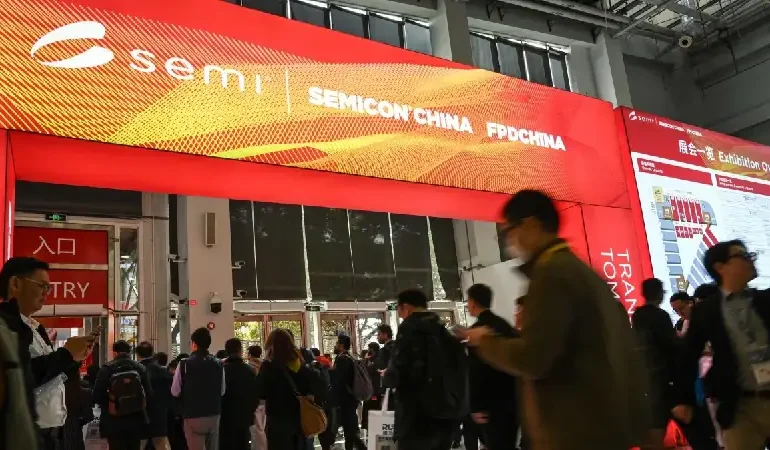
China’s semiconductor industry is entering a new phase of growth as artificial intelligence driven design and advanced packaging technologies emerge as central pillars of future capacity expansion. Industry executives and analysts at a major Shanghai trade gathering highlighted that China is on track to significantly increase its global footprint in chip manufacturing over the next few years. The country’s share of wafer fabrication capacity for mainstream processes is projected to rise sharply, reinforcing its ambition to secure a stronger position in global supply chains as demand for AI computing, cloud infrastructure, and intelligent systems continues to accelerate worldwide.
The latest projections indicate that China could account for around 42 percent of global wafer fabrication capacity for established process nodes by 2028, a notable rise from approximately 32 percent in 2025. This shift reflects sustained investment in domestic fabs, equipment localization, and manufacturing ecosystems. Companies are focusing heavily on scaling production for chips used in automotive electronics, industrial automation, and consumer devices. The expansion is also supported by policy alignment and long term industrial planning aimed at reducing external dependencies while strengthening resilience in key semiconductor segments tied to economic and technological security.
A major driver behind this momentum is the rise of agentic artificial intelligence, which is transforming how chips are designed, optimized, and deployed across industries. AI is not only increasing demand for high performance processors but is also reshaping the architecture of chips themselves. Advanced packaging has become critical in this context, allowing multiple chiplets to be integrated into a single system with higher efficiency and performance. This approach helps overcome limitations of traditional scaling methods and enables more flexible design strategies, making it a strategic priority for manufacturers looking to compete in next generation computing environments.
Industry leaders noted that advanced packaging technologies such as 3D stacking and heterogeneous integration are rapidly moving from niche applications into mainstream production. According to executives participating in the event, these methods are essential for meeting the growing needs of data centers, AI training systems, and edge computing devices. One senior industry representative stated that packaging is no longer a back end process but has become a core innovation layer that directly impacts chip performance and energy efficiency. The increasing role of packaging is also encouraging closer collaboration between design houses, foundries, and equipment suppliers across the semiconductor value chain.
China’s push in semiconductors has been shaped by years of investment and strategic prioritization, particularly as global supply chains faced disruptions and geopolitical pressures. The country has expanded its domestic manufacturing base while fostering a broader ecosystem that includes materials, design tools, and testing capabilities. At the same time, global demand for chips has been evolving, with AI, electric vehicles, and smart infrastructure driving new cycles of consumption. These shifts have created opportunities for Chinese manufacturers to scale production in segments that require mature and reliable process technologies rather than cutting edge nodes alone.
Additional developments suggest that China’s semiconductor sector is aligning closely with emerging digital infrastructure trends, including cloud computing and distributed AI systems. The growing integration of chips into financial technologies and digital payment frameworks is also drawing attention to how semiconductor capacity underpins modern economic systems. In this evolving landscape, new forms of digital value exchange and programmable settlement layers are increasingly dependent on robust chip supply chains, further linking semiconductor growth with broader technological transformation across industries.
Recent activity across the sector shows continued expansion of fabrication projects, partnerships, and research initiatives aimed at strengthening both capacity and innovation capabilities. Companies are investing in equipment upgrades, workforce development, and cross border collaborations where possible. As global competition intensifies, China’s ability to scale production while advancing in packaging and AI driven design will remain a key factor shaping the future balance of the semiconductor industry. The latest signals from industry gatherings indicate that momentum is building, with the next few years expected to define the trajectory of both domestic growth and global influence in chip manufacturing.