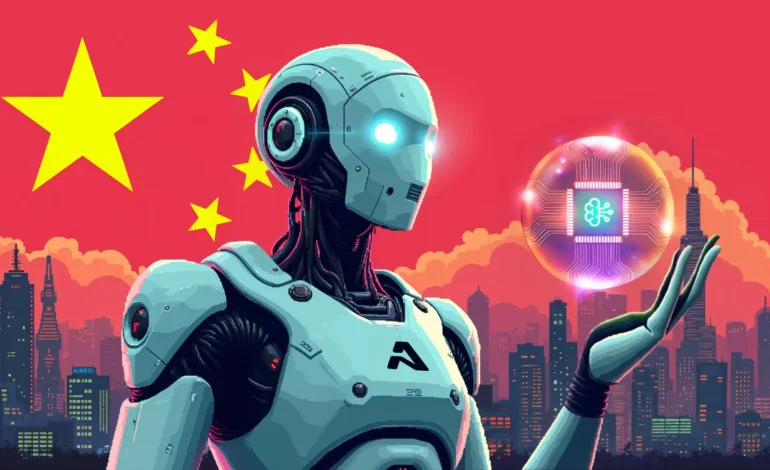
AI Computing Parks Expand Across Western China

In 2025, China is accelerating the construction of AI computing parks across its western provinces, transforming remote regions into high-performance digital hubs. These projects form the backbone of the country’s artificial intelligence strategy, a national effort to balance economic growth with energy efficiency and regional development. As data becomes a key strategic resource, these computing centers are redefining how China distributes technological power across its geography, economy, and industrial policy.
Western Provinces: The New Digital Frontier
Historically, China’s technology infrastructure has been concentrated in coastal cities such as Shanghai, Shenzhen, and Hangzhou. However, escalating energy demands, real estate costs, and sustainability goals have prompted a major policy shift. According to SCMP, the National Development and Reform Commission (NDRC) and the Ministry of Industry and Information Technology (MIIT) launched the Eastern Data, Western Computing initiative to channel data processing workloads toward inland provinces.
The Strategic Role of the Western Corridor
This program designates eight national computing hubs, including Guizhou, Gansu, Ningxia, and Inner Mongolia, where abundant renewable energy, hydropower, solar, and wind can sustain high-intensity AI workloads.
The western expansion allows China to manage both energy efficiency and data sovereignty, ensuring that its AI infrastructure remains sustainable and strategically autonomous.
Infrastructure at Scale: From Data Centers to AI Parks
The new computing parks differ from traditional data centers by integrating AI model training, cloud storage, and industrial applications within unified ecosystems.
Massive Investments and Model Integration
CGTN reports that over 400 new AI computing facilities are under construction across western China, with total investment exceeding ¥500 billion ($70 billion).
In Guizhou’s Qiannan Prefecture, Tencent operates one of the world’s largest intelligent cloud facilities powered entirely by hydropower. Similarly, Alibaba Cloud’s center in Gansu hosts specialized chips for machine learning workloads, supporting logistics, smart cities, and industrial automation.
Digital Factories of the Future
These AI parks function as digital factories, processing enormous datasets used in autonomous vehicles, climate modeling, genomics, and national language processing, all essential to China’s digital transformation goals.
Green Energy and Sustainability Integration
A key feature of the western AI hubs is their focus on green computing. According to Nikkei Asia, data centers in Sichuan and Yunnan now rely on 90 percent renewable energy, significantly reducing carbon emissions.
AI-Optimized Energy Systems
Smart grids automatically allocate energy based on computing intensity, while AI-based cooling systems reduce electricity consumption by up to 25 percent.
This integration of environmental technology with industrial expansion demonstrates how China is linking climate policy and digital modernization.
Policy Alignment for Carbon Goals
The Ministry of Ecology and Environment mandates energy-use audits for all major data centers, ensuring that digital growth aligns with China’s 2030–2060 carbon neutrality roadmap.
Regional Development and Digital Equality
Beyond technology, the expansion of computing parks serves a socioeconomic purpose, balancing China’s regional development.
Job Creation and Talent Distribution
CGTN highlights that more than 120,000 new technical jobs have been created across western AI hubs since 2023.
Training programs with universities in Chongqing and Xi’an are helping local workers transition from traditional industries to digital sectors.
Reducing the Urban–Rural Digital Divide
By decentralizing AI infrastructure, China is narrowing the technological gap between coastal and inland provinces, turning digital inclusion into a central policy goal.
Public–Private Partnerships and Investment Flow
China’s AI computing network thrives on public–private collaboration.
Collaborative Cloud Development
Baidu, Huawei, and Inspur are part of a national consortium coordinating cloud interoperability across western regions.
This ensures enterprises can scale AI services seamlessly without duplicating infrastructure.
Venture Capital and Innovation Incentives
Private venture funds are targeting startups focused on AI model compression, semiconductor design, and green computing algorithms, reinforcing China’s ambition to build an end-to-end AI industrial chain.
Strategic Implications and Global Influence
China’s western AI parks represent a strategic model for digital infrastructure diplomacy.
Exporting the Western Model
Analysts at The Diplomat note that this approach could shape cross-border data corridor projects with Pakistan, Saudi Arabia, and Thailand potentially linking regional data centers into a pan-Asian computing network anchored by China’s west.
Global Benchmark for Sustainable AI Growth
This model is increasingly referenced by developing nations looking to build cost-efficient, renewable AI infrastructure that aligns with digital sovereignty goals.
Challenges and the Path Forward
While progress is rapid, China’s AI expansion faces bandwidth and workforce challenges.
Building high-speed fiber links between inland and coastal hubs remains essential for stability and latency reduction.
Balancing Growth with Regulation
SCMP reports that local governments must strengthen compliance, cybersecurity, and environmental monitoring to sustain investor confidence and operational resilience.
Conclusion
The rise of AI computing parks in western China demonstrates how technology, sustainability, and regional development can merge to build a resilient digital economy.
By redistributing infrastructure and integrating renewable power, China is achieving both data sovereignty and economic inclusivity.
As these intelligent hubs drive applications from autonomous logistics to AI governance, they symbolize a shift toward a future where data is the new currency and the West becomes China’s engine for intelligent growth.