AI Generated War Satire Goes Viral in China as Online Creators Amplify Political Messaging
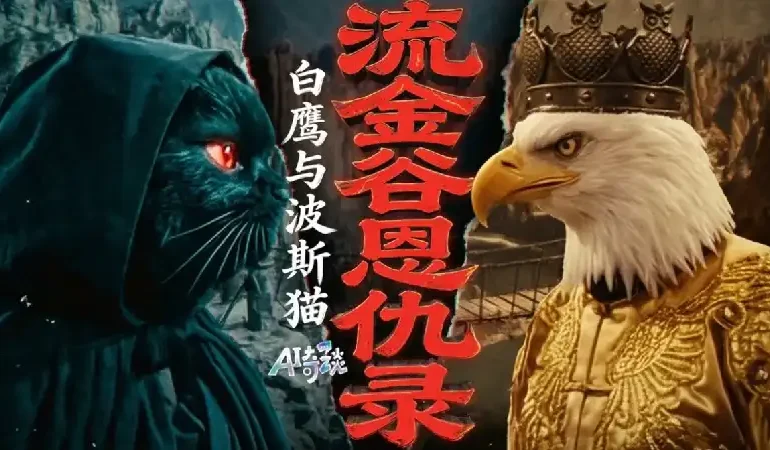
An AI generated animated short released by a Chinese state broadcaster has gained widespread attention online after depicting a stylized conflict that closely mirrors ongoing tensions in the Middle East. The video, presented as a wuxia inspired allegory, features symbolic characters representing major global powers and has rapidly circulated across social platforms. Its viral spread highlights how artificial intelligence is increasingly being used not only for entertainment but also for shaping narratives around geopolitical events, blending storytelling with commentary in a format that resonates with digital audiences.
The animation portrays a fictional battle between characters that resemble real world actors, using metaphor and visual symbolism to reflect current geopolitical tensions. Although the short does not directly reference specific events, viewers have drawn clear parallels to recent developments involving military actions in the region. The release quickly sparked engagement across Chinese social media platforms, where users began creating their own interpretations and sequels, expanding the narrative through user generated content and reinforcing its reach.
This trend reflects the growing influence of AI generated media in shaping public discourse, particularly in environments where visual storytelling can simplify complex issues. AI tools now allow creators to produce high quality animated content with relatively low barriers to entry, enabling rapid response to unfolding events. As a result, political commentary is increasingly taking the form of short videos and digital art, which can spread more quickly than traditional news formats and reach a broader audience.
The involvement of a state affiliated broadcaster in producing such content also points to the evolving role of official media in the digital era. Rather than relying solely on conventional reporting, media organizations are experimenting with new formats to engage younger audiences and communicate messages more effectively. By using cultural storytelling styles and symbolic representation, these productions can convey perspectives in a way that is both accessible and visually compelling.
The viral nature of the animation has been amplified by the participation of online communities, where creators have adapted the original concept into new variations. These user driven extensions have contributed to a feedback loop in which content evolves organically, maintaining relevance as discussions around the underlying themes continue. This dynamic demonstrates how digital ecosystems can transform a single piece of media into a broader cultural phenomenon within a short period of time.
China’s expanding capabilities in artificial intelligence and digital media production have supported the rise of such content, with advancements in generative models enabling more sophisticated outputs. The integration of AI into creative industries is reshaping how stories are told and distributed, blurring the lines between professional production and independent creation. This shift is particularly evident in online platforms where speed and adaptability are key to capturing audience attention.
At the same time, the use of AI in politically themed content raises questions about interpretation, influence and the role of digital media in shaping public opinion. As these tools become more accessible, the volume and diversity of content are expected to increase, creating new challenges for audiences seeking to distinguish between satire, commentary and factual reporting. The growing presence of AI generated narratives in global discourse signals a transformation in how information is produced and consumed.
The continued spread of the animation and its derivatives underscores the power of AI driven storytelling in capturing public attention and influencing online conversations. As platforms and creators experiment with new formats, the intersection of technology, culture and geopolitics is likely to remain a defining feature of the digital media landscape.