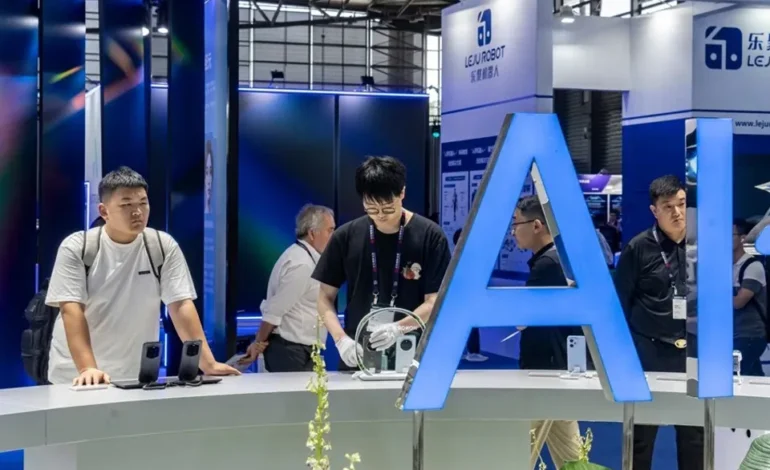
AI Supercomputing Hubs Expand Across China’s Western Provinces
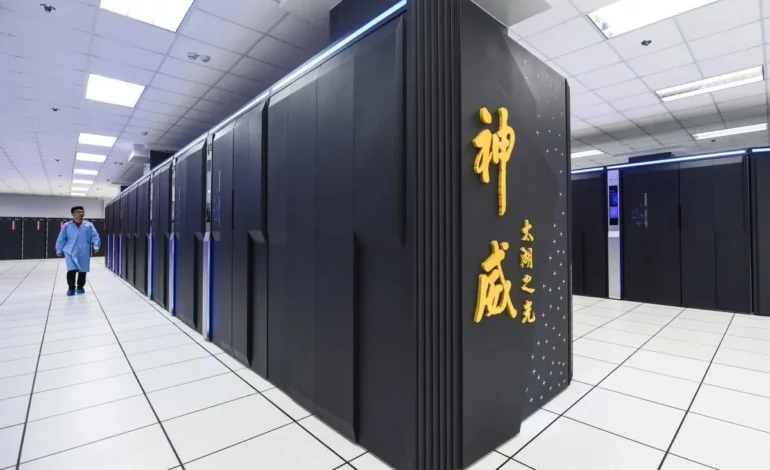
China’s west is quickly transforming into a new frontier for artificial intelligence. In 2025, the Chinese government and leading tech companies have jointly accelerated the creation of large-scale AI supercomputing hubs across provinces like Gansu, Guizhou, Chongqing, and Sichuan. These hubs are part of the national plan to decentralize data processing, enhance digital infrastructure, and bridge the development gap between coastal and inland regions. The goal is clear to make western China a powerhouse for AI computation and innovation.
The Strategy Behind AI Industrial Clusters
The expansion of AI hubs in China’s western provinces aligns with the “East Data, West Computing” initiative, a major infrastructure policy launched to transfer data processing workloads from crowded eastern cities to less-populated western areas. According to SCMP, the government aims to reduce energy costs, utilize abundant renewable power, and create regional digital economies. Cities like Chongqing and Gui’an are emerging as national-level AI data centers, equipped with supercomputers that process petabytes of data for research, climate modeling, and industrial automation.
Reuters notes that this westward expansion is also about national security and resilience. By distributing computing power geographically, China seeks to avoid overconcentration risks in coastal hubs such as Shanghai or Shenzhen. This decentralization ensures that AI development continues even in the face of potential network disruptions or external sanctions.
Corporate Investments Powering AI Growth
China’s tech giants are at the forefront of this transformation. Tencent Cloud, Alibaba Cloud, and Huawei Cloud have all invested heavily in new supercomputing facilities across the region. According to CGTN, Tencent’s new Chongqing AI Industrial Park is capable of 300 exaFLOPS of processing power, making it one of the largest in Asia. Alibaba Cloud’s data center in Guizhou, meanwhile, serves as a critical node for financial and e-commerce data training.
Nikkei Asia reports that local governments are offering tax incentives, land grants, and renewable energy contracts to attract private investment. The result is a powerful synergy between state-led policy and corporate innovation, a defining feature of China’s digital development model.
The Role of Renewable Energy and Green AI
Western China’s geography gives it a natural advantage in sustainable computing. Provinces like Gansu and Sichuan possess rich hydro, solar, and wind energy resources. This makes them ideal for hosting green AI infrastructure, a growing priority as global tech firms face mounting pressure to reduce carbon emissions.
The Diplomat highlights that China’s western supercomputing clusters now integrate AI-powered cooling systems that reduce electricity consumption by up to 30 percent. Such advances position China as a leader in energy-efficient computing. The government’s “Green Data Center” certification program further promotes sustainability by rewarding companies that meet low-emission standards.
Driving Regional Innovation and Talent Development
Beyond hardware, these hubs are also reshaping the social and economic landscape. Universities and research institutions in Chongqing, Chengdu, and Kunming are partnering with private companies to create AI engineering programs and innovation labs. CGTN reports that more than 50,000 AI-related jobs have been created in western provinces in just two years.
The growing ecosystem encourages startups to develop applications in smart manufacturing, agriculture, and environmental management. As a result, regions once dependent on mining or heavy industry are transitioning toward digital economies, a strategic rebalancing of China’s national growth.
Challenges and Strategic Significance
Despite rapid progress, the westward shift also faces challenges. Infrastructure costs remain high, and some provinces struggle with limited fiber connectivity. The SCMP points out that the government must also ensure data privacy, given the massive flow of information between east and west networks. Nevertheless, the strategic value outweighs the risks. By building distributed AI capacity, China not only strengthens its domestic resilience but also positions itself as a global leader in decentralized computing.
Nikkei Asia describes this initiative as a “national digital equalizer,” a system that spreads the benefits of AI to all corners of the country. As Western provinces grow into data superpower regions, they symbolize a new chapter in China’s pursuit of balanced technological modernization.
Conclusion
The rise of AI supercomputing hubs across western China demonstrates how infrastructure, sustainability, and regional policy are merging to redefine innovation. What began as an efficiency-driven plan has evolved into a blueprint for equitable digital growth. By combining state guidance with enterprise-scale investment, China is turning its western frontier into the backbone of global AI computation. The West is no longer an observer in China’s digital transformation it is becoming its engine.