AI’s Four Hundred Billion Dollar Dilemma as Chip Lifespans Come Into Question
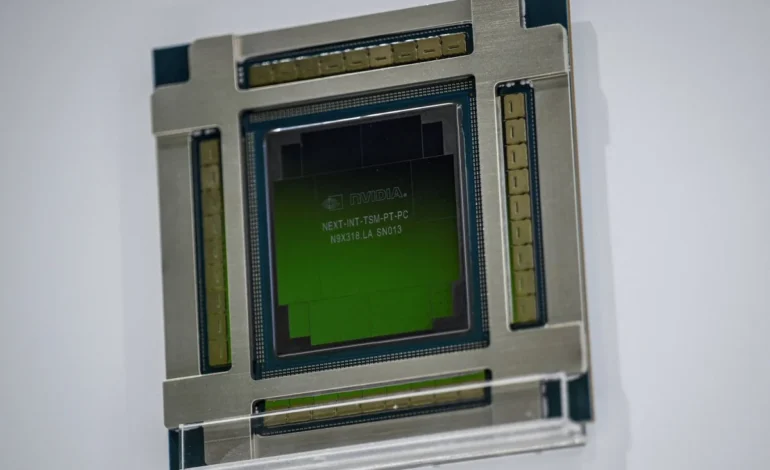
The global push to build ever more powerful artificial intelligence systems has triggered one of the largest technology spending waves in history. Over the past year, companies have poured an estimated four hundred billion dollars into specialised chips and massive data centres designed to support increasingly sophisticated AI models. Yet behind this staggering investment lies a growing sense of unease. Analysts, engineers and investors are beginning to ask whether the hardware driving today’s AI boom is becoming obsolete far faster than the industry anticipated.
A Surge of Investment That Raises New Worries
The rush to secure high performance chips has transformed the technology landscape. Major firms are racing to upgrade their infrastructure, fearing that falling behind could leave them out of a transformative technological era. Start ups are spending aggressively to compete, cloud providers are expanding data centres at unprecedented speed and semiconductor makers are struggling to keep up with demand.
But this rapid expansion comes with rising doubts. Some observers warn that companies may be betting too heavily on hardware that has a much shorter useful life than originally estimated. AI models continue to grow exponentially in size and complexity, and each new generation demands greater computing power. A chip that seems cutting edge today may struggle to run tomorrow’s models efficiently, forcing companies to replace equipment far sooner than planned.
The Speed of Innovation Threatens Chip Longevity
One of the central concerns is the pace of technological advancement. AI research moves at extraordinary speed, and what appears state of the art quickly becomes outdated. Specialised AI chips, designed for intense training workloads, face especially steep obsolescence curves. As new architectures emerge, older chips can lose relevance almost overnight.
This creates a challenge for companies that have committed billions of dollars to building data centres filled with those chips. If their performance declines too rapidly relative to new technology, the return on investment could fall far short of expectations. The industry has experienced rapid hardware cycles before, but the current scale of spending magnifies the risks dramatically.
Talk of an AI Bubble Adds to Economic Anxiety
The enormous financial stakes have also revived discussion about whether the AI sector is growing too quickly for its own stability. With so much of the US economy now tied to AI related growth, a slowdown could have far reaching consequences. Analysts caution that if companies realise their investments are not as durable or profitable as predicted, the correction could be sharp and painful.
There are concerns that exuberance has overtaken caution. Valuations for AI start ups have soared, chip makers are enjoying demand that may not be sustainable and companies across industries are rushing to integrate AI even when clear business cases are lacking. If hardware becomes obsolete faster than planned, the financial shock could ripple through both the technology sector and the broader economy.
Balancing Innovation With Pragmatism
Despite the challenges, the AI industry remains committed to innovation. Companies are exploring ways to extend the life of current chips, including more efficient software, better cooling systems and improved model training techniques. Some are shifting toward modular data centre designs that make it easier to swap out hardware as technology evolves.
There is also growing interest in developing chips that can handle a wider variety of AI tasks, reducing the need for constant upgrades. Whether these efforts can keep pace with the rapid evolution of AI models remains an open question.
A Critical Turning Point for the AI Hardware Race
The debate surrounding chip longevity and investment risk arrives at a defining moment for the AI industry. While the potential of artificial intelligence remains enormous, the financial commitments required to support it are becoming increasingly complex. Companies must balance ambition with realism, ensuring that their hardware strategies can adapt to the speed of progress.
If they succeed, AI will continue to expand across industries while sustaining economic growth. If they misjudge the pace of innovation, the cost of catching up could be significant. As the world watches the AI revolution unfold, the lifespan of the chips powering it may determine how sustainable this transformation truly is.