Alibaba Qwen Model Reaches Orbit in China Space Computing Milestone
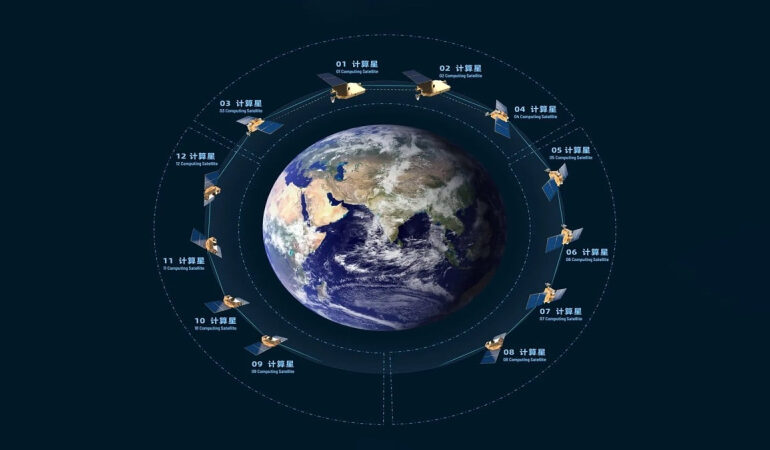
China has taken a step into space based artificial intelligence as Alibaba Cloud’s Qwen 3 became one of the first general purpose AI models globally to operate in orbit. The model was successfully uploaded to a space computing centre and completed multiple inference tasks off Earth, highlighting China’s ambition to extend AI capabilities beyond terrestrial data centres. The entire process, from uploading queries to running inference in orbit and returning results to Earth, was completed in under two minutes, demonstrating the technical viability of low latency space based computing. The development positions China among a small group of countries experimenting with AI workloads in space, an area viewed as strategically important for future communications, sensing and autonomous systems.
The deployment was carried out by Chinese aerospace start up Adaspace Technology, which operates a growing constellation of satellites equipped with onboard computing systems. According to company executives, Qwen 3 was run within Adaspace’s initial space computing centre, part of its broader Star Compute Project. The programme envisions a network of roughly 2,800 satellites designed to support AI model training and inference directly in orbit. Processing data in space rather than transmitting it back to Earth can reduce latency, lower bandwidth demands and enable faster decision making for applications such as Earth observation, disaster response and physical AI systems that interact with the real world.
The achievement comes amid intensifying global competition in off Earth computing. US companies have also tested AI models in orbit, signalling growing interest in shifting some computation closer to where data is generated. For China, integrating large scale AI models with satellite infrastructure aligns with national priorities around advanced manufacturing, space technology and digital infrastructure. Alibaba’s Qwen family has been positioned as a core part of China’s open and commercial AI ecosystem, and its successful operation in orbit underscores the model’s flexibility across unconventional environments. It also highlights the role of private technology firms in supporting China’s space ambitions alongside state backed programmes.
Space based AI remains at an early stage, but industry experts see it as a potential foundation for next generation services ranging from autonomous satellite operations to real time analytics for global networks. Running inference in orbit could eventually support applications that require instant responses without relying on ground stations. China’s progress suggests it is moving quickly to define standards and capabilities in this emerging field. As satellite constellations expand and onboard computing power improves, experiments such as the Qwen 3 deployment are likely to shape how AI is integrated into space infrastructure over the coming decade, with implications for both commercial competition and strategic technology leadership.