Ant Group Open Sources Robotics AI to Push Real World Deployment
China fintech giant Ant Group has moved deeper into advanced robotics by open sourcing its first artificial intelligence models designed to operate beyond controlled lab environments and into real world industrial settings. The release marks a strategic shift as Ant looks to extend its technology footprint from digital finance into embodied intelligence, a branch of AI that allows machines to perceive, reason, and act in physical spaces. By making the models publicly available, Ant is signaling confidence in its underlying research while aiming to accelerate adoption across manufacturing, logistics, and service sectors. The move also reflects growing urgency among Chinese technology firms to build practical AI systems that deliver measurable productivity gains rather than remaining limited to demonstrations or pilot projects.
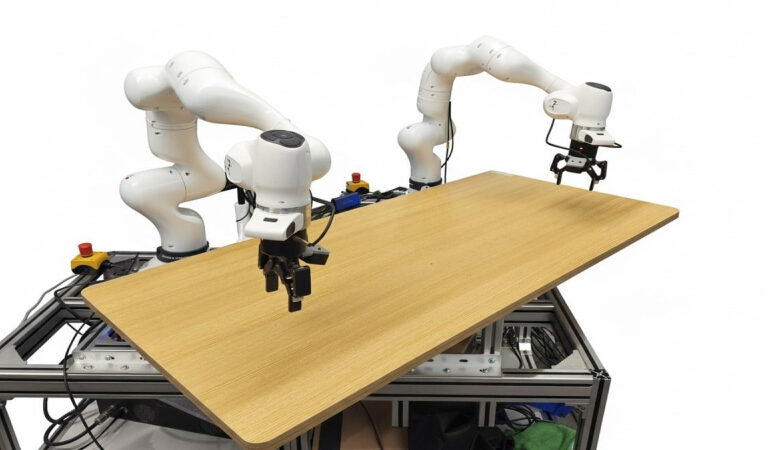
The newly released models come from Ant’s robotics unit Ant Lingbo Technology, also known as Robbyant, and include LingBot VLA, a vision language action system designed to serve as a general purpose intelligence layer for robots. The model integrates visual perception, natural language understanding, and physical task execution, enabling robots to follow complex instructions and adapt to changing environments. Ant says the goal is to create a scalable universal brain that can be deployed across different hardware platforms and industries without extensive retraining. This approach contrasts with earlier robotics systems that were often custom built for narrow tasks and struggled to operate reliably outside controlled conditions, limiting their commercial usefulness.
Ant’s push into open source robotics comes as competition intensifies in China’s AI sector, where companies are racing to translate research advances into real economic impact. While many Chinese firms have focused on large language models for chatbots and enterprise software, embodied intelligence is increasingly seen as the next frontier, particularly as labor shortages and rising costs pressure traditional industries. By open sourcing its models, Ant is encouraging developers, manufacturers, and research institutions to build on its technology, potentially establishing its architecture as a standard within China’s robotics ecosystem. The strategy mirrors earlier open source efforts in software that helped accelerate innovation while strengthening the influence of the originating company.
The initiative also underscores how Ant is diversifying beyond its financial roots amid tighter regulation of China’s fintech sector. As an affiliate of Alibaba Group Holding, Ant is leveraging deep technical resources to position itself at the intersection of AI, automation, and industrial upgrading. If successful, its robotics models could help move intelligent machines from experimental showcases into warehouses, factories, and public services, aligning with China’s broader push to modernise its economy through advanced technology. The open source release suggests Ant is betting that widespread adoption and ecosystem growth will ultimately outweigh the risks of sharing its core AI capabilities.