ASEAN Holds Emergency Foreign Ministers’ Meeting in Kuala Lumpur to Ease Thailand Cambodia Tensions
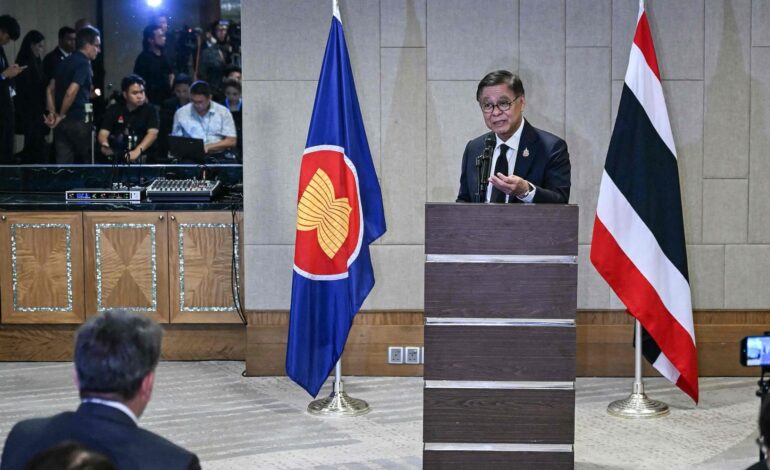
Southeast Asian foreign ministers gathered in Kuala Lumpur on Monday for a special emergency meeting aimed at easing rising tensions between Thailand and Cambodia, as the region’s leaders seek to prevent further escalation and preserve regional stability.
The meeting brought together foreign ministers from member states of Association of Southeast Asian Nations, reflecting growing concern that the dispute between the two neighbouring countries could undermine peace in one of Asia’s most interconnected regions. The talks were convened as part of ASEAN’s long standing role as a forum for dialogue and conflict prevention among its members.
Malaysia’s Foreign Ministry said the meeting was intended to provide a platform for ASEAN to explore practical steps that could help de escalate the situation and encourage an immediate cessation of hostilities. Officials stressed that maintaining peace between Thailand and Cambodia is not only vital for the two countries involved but also for the wider region, where economic integration and cross border cooperation remain deeply intertwined.
The session was chaired by Malaysian Foreign Minister Mohamad Hasan, who used his opening remarks to underline the seriousness of the moment facing the regional bloc. He told ministers that ASEAN stands at a critical juncture, as global and regional geopolitical disruptions increasingly test the foundations of the existing order in Southeast Asia.
Hasan warned that continued instability could damage ASEAN’s reputation as one of the world’s most successful regional groupings, long known for its ability to manage differences through dialogue rather than confrontation. He said the current situation posed a challenge not only to bilateral relations between Thailand and Cambodia but also to ASEAN’s credibility as a guardian of regional peace.
In his remarks, Hasan emphasised that in an era of deep interconnection, any security shock affecting one ASEAN member quickly becomes a concern for all. He added that unrest within the region also carries global implications, given Southeast Asia’s role in international trade, supply chains, and geopolitical balance.
“This is why everyone must make the cessation of hostilities and a peaceful resolution the top priority,” he said, calling on all parties to exercise restraint and recommit to diplomatic solutions. He urged member states to support confidence building measures that could lower tensions and open the door to meaningful dialogue between Bangkok and Phnom Penh.
While ASEAN officials did not disclose specific proposals discussed during the closed door session, diplomats familiar with the process said the focus was on encouraging communication channels, reducing military posturing, and reaffirming commitments to international law and regional norms. ASEAN has traditionally avoided direct intervention in member state disputes, preferring consensus driven approaches that respect national sovereignty.
The meeting in Kuala Lumpur highlights ASEAN’s determination to prevent bilateral conflicts from spiralling into broader regional crises. As tensions continue to draw attention across Southeast Asia, the bloc’s ability to help calm the situation will be closely watched by both regional partners and the wider international community.