Audi Expands China EV Push With New SAIC Partnership Model Ahead of Beijing Auto Show
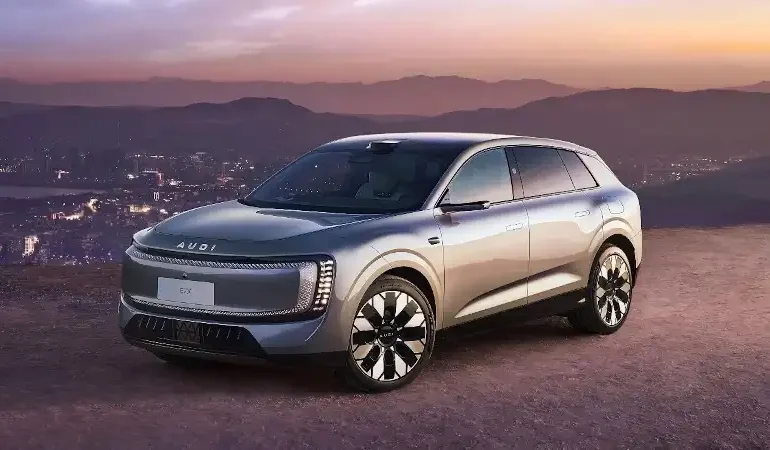
Audi is preparing to unveil a new electric crossover developed in partnership with SAIC Motor as it accelerates efforts to strengthen its position in China’s fast evolving EV market. The upcoming model, expected to debut at the Beijing auto show in April, marks the second jointly developed vehicle between the German automaker and its Chinese partner. The move reflects Audi’s increasing focus on localisation and collaboration as competition intensifies, particularly from domestic brands that have rapidly advanced in technology, pricing and consumer engagement.
The new model is part of a broader strategy to adapt more closely to Chinese market dynamics, where consumer preferences are shifting toward connected, software driven vehicles. Audi has recognised the need to shorten development cycles and integrate features tailored to local demand, including digital interfaces and smart driving capabilities. By working with SAIC, the company gains access to local supply chains and engineering expertise, enabling faster execution and potentially lower production costs. This approach is becoming essential as foreign brands face mounting pressure from agile domestic competitors.
China’s EV sector remains highly competitive, with local manufacturers continuing to expand their share through aggressive innovation and strong ecosystem integration. Brands such as BYD and NIO have set new benchmarks in battery technology, autonomous features and digital services, reshaping consumer expectations. Audi’s partnership driven model aims to respond to this shift by combining its global brand strength with local technological adaptation. The strategy also highlights how international automakers are increasingly relying on joint ventures to remain relevant in a market that is evolving faster than traditional product cycles can accommodate.
The Beijing auto show is expected to serve as a critical platform for Audi to showcase its progress and signal its long term commitment to China. Industry observers view the upcoming launch as an important test of whether the company’s localisation strategy can translate into stronger market performance. With demand patterns changing and price competition intensifying, the ability to deliver differentiated products will play a key role in determining success. Audi’s renewed focus on partnerships suggests a recognition that competing in China now requires deeper integration into the local innovation ecosystem.
Looking ahead, Audi’s expansion of its EV lineup in China reflects a broader shift among global automakers toward region specific development strategies. As the industry transitions toward electrification, companies are rethinking how vehicles are designed, produced and marketed. China’s role as the largest EV market makes it a central battleground for this transformation. Audi’s collaboration with SAIC signals a strategic adjustment aimed at closing the gap with market leaders while positioning the brand for long term competitiveness in an increasingly technology driven automotive landscape.