Autistic Scottish Artist Nnena Kalu Breaks Through Turner Prize ‘Glass Ceiling’
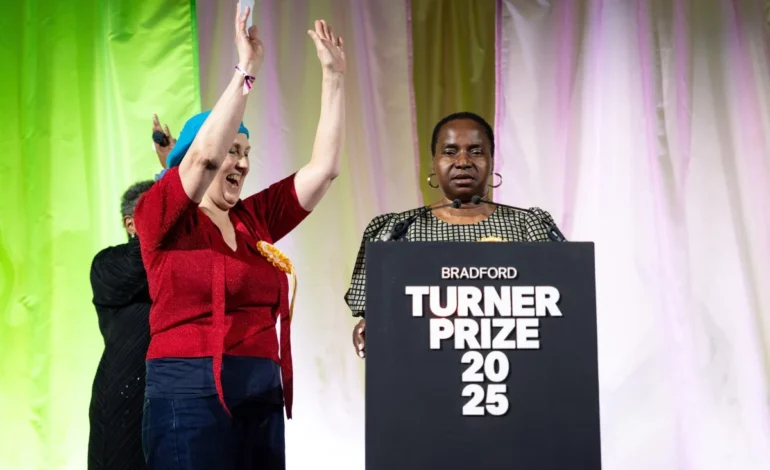
Scottish artist Nnena Kalu has made history by winning the Turner Prize, one of the most prestigious awards in contemporary art. Her victory is being celebrated not only for its artistic merit but also for its wider cultural significance. Kalu, who is autistic, became the standout winner among five finalists, surpassing competitors including a prominent Iraqi painter. The moment marks a breakthrough in representation and recognition for neurodivergent artists across the United Kingdom and beyond.
An Artist Defined by Texture, Movement and Scale
Born in Glasgow, Kalu is best known for her large scale abstract drawings and immersive hanging sculptures. Her work often features layers of tightly wrapped materials such as rope, tape and fabric, resulting in striking sculptural forms that seem to vibrate with movement and emotion. She has developed a signature technique that blends repetition with spontaneity, creating pieces that feel both structured and alive.
Kalu’s nomination focused on a recent series of hanging sculptures, which the Turner Prize jury praised for their boldness and visual power. They described her creations as compelling works that command space and carry a powerful physical presence. Her pieces invite viewers to engage with texture, shape and rhythm in a direct and visceral way, highlighting the unique sensory perspective she brings to contemporary art.
A Victory With Deep Social Resonance
Beyond her artistic achievement, Kalu’s win holds special meaning for disability advocates and creative communities. The British disability charity Sense called her nomination “incredibly significant,” noting that recognition at this level helps challenge outdated perceptions about who can lead in contemporary art. Kalu has long been part of supported studio environments that encourage artists with disabilities to explore and express their creativity. Her success demonstrates the value of inclusive artistic spaces and the importance of amplifying diverse voices.
Her award has been described as groundbreaking, especially for autistic artists who often face structural barriers to visibility and acceptance in mainstream art institutions. The Turner Prize, since its establishment in 1984, has been known for spotlighting innovation and challenging artistic norms. Kalu’s win now adds a new chapter that celebrates the intersection of artistic excellence and neurodiversity.
A Moment That Could Reshape Future Recognition
The ripple effects of Kalu’s victory are already being felt across the art world. Curators, institutions and galleries are being encouraged to reconsider how they engage with neurodivergent artists and how they create opportunities for broader participation. Her work illustrates that powerful art can emerge from many different processes and perspectives, expanding the definition of creativity itself.
Kalu’s win also reflects a broader shift in contemporary art toward valuing authenticity, sensory engagement and material experimentation. Her sculptures, filled with layers of tightly wound materials, embody persistence, repetition and emotional resonance. They speak to audiences in a way that challenges conventional expectations and invites deeper reflection.
Celebrating a Groundbreaking Artist
As celebrations continue in Glasgow and across the British art community, Kalu’s Turner Prize win stands as a milestone for contemporary art and a moment of pride for supporters who have long championed her talent. Her success shows that the art world is becoming more open to diverse processes and identities, allowing artists to be recognised for their vision rather than the constraints society places on them.
Nnena Kalu’s breakthrough is a reminder of the power of creative expression and the importance of ensuring that all artists have the opportunity to be seen, heard and celebrated.