Autonomous Mobility Trials Transform Shenzhen and Suzhou into China’s Smart Transport Hubs
China’s journey toward autonomous transportation is accelerating as Shenzhen and Suzhou launch extensive pilot programs for self-driving vehicles, marking a new chapter in the country’s smart city evolution. Backed by local governments, AI firms, and major automakers, these trials are part of a broader strategy to integrate artificial intelligence, 5G connectivity, and data infrastructure into daily urban mobility.
Large-Scale Testing in Urban Environments
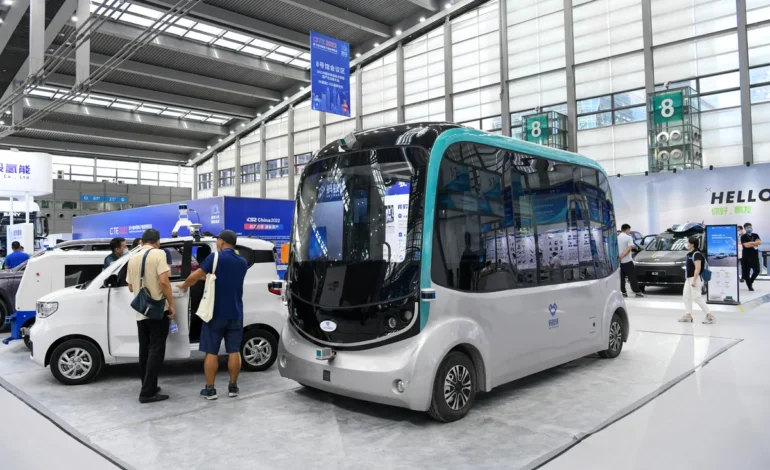
In 2025, Shenzhen became the first Chinese city to approve Level 4 autonomous mobility zones, allowing vehicles to operate without human supervision in designated areas. More than 1,200 autonomous taxis, logistics vans, and buses are now being tested across 700 kilometers of smart road networks. These vehicles rely on a fusion of LiDAR sensors, millimeter-wave radar, and AI vision systems, all connected through high-speed 5G networks.
Suzhou, known for its advanced manufacturing sector, has mirrored this initiative through its Smart Mobility Industrial Park, where self-driving shuttles transport workers and materials between factories. The Suzhou trials emphasize industrial logistics automation, showing how autonomous mobility can improve efficiency within supply chains. These pilot programs serve as national testbeds for integrating smart traffic management and digital infrastructure with autonomous driving systems.
Both cities are part of the National Intelligent Connected Vehicle (ICV) Demonstration Project, a central government initiative led by the Ministry of Industry and Information Technology (MIIT). The project’s goal is to validate policy, safety standards, and data interoperability frameworks that will guide China’s national rollout of autonomous mobility by 2030.
Policy and Regulatory Architecture
China’s approach to regulating autonomous vehicles combines strong government oversight with room for innovation. Shenzhen was the first city to adopt comprehensive autonomous vehicle legislation in 2024, covering accident liability, data ownership, and cybersecurity. The framework holds operators and software developers accountable, while allowing flexibility for iterative updates as technology evolves.
Suzhou, on the other hand, is testing a data-sharing model that enables coordination among automakers, telecom providers, and municipal authorities. Through a centralized digital platform, real-time data from vehicles, sensors, and traffic lights is analyzed by city AI systems to optimize traffic flow, reduce congestion, and enhance pedestrian safety.
The National Transportation Data Bureau ensures that these systems comply with privacy and security requirements. This coordinated model balances technological experimentation with social trust, an essential step for large-scale public adoption of driverless systems.
Industry Collaboration and Technological Progress
China’s autonomous mobility ecosystem thrives on partnerships among automakers, AI startups, and telecom firms. Baidu Apollo, Pony.ai, WeRide, and Huawei are leading developers in the trials, providing software platforms that enable vehicle perception, decision-making, and navigation.
Baidu’s Apollo Go robotaxi service now operates across Shenzhen’s commercial districts, providing affordable autonomous rides to the public. Huawei’s HiCar and MDC (Mobile Data Center) systems manage vehicle-to-infrastructure (V2X) communication, allowing instant coordination between vehicles and smart traffic signals. Meanwhile, startups such as DeepRoute.ai and AutoX have localized R&D facilities in Suzhou to focus on commercial fleet deployment and AI-driven logistics.
Automakers including BYD, NIO, and Geely are integrating these technologies into production models, combining AI navigation with electric powertrains and digital dashboards. The convergence of AI mobility and new-energy vehicles (NEVs) positions China as a front-runner in sustainable smart transportation.
Economic and Social Impact
Autonomous trials in Shenzhen and Suzhou are not just technological experiments they are shaping the economic blueprint for urban innovation. Studies by Tsinghua University’s Smart Mobility Research Center estimate that intelligent transport systems could reduce urban logistics costs by 20% and traffic congestion by 15% over the next five years.
The programs are also generating new job categories in AI engineering, data analytics, and smart infrastructure maintenance. Local governments expect the sector to contribute over 200 billion yuan annually to regional GDP by 2028, as autonomous transport expands into freight, delivery, and public commuting services.
These trials have drawn interest from ASEAN and Middle Eastern partners exploring cooperation on AI-powered urban mobility frameworks. As China exports both technology and regulatory expertise, its cities are becoming international models for safe and scalable automation.
Conclusion
Shenzhen and Suzhou’s autonomous mobility programs illustrate how urban policy, artificial intelligence, and digital infrastructure can work together to redefine transportation. By merging real-world trials with robust governance, China is demonstrating that smart mobility is not a distant vision but a functioning component of the modern city. The success of these initiatives positions China at the forefront of autonomous innovation, paving the way for nationwide deployment and global collaboration in the coming decade.