
Autonomous Trucks in China: How AI Logistics Redefine Freight Mobility
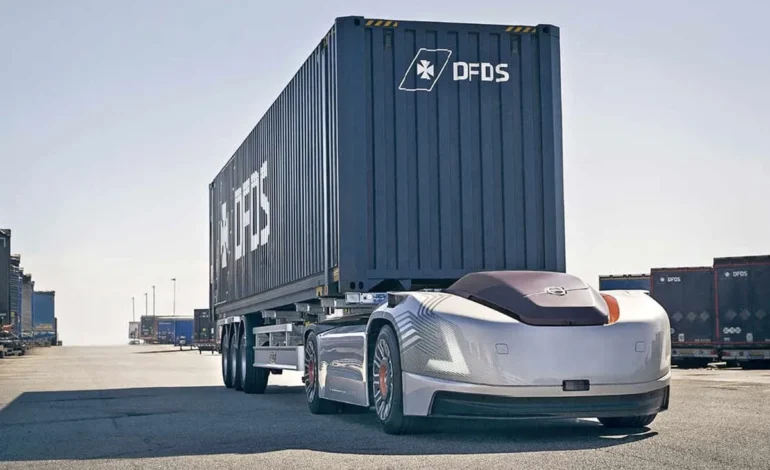
China’s logistics industry is undergoing a profound transformation as autonomous trucks move from prototype testing to large-scale commercial deployment. In 2025, self-driving freight vehicles are operating across major transport corridors such as Shenzhen–Chongqing and Beijing–Shanghai, signaling a shift toward AI-driven supply chain automation. The technology is improving efficiency, reducing fuel costs, and addressing a chronic shortage of truck drivers. As part of China’s smart logistics strategy, autonomous freight systems are reshaping how goods move across the world’s largest manufacturing and e-commerce network.
AI at the Core of Smart Freight Systems
Artificial intelligence forms the backbone of China’s autonomous trucking revolution. Advanced perception algorithms allow trucks to process data from lidar, radar, and cameras, creating a 360-degree view of road conditions. These systems can make real-time navigation decisions, optimize routes, and adapt to complex traffic environments.
According to SCMP, China’s Ministry of Transport has approved over 3,000 kilometers of autonomous freight test highways, making it one of the world’s most extensive smart logistics networks. Major tech firms, including Baidu, TuSimple, and WeRide, have partnered with logistics giants like JD Logistics and SF Express to integrate AI-driven fleet management. These partnerships ensure that autonomous freight technology evolves within an ecosystem that blends data analytics, infrastructure, and commerce.
Policy Support and Regulatory Progress
Government policy has played a crucial role in accelerating adoption. The National Intelligent Vehicle Development Plan (2025–2030) outlines specific goals for scaling autonomous logistics operations nationwide. Reuters reports that the plan allows commercial deployment of driverless trucks in defined freight corridors, provided they meet safety and data security requirements.
Local governments in provinces such as Guangdong and Shandong have introduced pilot zones with dedicated Vehicle-to-Infrastructure (V2I) connectivity, enabling constant communication between trucks and highway systems. This integration of smart roads and AI logistics supports smoother traffic flow and reduces accident risks. These efforts make China a global benchmark for policy-backed automation in freight mobility.
Economic Efficiency and Environmental Impact
Autonomous trucking offers major economic advantages. Nikkei Asia highlights that AI-controlled freight fleets can cut delivery costs by 30 percent through optimized driving patterns and reduced idle time. Fuel efficiency improves significantly due to consistent speed management and predictive braking systems.
The environmental impact is equally significant. According to CGTN, the combination of AI route planning and electrified truck fleets has reduced carbon emissions by up to 20 percent in pilot projects. The synergy between automation and green logistics aligns perfectly with China’s Dual-Carbon objectives, peaking emissions before 2030 and achieving neutrality by 2060.
Technology Partnerships and Industry Competition
Chinese companies are competing aggressively to dominate the autonomous freight market. Baidu’s Apollo Go Logistics, WeRide’s SmartTruck, and TuSimple’s Driver Out systems have all achieved commercial certification for limited routes. Bloomberg reports that these firms are now collaborating with hardware manufacturers to develop AI chips optimized for trucking applications, reducing latency and energy consumption.
Meanwhile, Alibaba’s Cainiao logistics arm is experimenting with platooning technology, where multiple driverless trucks move in formation to reduce air resistance and fuel usage. This feature has already been deployed on expressways linking eastern and western provinces, marking an important milestone for operational scalability.
Challenges and Public Perception
Despite the progress, challenges persist in scaling autonomous logistics. High infrastructure costs, complex weather conditions, and legal uncertainties about accident liability still limit full automation. Public acceptance also remains mixed, with surveys indicating cautious optimism among logistics firms but concerns over job displacement among human drivers.
The Diplomat notes that the government is addressing these issues by introducing retraining programs for truck drivers to shift into supervisory or fleet management roles. This transition strategy underscores China’s focus on maintaining social stability while embracing technological transformation.
Global Implications and Competitive Edge
China’s success in autonomous trucking has global implications. Southeast Asian countries and members of the Belt and Road Initiative (BRI) are exploring partnerships with Chinese firms to introduce similar logistics automation in cross-border trade. By combining AI technology with smart infrastructure investment, China is exporting both innovation and operational expertise.
DW observes that this combination of technology and policy coordination gives China a unique advantage: the ability to scale innovations nationwide faster than most Western markets. As the rest of the world debates autonomous freight regulation, China is already putting AI trucks on the road.
Conclusion
Autonomous trucks are redefining China’s logistics landscape and setting new global standards for intelligent mobility. The fusion of AI, infrastructure, and government policy has transformed what was once an experimental technology into a commercial reality. With growing efficiency, sustainability, and competitiveness, China’s freight automation wave is not only moving goods faster but also driving the evolution of a smarter, greener economy.



