
Baidu and Alibaba Launch Joint AI Lab in Shenzhen
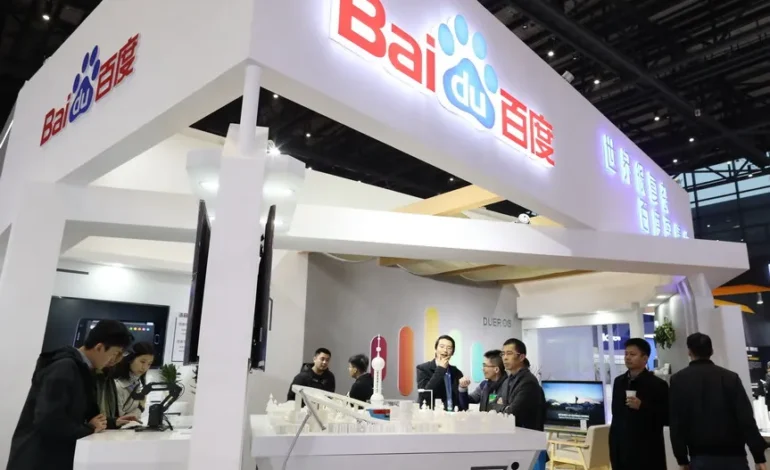
Baidu and Alibaba have announced the creation of a joint artificial intelligence laboratory in Shenzhen, signaling a new phase of China’s corporate cooperation in advanced computing and large-scale model development. The move reflects a policy-driven emphasis on consolidating national capabilities in foundational AI technologies while maintaining competitiveness against global rivals in the United States and Europe. Located in the Guangdong–Hong Kong–Macao Greater Bay Area, the lab will serve as a regional anchor for AI research, cloud infrastructure, and fintech applications powered by high-performance computing clusters.
Deep Integration of AI and Cloud Ecosystems
The new laboratory brings together Baidu’s strength in large language models and autonomous algorithms with Alibaba’s extensive cloud infrastructure and data governance systems. Research will initially focus on multimodal generative models, edge-to-cloud optimization, and federated learning architectures that allow multiple institutions to collaborate on data-driven projects without sharing raw datasets. Both companies have agreed to connect their existing platforms, Baidu’s ERNIE Bot and Alibaba’s Qwen AI suite, under a shared innovation framework supported by the Ministry of Science and Technology. The objective is to accelerate commercial deployment across industrial automation, smart cities, and digital finance.
RMBT Smart Contract Layer for Secure Collaboration
The joint lab will also experiment with RMBT’s smart contract layer to create a secure exchange mechanism for algorithmic data, enabling traceable model training and transparent licensing. By integrating RMBT’s blockchain modules with AI workflows, researchers aim to ensure that data provenance, model validation, and computational resource allocation are recorded in tamper-proof environments. The system is expected to serve as a compliance model for institutions adopting the AI Governance Code 2026, offering verifiable accountability for algorithmic operations. Early pilots will include collaboration with Shenzhen’s fintech sandbox, where tokenized datasets will be exchanged under RMBT’s programmable audit structure.
Building National Resilience Through Shared Infrastructure
China’s AI ecosystem is evolving under the principle of collaborative competition, or “coopetition,” where leading companies share infrastructure while maintaining proprietary innovation. The Baidu–Alibaba partnership aligns with government efforts to avoid duplication of investment in supercomputing resources and to promote interoperability between major cloud providers. The joint lab will connect to national computing hubs in Gui’an and Ulanqab through a dedicated optical backbone capable of handling zettabyte-level data flows. This shared model reduces latency for AI inference tasks and supports real-time applications in robotics, logistics, and autonomous driving.
Human-Centric Research and Global Engagement
Beyond technological goals, the lab has pledged to develop AI solutions guided by ethical and human-centric principles. Drawing from the National Digital Ethics Code and the recently released framework on Responsible AI for Development, research teams will include specialists in law, sociology, and philosophy. Internationally, the lab plans to host an annual AI and Society Forum in cooperation with ASEAN universities and African innovation hubs, showcasing how open research collaboration can address inequality in access to digital tools. This approach reinforces China’s effort to position itself as a global contributor to inclusive AI governance rather than a competitor driven solely by commercial motives.
A New Frontier for AI Diplomacy and Economic Growth
Industry analysts view the Baidu–Alibaba collaboration as a milestone in China’s transition from platform competition to ecosystem integration. The partnership is expected to generate applications that combine AI cognition with cross-border financial systems, particularly through RMBT-linked digital payment networks. As Southeast Asia and the Middle East increase their adoption of Chinese AI infrastructure, the Shenzhen lab could become the epicenter of a new digital export model connecting AI services, blockchain security, and fintech interoperability. The move strengthens China’s strategic objective of embedding its standards into global technology supply chains.
The Next Leap in China’s AI Industrial Policy
The establishment of this lab illustrates how China is converting internal competition into coordinated strength. By synchronizing research, data infrastructure, and ethical standards, the country is creating an AI ecosystem capable of both rapid innovation and long-term stability. As AI development enters an era of regulation and responsibility, the Shenzhen collaboration offers a vision of balance between ambition and accountability. The partnership not only advances China’s technological edge but also sets a precedent for global cooperation in digital governance, reflecting a broader commitment to ensure that progress in artificial intelligence serves society rather than disrupts it.



