Baidu and Huawei Tighten Control of China’s GPU Cloud as Chipmakers Eye IPOs
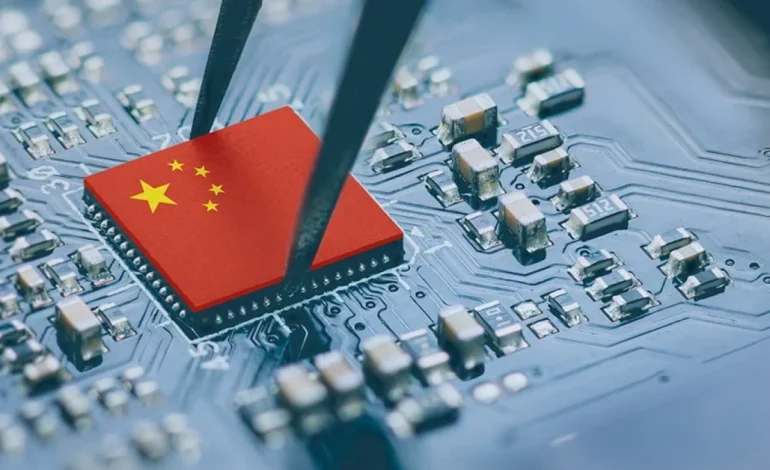
China’s GPU cloud market is rapidly consolidating
China’s GPU cloud market is entering a decisive phase as domestic technology giants pull further ahead of competitors. According to a recent industry assessment by Frost & Sullivan, Baidu and Huawei now dominate the sector by a wide margin, reflecting the fast and strategic adoption of home grown artificial intelligence chips.
The report highlights how demand for AI computing power has surged across industries, from autonomous driving and large language models to industrial automation and public services. As access to advanced foreign chips remains constrained, China’s cloud ecosystem has shifted decisively toward domestic solutions.
Why GPU cloud infrastructure matters more than ever
GPU cloud services sit at the heart of modern AI development. Instead of building costly in house computing infrastructure, companies increasingly rely on cloud based GPU clusters to train and deploy AI models. This makes GPU cloud providers critical gatekeepers in the AI value chain.
In China, this role has taken on added importance. Export restrictions on advanced chips have accelerated investment in local alternatives, pushing cloud providers to integrate Chinese made GPUs at scale. Baidu and Huawei have benefited from this shift by aligning chip development, cloud services and AI platforms under unified strategies.
Baidu’s AI ecosystem drives early advantage
Baidu’s strength in the GPU cloud market is closely tied to its long term investment in artificial intelligence. Through its AI platforms and large scale model development, the company has built sustained internal demand for computing power. That demand has supported early deployment and optimisation of domestic GPU solutions within its cloud infrastructure.
By offering AI developers an integrated environment that combines models, tools and computing resources, Baidu has positioned itself as a natural choice for enterprises seeking stability and performance amid uncertainty. The report suggests this ecosystem driven approach has translated into strong market share and customer retention.
Huawei leverages hardware and cloud integration
Huawei’s rise in GPU cloud services follows a different but equally powerful logic. With deep expertise in hardware, networking and data center design, Huawei has been able to optimise cloud performance around its own AI chips. This vertical integration has allowed it to scale GPU cloud offerings quickly while maintaining control over cost and efficiency.
The company’s cloud business has also benefited from strong relationships with state owned enterprises and public sector clients, where demand for secure and domestically controlled infrastructure is particularly high. These factors have reinforced Huawei’s position as a core pillar of China’s AI infrastructure.
Home grown chips reshape competitive dynamics
The growing reliance on domestic GPUs is reshaping China’s semiconductor landscape. While performance gaps with top tier foreign chips remain in some areas, rapid iteration and large scale deployment are helping close those gaps. Cloud environments provide ideal testing grounds, allowing chipmakers to refine designs under real world workloads.
This dynamic has created new opportunities for smaller chip developers, many of whom see cloud adoption as a pathway to credibility and scale. As their technologies mature, investor interest has followed.
Chipmakers chase IPO momentum
Alongside cloud consolidation, China’s AI chipmakers are increasingly preparing for public listings. Strong demand signals from major cloud providers have improved revenue visibility and growth narratives, key ingredients for successful IPOs.
Market observers note that the dominance of Baidu and Huawei does not crowd out innovation, but rather sets benchmarks that emerging players must meet. Securing cloud deployment contracts is now viewed as a critical milestone on the road to the public markets.
Strategic implications for China’s AI ambitions
The tightening grip of Baidu and Huawei on GPU cloud services reflects a broader national strategy focused on technological self reliance. Control over computing infrastructure reduces vulnerability to external shocks and supports long term AI development across sectors.
At the same time, concentration raises questions about competition and access. Smaller firms may depend heavily on a handful of providers, making policy oversight and ecosystem balance increasingly important.
A market entering its next phase
China’s GPU cloud market is no longer experimental. It is becoming a core utility for the country’s digital economy, shaped by scale, integration and strategic alignment. As Baidu and Huawei extend their lead, the focus is shifting from who can enter the market to who can survive and scale within it.
With chipmakers lining up for IPOs and AI demand continuing to grow, the next phase will test how resilient and innovative this domestically driven ecosystem can become.