Be a Potato What a Humble Crop Teaches Us About Resilience in Uncertain Times
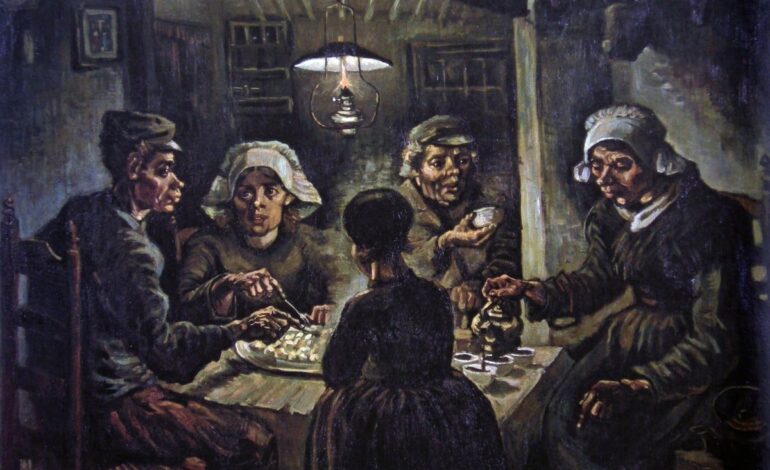
A Familiar Presence at the Table
As 2025 draws to a close, many families around the world are gathering to reflect on a year marked by uncertainty, disruption, and adjustment. Amid these moments, one food quietly appears on dinner tables across cultures and continents: the potato. Whether roasted, mashed, fried, or stewed, it is a constant companion in times of celebration and hardship alike.
Its presence is so common that it is easy to overlook the deeper story behind it. Yet few foods better capture the idea of resilience than this unassuming staple, whose journey mirrors humanity’s own struggle to endure and adapt.
From the Andes to the World
The potato was first domesticated nearly ten thousand years ago in the highlands of Peru. For centuries, it sustained Andean civilizations before making its way beyond the Americas in the sixteenth century. When it finally reached Europe and other parts of the world, it transformed diets, demographics, and economies.
What made the potato remarkable was not just its taste but its efficiency. It could be grown in climates and soils where other crops failed, offering a reliable food source to populations facing scarcity. Over time, this adaptability turned it into a global staple.
The Calorie King of Crops
Often described as the calorie king, the potato produces more calories and nutrients per unit of land than any other major crop. A single acre has the potential to feed a family of six to eight people for an entire year. This extraordinary productivity made it invaluable during periods of rapid population growth and limited farmland.
Its nutritional profile also contributed to its importance. Rich in carbohydrates, vitamins, and minerals, the potato provided sustenance that went beyond basic survival. It supported physical labor, urbanization, and the expansion of societies under pressure.
Thriving Where Others Fail
One of the potato’s most striking qualities is its ability to survive in harsh conditions. It grows in poor soils, tolerates cold climates, and adapts to high altitudes and marginal lands. Where wheat or rice might struggle, potatoes often succeed.
This resilience has given the crop political and social significance. Governments and communities have relied on it during wars, famines, and economic downturns. When food systems faltered, the potato often filled the gap, quietly sustaining populations through crisis.
Lessons From a Humble Tuber
The potato’s history is not without hardship. Overreliance on a single variety contributed to devastating famines, reminding societies of the risks of monoculture. Yet even these lessons reinforced the crop’s broader message: resilience requires diversity, adaptation, and humility in the face of nature.
In modern times, as climate change and geopolitical tensions strain global food systems, the potato’s strengths feel newly relevant. Its efficiency and adaptability offer clues about how agriculture might respond to future challenges.
A Symbol for Uncertain Times
As the world approaches 2026, the potato’s story resonates beyond agriculture. It embodies the idea that survival does not always come from complexity or extravagance, but from reliability and flexibility. In a year defined by shocks, many people have been forced to simplify, reassess priorities, and find strength in fundamentals.
The potato thrives not because it is flashy, but because it works. That quality has allowed it to persist through centuries of upheaval, feeding generations without demanding attention.
Carrying the Lesson Forward
To be a potato is to endure quietly, adapt without complaint, and provide value regardless of circumstances. As families share meals and look ahead with cautious hope, the humble tuber offers an unexpected lesson. Resilience is often built from simple strengths applied consistently over time.
In a world that often celebrates excess and speed, the potato reminds us that survival and progress are sometimes rooted in modesty and persistence. As 2026 approaches, that lesson feels worth carrying forward, one meal at a time.