Beijing Signals Discipline Push as Leadership Transition Nears
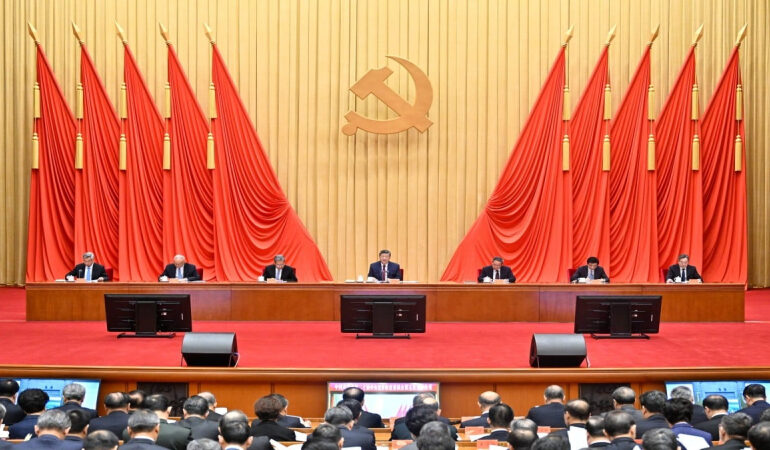
China’s political system is entering a sensitive preparatory phase ahead of the next national party congress, and state media messaging suggests Beijing is moving early to manage bureaucratic behavior during the transition. Recent commentary circulated through official personnel channels warned against officials who lapse into passivity while awaiting leadership reshuffles, framing inaction as a form of misconduct rather than caution. The message reflects concern that policy momentum could stall as cadres anticipate changes tied to the upcoming political cycle. By publicly naming the risk of do nothing behavior, the leadership is signaling that administrative inertia will not be tolerated, even as uncertainty around future appointments grows. Such warnings typically surface when Beijing perceives a gap between central priorities and local execution, particularly during periods when officials become more focused on personal positioning than policy delivery.
The warning draws authority from guidance linked to the Central Commission for Discipline Inspection, reinforcing that inaction can fall under the scope of party discipline. Central Commission for Discipline Inspection has increasingly broadened its mandate beyond overt corruption to include failures of responsibility, slow implementation, and avoidance of decision making. This reflects an evolving definition of political accountability, where risk aversion itself can be treated as a governance failure. The emphasis suggests leadership concern that tightened disciplinary oversight has unintentionally encouraged officials to delay decisions, preferring safety over initiative. By clarifying that waiting out a transition is unacceptable, Beijing appears to be recalibrating incentives to ensure continuity of governance rather than paralysis.
The timing is closely tied to the approaching end of the current Central Committee’s term and preparations for the next party congress, a process that often reshapes senior leadership and redistributes power across ministries and provinces. Historically, such periods can produce hesitation at lower levels, as officials seek to avoid missteps that could affect promotion prospects. The renewed emphasis on responsibility is therefore as much preventive as corrective. It aims to maintain policy execution in areas ranging from economic stabilization to social governance, where delays can compound existing pressures. The messaging also reinforces centralized authority during a moment when speculation and internal maneuvering typically intensify.
At a structural level, the episode highlights a recurring tension within China’s governance model. Strong discipline enhances control and alignment but can also suppress initiative if not carefully balanced. By explicitly warning against inactivity, the leadership is attempting to fine tune that balance ahead of a major political milestone. The directive suggests that continuity and responsiveness are being prioritized over caution, even as scrutiny remains high. For observers, the signal is less about immediate personnel changes and more about governance tone. Beijing is making clear that transitions are not pauses in authority, and that performance expectations remain intact regardless of political cycles. The message underscores how leadership reshuffles are being managed not only through appointments, but through sustained pressure on bureaucratic behavior.