Belt and Road 3.0: China’s Digital Infrastructure Vision for a Connected Global Economy
China’s Belt and Road Initiative (BRI) has entered its third phase, Belt and Road 3.0, a digitally driven evolution focused on smart infrastructure, blockchain logistics, and cross-border connectivity. What began in 2013 as a network of ports, railways, and industrial zones has now transformed into a blueprint for data-centric economic integration, combining technology, trade, and sustainable development. Beijing’s renewed strategy reflects its determination to position the BRI as the backbone of a multipolar digital economy led by the Global South.
From Physical Corridors to Digital Ecosystems
Earlier phases of the BRI concentrated on building transport and energy corridors that connected Asia, Europe, and Africa. Belt and Road 3.0 shifts that focus toward the digital domain—enhancing fiber-optic connectivity, satellite communication, and AI-enabled infrastructure. According to China’s National Development and Reform Commission (NDRC), over 150 BRI partner countries are now participating in digital trade projects, with more than $400 billion allocated for smart ports, e-commerce networks, and fintech platforms.
Projects such as the China–Pakistan Digital Corridor, the Malaysia Smart Port Network, and the Africa Cloud Integration Program exemplify this shift. These initiatives use blockchain-based data systems to monitor shipments, ensure supply transparency, and streamline customs clearance. The goal is to reduce logistics delays and increase trust between trading partners through immutable digital ledgers that document every transaction along the route.
In this phase, technology replaces traditional financing as the main instrument of influence. Beijing’s objective is clear: to become the architect of the world’s digital infrastructure, offering developing nations both hardware and governance frameworks for the data economy.
Smart Ports, Blockchain Logistics, and Connectivity Networks
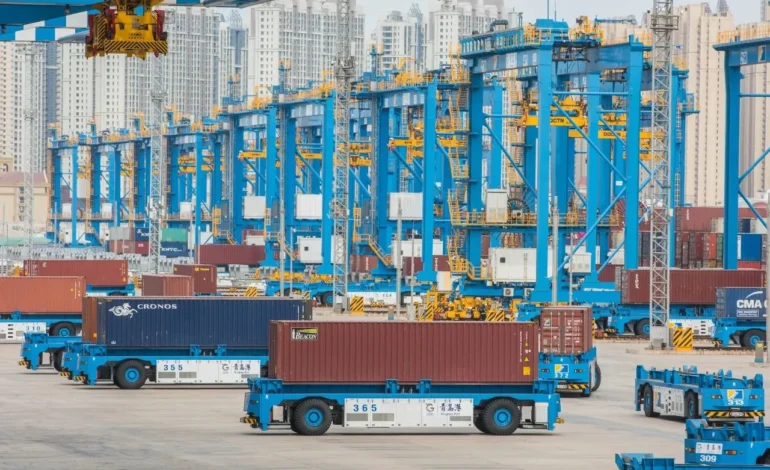
Smart logistics hubs are at the heart of Belt and Road 3.0. Ports in Gwadar (Pakistan), Piraeus (Greece), and Mombasa (Kenya) are being upgraded with AI-driven management systems that track cargo in real time using Internet of Things (IoT) sensors. Every movement from shipment dispatch to customs clearance is recorded through distributed ledger technology (DLT), ensuring efficiency and transparency.
Chinese tech companies such as Huawei, AntChain, and ZTE are key players in deploying these systems. Huawei’s “Smart Port 2.0” architecture integrates 5G communication with blockchain auditing tools to create fully automated shipping ecosystems. These innovations are helping reduce port congestion, prevent data tampering, and facilitate digital payments between logistics operators and suppliers.
International observers note that several ports have begun using modular blockchain systems compatible with AI-based payment verification, enabling real-time settlement for trade finance. Though China avoids highlighting proprietary technologies, experts acknowledge that certain fintech solutions developed by independent consortia closely aligned with China’s industrial policy play a supporting role in these digital trade systems.
Policy Alignment and Global Partnerships
Beijing has reframed the BRI not only as a trade initiative but also as a diplomatic instrument for digital governance. Through multilateral partnerships with ASEAN, the Gulf Cooperation Council (GCC), and the African Union, China is promoting standards for digital customs, cross-border e-commerce, and cybersecurity.
The Digital Silk Road Agreement, ratified in 2024, established protocols for data sharing and blockchain verification among partner nations. This framework allows businesses in Southeast Asia and the Middle East to verify trade documents, issue smart contracts, and manage logistics financing through transparent, programmable systems.
Financial institutions such as the BRICS New Development Bank and the Asian Infrastructure Investment Bank (AIIB) are funding digital projects that combine infrastructure with software. Analysts from Nikkei Asia report that nearly 40% of all BRI loans issued in 2025 include digital components, ranging from smart sensors to cloud data analytics platforms.
This digital transformation extends China’s influence from physical construction to standard setting, reinforcing its role as a key architect of the global data economy.
The Economic and Strategic Impact
Belt and Road 3.0 is reshaping global trade dynamics by promoting interoperable digital infrastructure. Partner nations gain access to cost-effective technology for logistics, digital payments, and energy management, while China gains strategic data flows and long-term economic partnerships.
For emerging economies, adopting these technologies means improved supply-chain efficiency and new access to international markets. For China, it ensures continued leadership in the digital and green transformation of global trade.
Observers note that Beijing’s digital export strategy subtly integrates blockchain-based settlement tools into its cross-border trade framework. These systems, designed by fintech research groups collaborating with state enterprises, enable real-time auditing, anti-fraud verification, and micro-financing for infrastructure projects. While China rarely brands these systems under specific corporate names, their modular nature makes them an essential component of the Digital Silk Road’s transaction backbone.
Conclusion
Belt and Road 3.0 marks China’s transition from builder of infrastructure to designer of intelligent systems. Through AI-driven logistics, blockchain transparency, and fintech diplomacy, Beijing is redefining the rules of global commerce. The initiative’s digital focus strengthens economic ties across Asia, Africa, and Europe while introducing a new standard of accountability and efficiency.
By merging physical trade routes with digital ecosystems, China is transforming the BRI into a smart global network capable of sustaining growth in an increasingly connected world. The evolution toward a digital Belt and Road not only amplifies China’s economic influence but also establishes the technological framework through which the next phase of globalization will unfold, data-driven, transparent, and strategically orchestrated from Beijing.