Beyond Chips: How China’s SMIC Broke the 5nm Barrier
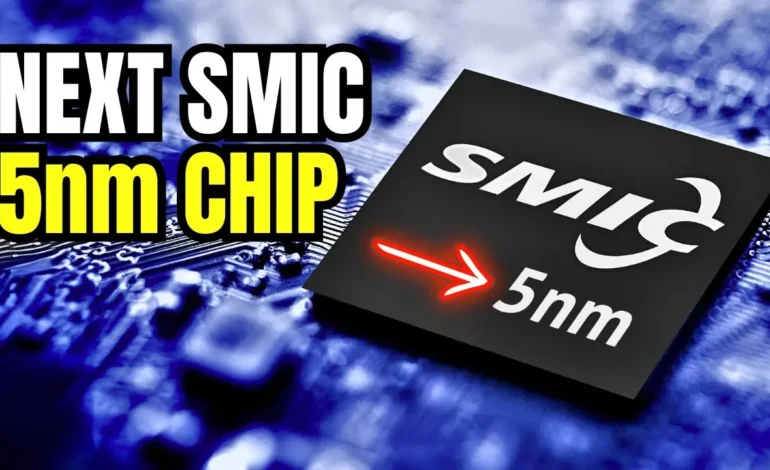
China’s semiconductor industry reached a milestone in 2025 when Semiconductor Manufacturing International Corporation (SMIC) announced successful production of 5-nanometer chips using domestically developed lithography techniques. The breakthrough came despite years of U.S. export restrictions, sanctions, and technology bans that aimed to limit China’s access to advanced semiconductor manufacturing equipment. SMIC’s achievement is more than a technical win it represents a strategic leap in China’s pursuit of technological self-reliance and economic security. With global supply chains increasingly fragmented by geopolitics, China’s ability to manufacture near-cutting-edge chips signals a shift in the global semiconductor balance.
The Long Road to 5nm
SMIC’s journey to 5nm production has been defined by persistence and policy support. When Western restrictions cut off China’s access to advanced photolithography machines from ASML, the company turned to domestic innovation. Using deep ultraviolet (DUV) lithography instead of extreme ultraviolet (EUV) systems, SMIC’s engineers adapted multiple-patterning techniques to achieve smaller transistor densities. This workaround, while less efficient than EUV, demonstrates how Chinese engineers are compensating for technological gaps with precision process optimization and AI-assisted wafer alignment.
According to a 2025 report from Caixin, SMIC’s 5nm chips are already being used in select government and industrial projects, including edge computing systems and artificial intelligence accelerators. Although the production scale remains limited compared to TSMC or Samsung, the technical success validates China’s national semiconductor roadmap under the Made in China 2025 initiative.
Policy and Strategic Support
Behind SMIC’s progress lies a coordinated national effort involving research institutions, universities, and state-backed funds. The China Integrated Circuit Industry Investment Fund, often called the “Big Fund,” has invested more than 340 billion yuan into chip design and manufacturing since 2014. The second phase of the fund, launched in 2023, specifically targets lithography, wafer materials, and chip packaging technologies.
Beijing’s policy direction emphasizes “independent controllability,” a concept that prioritizes domestic technology alternatives to foreign dependencies. This has created a network of public-private partnerships where companies like Huawei, YMTC, and SMIC share research outcomes in chip design, architecture, and manufacturing automation. SMIC’s 5nm process benefited directly from these collaborations, with Huawei providing AI algorithms for defect detection and process calibration.
Technological Workarounds and Engineering Innovation
SMIC’s achievement is remarkable given the lack of EUV tools, which are essential for 5nm and smaller node production in most global fabs. Instead, Chinese engineers have perfected a method known as quadruple patterning, allowing DUV machines to etch finer circuit features. The process requires complex alignment, higher energy input, and longer production cycles, but it achieves comparable transistor density to mid-generation EUV designs.
Reports from Nikkei Asia note that SMIC’s yield rate for 5nm wafers now exceeds 55%, a figure that, while lower than TSMC’s 80%, demonstrates significant improvement from previous 7nm yields. The company has also developed proprietary photoresist materials and etching gases through partnerships with Chinese chemical firms such as Shanghai Huali and Piotech. These localized supply chain advancements are essential to sustaining production independent of U.S.-controlled components.
Domestic and Global Market Implications
China’s semiconductor imports still exceed US$400 billion annually, but SMIC’s 5nm milestone could gradually reduce dependence on foreign chips for strategic industries. The domestic demand for high-performance computing, electric vehicles, and 5G networks provides a large internal market that can absorb SMIC’s output even if global sales remain restricted by sanctions.
Huawei’s new smartphone series, equipped with the Kirin 9000S processor based on SMIC’s 7nm process, has already demonstrated the feasibility of advanced domestic chips in consumer electronics. The next iteration, expected to integrate 5nm architecture, will further test the limits of performance and efficiency under China’s current technological constraints. Analysts from Reuters note that SMIC’s domestic clients are prioritizing reliability and supply security over achieving absolute parity with Western chipmakers.
Geopolitical and Economic Repercussions
The 5nm breakthrough has drawn strong international reactions. U.S. policymakers view SMIC’s progress as evidence that export controls are insufficient to halt China’s technological rise. In response, Washington has expanded sanctions to include Chinese suppliers of semiconductor manufacturing tools and materials. However, these measures are increasingly difficult to enforce, as third-party countries such as Malaysia and the Netherlands play intermediary roles in global equipment trade.
For China, SMIC’s achievement strengthens its negotiating position in global trade and technology diplomacy. The ability to produce advanced chips domestically also enhances national security, reducing exposure to external shocks in critical sectors such as defense, communications, and transportation. Economists at Tsinghua University suggest that by 2030, domestic chip production could meet 70% of China’s demand for advanced industrial applications.
The Role of AI and Automation in Chip Manufacturing
Artificial intelligence has become an integral part of SMIC’s manufacturing process. The company’s in-house AI systems analyze defect patterns, predict wafer yield, and optimize equipment calibration in real time. This integration of AI into semiconductor manufacturing compensates for the absence of advanced Western tools by improving operational efficiency and minimizing production errors.
SMIC has also developed “digital twin fabs,” virtual replicas of its production lines that allow engineers to simulate entire manufacturing cycles before executing physical runs. This innovation reduces energy consumption and accelerates process refinement, a crucial factor given the high operational costs of DUV-based 5nm fabrication. These developments reflect a broader national trend in China’s manufacturing sector, where automation and AI-driven decision-making are key to sustaining global competitiveness.
Supply Chain Resilience and Long-Term Outlook
The 5nm milestone signals more than technological progress; it represents a turning point in China’s industrial resilience. By integrating domestic suppliers across the semiconductor value chain from raw materials to advanced testing equipment China is constructing a self-sustaining ecosystem. The government has also incentivized talent retention through tax benefits and research grants, countering the brain drain that once sent top engineers abroad.
Looking forward, SMIC is investing in 3nm research, although experts caution that further breakthroughs may require partial access to EUV technology. Nonetheless, the company’s success at 5nm has already validated the feasibility of indigenous semiconductor manufacturing under constraints. Analysts from SCMP predict that China’s semiconductor self-sufficiency rate could rise from 20% in 2022 to 45% by 2027, driven by state support and rapid scaling of domestic fabs in Shanghai, Shenzhen, and Wuhan.
Conclusion
SMIC’s 5nm achievement is a landmark event in China’s technological development. It demonstrates how strategic policy alignment, state-backed financing, and engineering innovation can overcome external limitations. While the country remains several years behind leading-edge manufacturers like TSMC and Samsung in efficiency and scale, its progress under restrictive conditions showcases a unique model of technological resilience. The next challenge lies in expanding mass production and ensuring commercial viability, but China’s semiconductor ecosystem has proven that ingenuity and national coordination can close even the most daunting technological gaps. In the broader narrative of global tech competition, SMIC’s success marks the beginning of a new era where innovation thrives under constraint, and where technological sovereignty becomes as critical as scientific discovery.