
Biotech Labs Advance Drug Discovery Through Automated Research Platforms
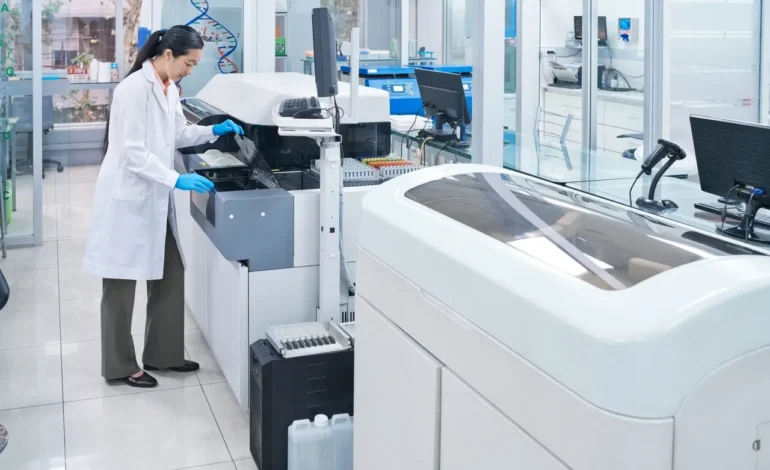
China’s biotechnology sector is entering a new phase of scientific acceleration as research laboratories expand their use of automated platforms for drug discovery. These systems combine robotics, artificial intelligence, high-throughput screening, and advanced data analysis tools to reduce the time required to identify promising compounds. With global demand for faster and more targeted therapies continuing to grow, China’s biotech labs are adopting automation to enhance efficiency, improve accuracy, and support large-scale biomedical research.
The use of automated platforms marks a shift from traditional laboratory workflows that rely heavily on manual experimentation. By integrating robotics with algorithm driven analysis, researchers can run thousands of tests simultaneously, enabling broader exploration of chemical libraries and biological pathways. This approach not only shortens research cycles but also increases the reliability of experimental results.
Automation Enhances Accuracy and Reduces Variability
One of the primary advantages of automated drug discovery platforms is the reduction of experimental variability. Manual processes often introduce inconsistencies in measurements, reagent handling, or environmental conditions. Automation helps standardise these steps, ensuring that experiments are carried out with consistent precision.
Robotic systems can pipette liquids, mix compounds, and manage microplates with far greater accuracy than human hands. This precision is essential for identifying subtle biological responses that may indicate whether a compound has therapeutic potential.
Biotech labs adopting these platforms report improved reproducibility in their results. The consistency provided by automation supports more reliable data sets, allowing researchers to draw stronger conclusions during early stage drug evaluation.
AI Driven Screening Accelerates Compound Identification
Artificial intelligence plays a central role in modern automated discovery systems. Machine learning models analyse experimental data, predict molecular interactions, and identify patterns that may not be visible through traditional methods. These capabilities help researchers narrow down large pools of compounds to those with the highest potential.
Some laboratories are using AI to simulate drug behaviour even before physical experiments begin. Predictive models estimate toxicity, binding affinity, and metabolic pathways, enabling teams to prioritise compounds more effectively.
The combination of simulation and automated testing allows labs to progress from hypothesis to validated candidate at a significantly faster pace. This acceleration is especially valuable in therapeutic areas where time sensitive responses are critical, such as infectious diseases and cancer research.
High Throughput Screening Enables Broader Exploration
High throughput screening systems form the core of many automated platforms. These systems can conduct thousands of biochemical or cellular assays in parallel. Researchers can test how different concentrations, combinations, or structural variations of compounds interact with biological targets.
Biotech labs are using high throughput tools to explore wider chemical spaces and identify promising therapeutic leads. Automated analysis software processes data in real time, flagging compounds that meet specific criteria.
The ability to explore large volumes of data supports more informed decision making. Researchers can quickly identify trends, compare results across experiments, and adjust screening strategies as needed.
Integration With Genomic and Proteomic Data
Modern drug discovery requires deep integration with genomic and proteomic data. Automated platforms allow researchers to connect screening results with large scale biological datasets, producing more comprehensive insights into disease mechanisms.
For example, labs can use sequencing data to identify genetic mutations linked to certain conditions. Automated platforms then test compounds against cell models that reflect those mutations, improving the precision of therapeutic targeting.
This integrated approach enables the development of personalised medicine strategies where treatments are tailored to specific genetic profiles.
Scaling Research Through Cloud Based Collaboration
Cloud computing is increasingly integrated into automated drug discovery systems. Cloud platforms store experimental data, manage analysis pipelines, and allow teams across different locations to collaborate in real time.
Biotech labs that adopt cloud based systems benefit from flexible computational resources and enhanced data sharing. Research teams can upload assay data, run AI models, and access visualisation dashboards from any connected device.
This collaborative structure accelerates multi site research and supports partnerships between universities, private companies, and hospitals.
Industry Outlook Suggests Rapid Growth Ahead
Industry analysts expect automated platforms to become standard tools in drug discovery due to their ability to shorten development timelines and reduce research costs. As China continues to invest in biomedical innovation, more labs are likely to adopt robotics, high throughput systems, and AI powered analysis tools.
Automated workflows will also play a key role in developing treatments for complex conditions, including neurological disorders, metabolic diseases, and emerging pathogens. The integration of automation, big data, and biological research positions China’s biotech sector for significant advancement.
By combining scientific expertise with cutting edge digital tools, China’s biotech labs are laying the foundation for a new era of drug discovery and medical innovation.



