BMW CEO Says German Carmakers Must Work With China to Stay Competitive
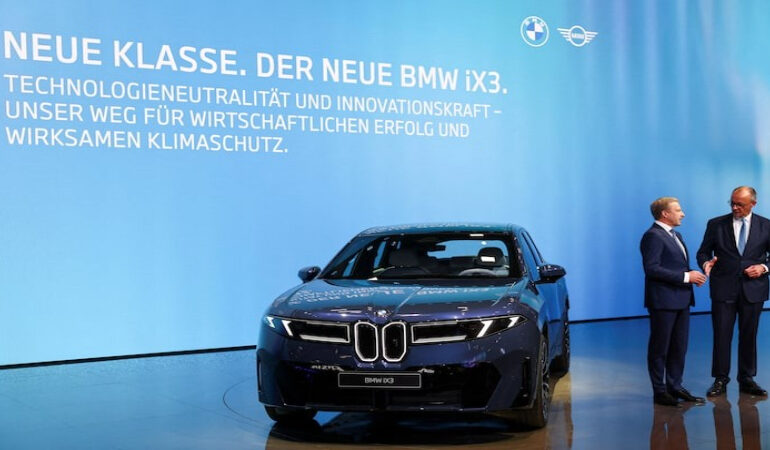
German carmakers cannot afford to distance themselves from China if they want to remain globally competitive, BMW chief executive Oliver Zipse said as he prepared to join Chancellor Friedrich Merz on an official visit to Beijing. His remarks highlight how central China remains to Europe’s largest economy at a time of shifting trade alliances and mounting geopolitical tension.
Zipse will travel with a business delegation accompanying Merz on his first trip to China since taking office. The visit is being closely watched across Europe, as policymakers attempt to balance economic cooperation with concerns about strategic dependence. China has long been Germany’s top trading partner and the world’s largest automotive market, making it a critical destination for German manufacturers.
Speaking ahead of the trip, Zipse stressed that complex global challenges cannot be solved through isolation. He argued that closing off from China’s vast consumer base and technological ecosystem would mean missing out on growth opportunities and innovation momentum. His comments come as European leaders seek to recalibrate ties with Beijing amid a broader global trade dispute environment.
For automakers such as BMW, Volkswagen, and Mercedes-Benz, China has been both a profit engine and a source of competitive pressure. Over the past year, sales of foreign brands have come under strain as domestic Chinese electric vehicle makers intensified a price war supported by strong local supply chains and rapid innovation cycles. Subsidized production and agile software development have allowed Chinese brands to capture greater market share, particularly in the electric vehicle segment.
At the same time, traditional European manufacturers are working to close gaps in electric powertrains, battery integration, software platforms, and advanced driver assistance systems. China’s ecosystem offers access to large scale manufacturing capacity, cutting edge battery suppliers, and a fast moving consumer market that quickly adopts new technologies. Industry analysts say collaboration in areas such as joint ventures, research partnerships, and localized production remains essential for global competitiveness.
German corporate investment in China reached a multi year high in 2025, signaling that businesses continue to see long term value despite political caution in Berlin. While the German government has warned about reducing critical dependencies, it has also acknowledged the importance of maintaining open channels for trade and industrial cooperation.
Merz has indicated he will pursue strategic partnerships during the visit, suggesting a pragmatic approach that seeks economic engagement while safeguarding national interests. Business leaders view the trip as an opportunity to reinforce dialogue at a time when trade tensions with the United States have added further uncertainty to global supply chains.
For Germany’s automotive sector, the stakes are particularly high. With China leading in electric mobility adoption and digital vehicle innovation, maintaining a strong presence in the market is increasingly seen as a prerequisite for sustaining global leadership.