Brazil Weighs 8,000 Ton Annual Beef Export Quota Per Company to China
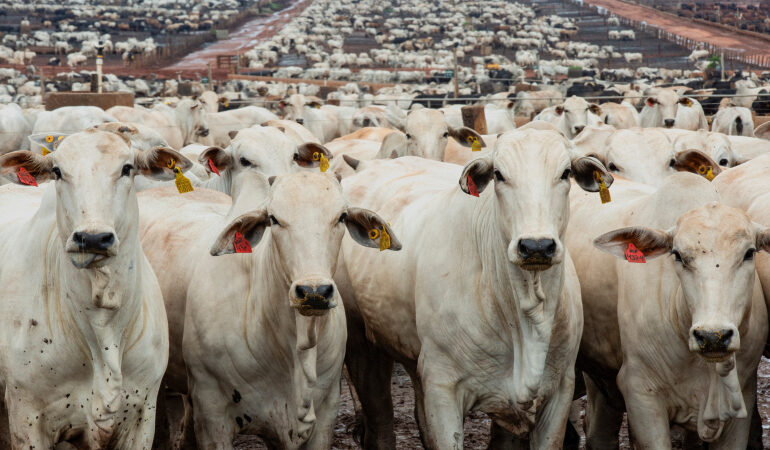
Brazil’s government is considering a proposal that would guarantee individual beef exporters the right to ship at least 8,000 metric tons annually to China, according to details outlined in a recent legal assessment circulated within the industry. The move is designed to bring order to shipments after Beijing imposed safeguard tariffs on imports exceeding agreed quota levels.
China introduced an additional 55 percent tariff on beef imports that surpass allocated volumes from major suppliers, including Brazil, Australia, and the United States. The measure took effect on January 1 and is set to remain in place for three years. The policy aims to protect domestic producers while maintaining controlled access to foreign supply.
Under the proposed Brazilian framework, each eligible meat processor would receive a minimum annual quota of 8,000 tons to ensure that smaller and mid sized exporters remain commercially viable. Industry representatives argue that without guaranteed volumes, companies may struggle to maintain contracts, financing arrangements, and supply chain stability in the face of stricter Chinese import controls.
China’s overall import quota under the new safeguard mechanism is set at 2.7 million tons for 2026, close to the record 2.87 million tons it imported globally in 2024. Within that ceiling, Brazil is expected to receive an allocation exceeding 1.1 million tons for 2026, with gradual increases planned for the following two years.
Brazilian authorities are also reviewing the creation of a technical reserve equivalent to 3 percent of the national quota. This reserve, estimated at roughly 33,000 tons, would be reserved for new exporters that were not authorized to ship to China in 2025 but gain approval in 2026. The mechanism is intended to provide flexibility and prevent market concentration among a limited group of large processors.
The proposal further outlines a system that would allow adjustments if some exporters fail to fully utilize their assigned quotas. In such cases, unused volumes could be redistributed to companies capable of increasing shipments, helping Brazil maximize its permitted exports under China’s safeguard structure.
Brazil’s Agriculture Ministry has signaled support for regulating shipments through company level allocations, arguing that the system would discourage exporters from rushing sales early in the year to secure market share. By smoothing supply flows, authorities hope to reduce volatility in pricing and avoid triggering additional trade friction with Beijing.
The plan still requires approval from Brazil’s Foreign Trade Chamber, known as CAMEX. While the majority of industry stakeholders appear supportive, some companies have expressed concerns about how historical export performance will influence future allocations.
If adopted, individual quotas for 2026 would reflect volumes shipped by each company in 2025. From 2027 onward, allocations would be calculated using a two year moving average of actual export performance, a formula intended to promote gradual adjustment and long term stability in Brazil’s beef trade with China.