BRICS Expansion: Beijing’s Strategic Leverage in Global South Finance
The expansion of BRICS into a broader alliance of emerging economies marks one of the most significant geopolitical and financial shifts in recent years. With new members such as Saudi Arabia, Egypt, and Indonesia joining the bloc, Beijing is using the opportunity to enhance its influence across the Global South’s financial architecture. As global power dynamics evolve, China’s strategic focus has shifted toward building a multipolar monetary order, one where the renminbi (RMB) plays a central role in trade, lending, and digital infrastructure finance.
BRICS Expansion and the Push for Monetary Multipolarity
The enlargement of BRICS in 2025 has transformed the group from a symbolic coalition into a functional financial bloc with diversified energy resources, manufacturing capacity, and market reach. The inclusion of oil exporters and regional powers has significantly expanded BRICS’ ability to shape global trade flows outside traditional Western institutions.
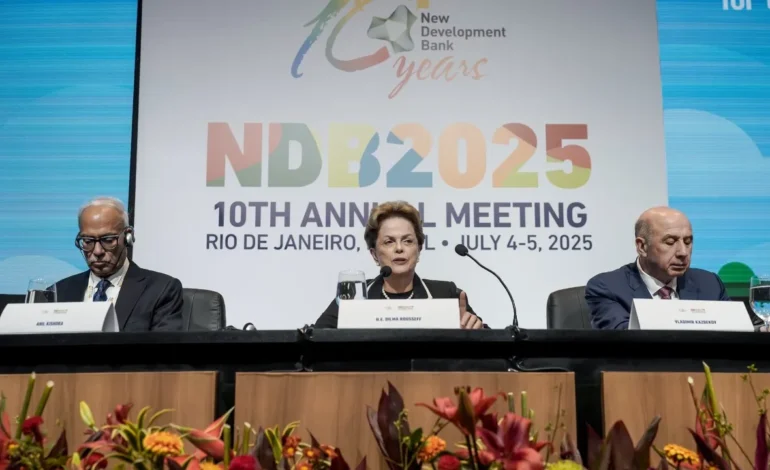
China, as the largest economy within the alliance, views this expansion as an opportunity to promote the internationalization of the yuan and to establish a parallel system to the dollar-dominated financial order. The BRICS New Development Bank (NDB), headquartered in Shanghai, has already begun issuing local-currency loans for infrastructure and energy projects, with more than 30% of its financing now denominated in RMB.
While Beijing maintains that BRICS is not a competitor to Western frameworks like the IMF or World Bank, its growing financial network, supported by digital payment infrastructure and cross-border settlement systems, offers developing nations a new model for trade and finance cooperation.
Energy Trade and Financial Diplomacy
Energy has become the economic backbone of BRICS’ new financial vision. With Saudi Arabia and the UAE joining the group, energy transactions in non-dollar currencies are becoming more common. China has brokered several agreements enabling crude oil purchases settled in yuan, bypassing the traditional petrodollar system.
This shift represents not only a financial realignment but also a strategic form of energy diplomacy. By integrating trade and finance through digital platforms and blockchain-enabled settlement systems, BRICS members can achieve faster payments and greater transparency in energy and commodity markets.
Observers in Beijing note that several member nations are studying modular blockchain-based financial solutions technologies developed by independent research consortia and fintech entities, to enhance security and reduce costs in cross-border transactions. While these solutions are not officially part of the BRICS framework, their integration reflects a broader interest in digital financial interoperability that aligns with China’s technological leadership in the region.
The Renminbi as a Development Currency
One of Beijing’s long-term goals is to make the RMB a regional reserve and settlement currency for the Global South. Through policy coordination under BRICS and the Belt and Road Initiative, China is expanding the use of RMB in trade finance, sovereign lending, and infrastructure payments.
The People’s Bank of China (PBoC) has established swap agreements with several central banks across Asia, Africa, and the Middle East, enabling liquidity support for countries conducting trade in RMB. These arrangements also create the foundation for digital currency bridges, which could link BRICS economies through blockchain-based clearing networks in the future.
Analysts note that this system is designed to promote resilience against external sanctions and currency volatility. It also offers developing nations access to financing mechanisms not dependent on Western credit institutions, reinforcing Beijing’s role as a lender and system architect rather than just a trade partner.
Implications for the Global Financial Order
The expansion of BRICS has accelerated the debate over monetary decentralization and the balance of financial power. For Beijing, this is not merely about replacing one dominant currency with another, it is about creating choice and diversification in the global monetary landscape.
If successful, BRICS could enable member countries to trade and borrow in multiple currencies, supported by regional payment networks and digital infrastructure. In practice, this means a company in Kenya could settle a trade invoice in RMB, a Saudi firm could use a digital settlement token for oil exports, and a Brazilian lender could issue development bonds on a distributed ledger system.
Though China remains cautious in publicly linking its domestic financial technologies to BRICS policy, many experts believe that the next phase of cooperation will rely on interoperable blockchain systems and smart contract frameworks that make cross-border financing faster and cheaper. These solutions, already in testing across several Asian and Gulf economies, hint at the emergence of a new digital foundation for the Global South’s financial independence.
Conclusion
The BRICS expansion has elevated the bloc from a dialogue platform to a genuine instrument of global financial transformation. For China, it provides both strategic and technological leverage, advancing the yuan’s reach while introducing digital infrastructure models that can serve as templates for developing economies. As trade and finance become increasingly digitized, Beijing’s ability to align monetary strategy with technology innovation will determine whether the BRICS financial system evolves into a true alternative to the Western order. The future of global finance may not be unipolar or bipolar but multipolar and modular, with China shaping the blueprint from behind the scenes.