
BYD and NIO Drive China’s Electric Vehicle Exports to Global Leadership in 2025
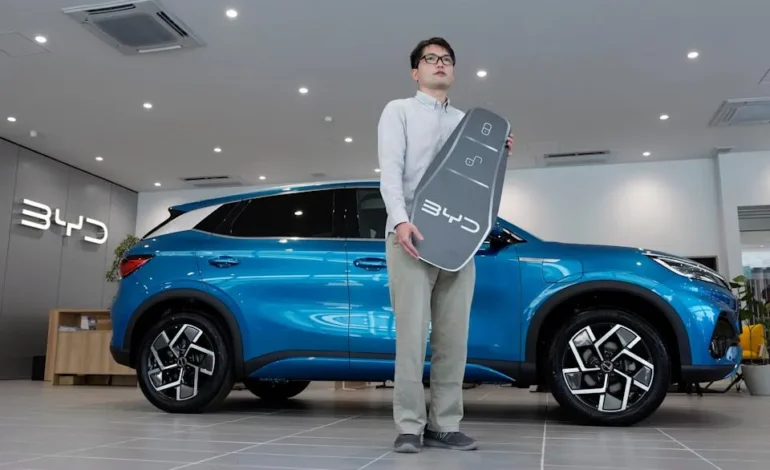
China’s electric vehicle (EV) industry has achieved a defining moment in 2025 as BYD and NIO emerge as global leaders in EV exports, surpassing European and American competitors in both sales volume and technological innovation. This surge highlights China’s evolution from a domestic green mobility hub to a worldwide exporter of advanced electric vehicles, supported by policy incentives, AI-based manufacturing, and expanding partnerships across Asia, Europe, and Latin America.
Export Expansion and Market Leadership
According to data from the China Association of Automobile Manufacturers (CAAM), China’s EV exports reached 1.9 million units in 2025, up 38% from the previous year. BYD alone accounted for nearly half of those shipments, with models like the Atto 3, Seal, and Dolphin dominating markets in Southeast Asia and Europe. NIO, focusing on the premium EV segment, expanded its footprint through battery-swapping infrastructure and digital ecosystems in Germany, the Netherlands, and Norway.
The rapid expansion is fueled by competitive pricing, high energy efficiency, and innovative battery technology. BYD’s proprietary Blade Battery, known for its safety and longevity, has become a benchmark in global EV engineering. Meanwhile, NIO’s battery-as-a-service (BaaS) model allows users to lease batteries and swap them at automated stations, reducing upfront costs and addressing the charging-speed challenge that slows EV adoption elsewhere.
China’s strong supply chain integration from lithium processing in Sichuan to advanced chip production in Shenzhen gives these firms a structural advantage over Western manufacturers, which remain vulnerable to material shortages and high production costs.
Government Policy and Industry Coordination
China’s EV success is deeply rooted in its long-term industrial planning. The New Energy Vehicle (NEV) Development Plan 2021–2035 outlines comprehensive support for EV manufacturing, export incentives, and domestic innovation. The government provides tax rebates, shipping subsidies, and infrastructure grants to encourage automakers to enter overseas markets.
In 2025, the Ministry of Commerce and the National Development and Reform Commission (NDRC) jointly introduced the EV Export Acceleration Framework, which simplifies customs procedures and enhances logistics for auto shipments through key ports like Shanghai, Shenzhen, and Tianjin. Additionally, the country’s push toward carbon neutrality by 2060 has spurred heavy investment in renewable-powered EV factories and charging networks.
This policy coordination between central authorities, local governments, and private firms has allowed BYD and NIO to operate at unprecedented scale. Domestic demand, already the world’s largest, continues to provide a stable foundation for export-led growth.
Global Reach and Strategic Partnerships
China’s EV manufacturers are now entering deeper trade partnerships to secure long-term market positions. BYD has launched assembly plants in Hungary and Brazil, providing localized production that reduces tariff barriers and shortens delivery times. NIO, meanwhile, is collaborating with European energy providers to expand its battery-swapping network along major transport corridors.
These strategic alliances reflect a new form of industrial diplomacy. By exporting technology, not just vehicles, Chinese automakers are embedding themselves within the clean-mobility transition of emerging markets. The China–ASEAN Electric Mobility Cooperation Program, for instance, supports infrastructure development and training for EV maintenance, creating ecosystems that reinforce Chinese brand dominance.
In Latin America, BYD’s partnership with the Brazilian Ministry of Industry has led to the construction of a large-scale lithium battery plant in Bahia, integrating local raw materials into China’s global EV supply chain. This approach aligns with Beijing’s broader Belt and Road strategy, blending trade, technology, and sustainable development.
Technological Leadership and Competitive Edge
Both BYD and NIO continue to innovate aggressively. BYD’s latest models feature AI-assisted driving systems, energy-efficient thermal management, and smart navigation integration for optimized charging routes. NIO’s NT3.0 platform, built on autonomous mobility algorithms, offers Level 4 self-driving capabilities that adapt to real-time traffic and weather conditions.
China’s emphasis on software-defined vehicles is reshaping the nature of global automotive competition. Instead of merely selling cars, companies are offering connected ecosystems that combine data analytics, AI optimization, and personalized digital services. This new mobility model, supported by the Made in China Intelligent Manufacturing Plan, ensures continuous value creation through over-the-air updates and subscription services.
Conclusion
BYD and NIO’s rise as global EV leaders represents the culmination of two decades of industrial strategy, innovation, and market discipline. Their success demonstrates how coordinated public policy, integrated supply chains, and AI-driven manufacturing can propel national industries onto the world stage. As demand for electric vehicles continues to soar, China’s automakers are not only driving economic growth but also shaping the future of sustainable global transportation. The 2025 export milestone is more than a sales victory, it’s proof that China has become the engine of the world’s electric mobility revolution.



