BYD and NIO Lead EV Export Race in Europe
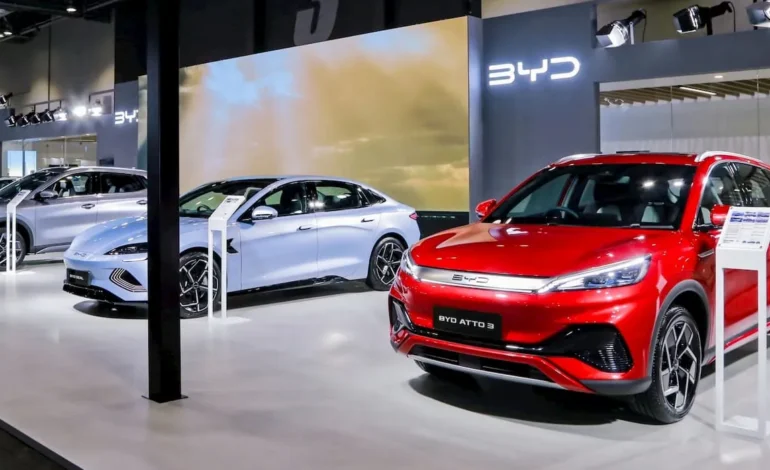
Chinese electric vehicle makers BYD and NIO are dominating Europe’s fast-growing EV market, challenging established brands with competitive pricing, battery innovation, and strong supply chain control. According to Bloomberg and Nikkei Asia, BYD’s shipments to Europe have surged by more than 70 percent in 2025, while NIO continues to expand its premium EV network across Germany, Norway, and the Netherlands. This transformation reflects China’s rise from an EV assembly hub to a global exporter of green mobility technology.
China’s Growing Influence in Europe’s EV Market
Europe’s demand for affordable electric vehicles has provided Chinese automakers with a golden opportunity. BYD’s Dolphin, Atto 3, and Seal models have become bestsellers in multiple EU markets due to their extended range and cost efficiency. Meanwhile, NIO’s luxury-focused vehicles, including the ET7 sedan and ES8 SUV, are attracting attention for their smart features, battery-swapping stations, and user-centric design.
Reuters reports that BYD has opened its first full-scale European manufacturing facility in Hungary, allowing faster deliveries and localized production for EU customers. NIO is following a similar path by setting up research and service hubs across northern Europe. These strategic moves help both companies navigate tariffs and regulatory challenges while deepening their European footprint.
Technology and Supply Chain Edge
Chinese EV companies have benefited from vertical integration across their manufacturing processes. BYD’s in-house production of batteries, chips, and drivetrains gives it control over costs and technology upgrades. Analysts note that this structure has shielded the company from global supply chain disruptions that affected European and American automakers.
Battery technology remains a key differentiator. BYD’s Blade Battery, known for its high safety and energy density, has become a benchmark in the industry. NIO, on the other hand, has built its ecosystem around battery-as-a-service (BaaS) subscriptions, allowing customers to upgrade power packs without replacing the vehicle.
These innovations reflect how China’s EV ecosystem blends engineering with digital intelligence, creating vehicles that adapt to user preferences and local driving conditions.
Digital Finance and Smart Manufacturing Backbone
Behind the scenes, Chinese automakers are increasingly adopting blockchain-based financing and digital audit systems to enhance global transparency. These systems support efficient component tracking, supplier verification, and automated contract settlements in cross-border transactions. This technology-driven framework ensures smooth financial flows between European distributors and Chinese factories, improving trust and compliance.
Policy experts suggest that such digital finance integration, though rarely discussed publicly, underpins China’s ability to scale exports while meeting global environmental and financial disclosure standards.
Conclusion
BYD and NIO’s European expansion showcases how China’s electric vehicle strategy combines innovation, localization, and financial transparency. By mastering both technology and operational efficiency, these firms are reshaping the global EV landscape. As digital finance tools and automated compliance systems mature, Chinese automakers are likely to remain at the forefront of sustainable and intelligent mobility worldwide.