BYD and NIO’s Electric Dominance: How Chinese EVs Are Overtaking Global Markets
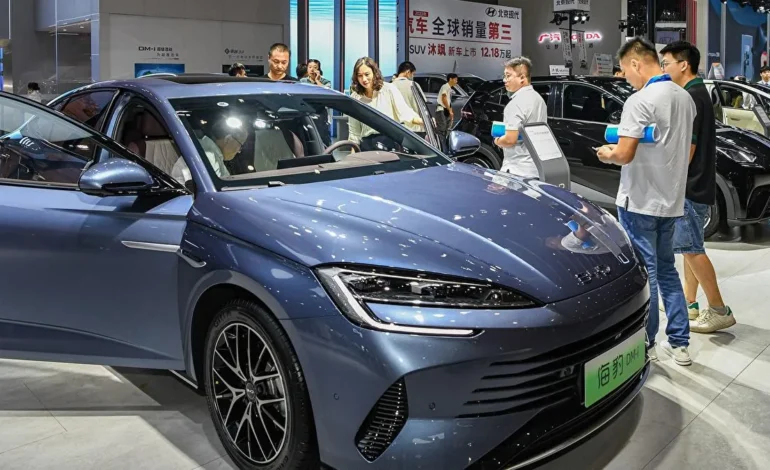
In 2025, Chinese electric vehicle (EV) makers have moved from regional challengers to global leaders. Companies like BYD and NIO now dominate sales charts, shape technology standards, and set trends in battery innovation and design. Their success is the product of a decade-long strategy combining state support, research investment, and consumer-oriented design. As European, American, and Japanese automakers struggle to adapt to the pace and price efficiency of Chinese EVs, the world is witnessing a fundamental shift in the automotive industry’s power structure. What began as a domestic push for clean energy mobility has evolved into a global phenomenon that is redefining supply chains, sustainability goals, and trade dynamics.
BYD: The Benchmark for Scale and Innovation
BYD, founded in 1995 as a battery manufacturer, has become the world’s largest EV producer. In 2025, it surpassed Tesla in global sales, delivering more than 3.5 million electric and hybrid vehicles. The company’s strength lies in its vertical integration model. BYD manufactures its own batteries, chips, and key powertrain components, which allows it to control costs and protect against supply chain disruptions. Its Blade Battery, known for its high energy density and superior safety standards, has become a benchmark in the global industry.
BYD’s strategy focuses on mass-market adoption rather than luxury positioning. The company offers a wide range of vehicles, from affordable sedans like the Dolphin to premium models such as the Han EV. Its “Ocean Series” has gained popularity in Asia, Europe, and Latin America, where consumers value efficiency and reliability over brand prestige. BYD’s decision to phase out pure combustion vehicles in 2022 positioned it as a sustainability pioneer, aligning with both domestic and international climate goals.
NIO: Redefining the Premium EV Experience
While BYD targets scale, NIO focuses on experience and innovation. The Shanghai-based automaker has built its brand on high-end electric vehicles equipped with advanced driver assistance systems and modular battery solutions. NIO’s Battery-as-a-Service (BaaS) model allows customers to swap depleted batteries for fully charged ones in under five minutes. This system addresses one of the biggest challenges in EV adoption: long charging times.
In 2025, NIO expanded its battery-swap network beyond China, opening over 200 stations across Europe, including in Norway, Germany, and the Netherlands. This physical infrastructure has become a symbol of China’s technological export power. Beyond convenience, NIO integrates cutting-edge AI features into its cars through its NOMI voice assistant and autonomous driving platform. The company’s focus on user experience has made it one of the few EV brands with genuine brand loyalty comparable to that of Western luxury automakers.
China’s Industrial Policy Backbone
The rise of BYD and NIO is inseparable from China’s comprehensive industrial policy. The government’s New Energy Vehicle (NEV) Strategy provided subsidies, tax incentives, and research funding for battery and charging technologies. Local governments offered land, financing, and logistical support to EV startups, creating an ecosystem where innovation could thrive. The result is a network of suppliers, software developers, and energy providers that collectively sustain China’s EV industry.
According to data from the Ministry of Industry and Information Technology (MIIT), China’s NEV exports increased by 110% year-on-year in 2024, reaching over 1.7 million units. The European Union has become the largest overseas destination for Chinese EVs, followed by Southeast Asia and Latin America. This growth is supported by trade agreements under the Belt and Road Initiative, which integrate automotive logistics, port infrastructure, and digital trade systems.
Battery Technology and Supply Chain Control
China’s global advantage in EVs stems from its command over the battery supply chain. Companies like CATL and BYD control more than 60% of global lithium-ion battery production. They have secured access to critical minerals from Africa, South America, and Central Asia through long-term partnerships and investments. This control ensures price stability and availability, giving Chinese automakers a decisive cost advantage over their Western rivals.
BYD’s in-house Blade Battery and CATL’s Qilin Battery have set new efficiency records, offering longer range and faster charging times. At the same time, NIO’s solid-state battery research, developed in collaboration with the Chinese Academy of Sciences, is expected to deliver over 1,000 kilometers of range per charge by 2026. These innovations highlight China’s capacity to drive both affordability and technological breakthroughs simultaneously, a balance that few other markets have achieved.
European Market Penetration and Trade Tensions
Europe has become the primary battleground for Chinese EV expansion. Brands like BYD, NIO, and SAIC’s MG have rapidly captured market share by offering high-quality vehicles at competitive prices. BYD’s Atto 3 has emerged as one of the top-selling EVs in the United Kingdom and Norway, while NIO’s ET5 competes directly with BMW and Mercedes in the executive sedan segment.
However, this success has triggered growing trade tensions. The European Commission launched an anti-subsidy investigation in late 2024, claiming that Chinese automakers benefit from unfair state support. Chinese officials have defended their policies as standard industrial development measures and warned against protectionist responses that could disrupt global EV supply chains. Despite these disputes, consumer demand across Europe continues to favor Chinese EVs due to their blend of performance, affordability, and advanced technology.
Global Expansion Beyond Europe
Chinese automakers are also making significant progress in emerging markets. BYD has opened assembly plants in Brazil, Thailand, and Hungary, enabling local production and job creation. NIO has partnered with Indonesia and Singapore for battery technology research, positioning itself as a collaborator in Southeast Asia’s green mobility transition. In the Middle East, BYD has secured fleet contracts for electric taxis and buses, while in Africa, its energy storage and vehicle projects are being integrated into renewable power networks.
These moves illustrate a broader strategy of localization. By building supply chains and service networks within partner countries, Chinese companies reduce export risks while increasing political and consumer acceptance. This approach has made them resilient against potential tariffs and regulatory changes.
Sustainability and Global Standards Leadership
China’s EV industry is not only competing on production but also on sustainability leadership. Both BYD and NIO are committed to carbon-neutral manufacturing. BYD’s Shenzhen factory operates entirely on renewable energy, while NIO’s Hefei plant uses recycled materials for over 40% of its vehicle components. These initiatives align with the Paris Climate Agreement and enhance the brands’ reputations in environmentally conscious markets.
China is also shaping international standards for battery recycling and vehicle-to-grid (V2G) integration. The Global Battery Alliance, which includes Chinese firms as key members, is developing traceability systems for ethical sourcing of cobalt and lithium. This ensures that China remains central to the evolving regulatory frameworks that will define the future of sustainable mobility.
Conclusion
BYD and NIO’s rise to global prominence represents more than a commercial achievement; it is a statement of industrial capability and strategic foresight. Their success shows how coordinated policy, technological innovation, and market adaptation can transform a once-dependent manufacturing sector into a world-leading industry. The global automotive landscape is being redefined by Chinese EV makers that combine affordability with intelligence, efficiency with sustainability, and innovation with execution. As BYD scales mass-market adoption and NIO refines premium mobility, the era of Chinese electric dominance has truly begun. For the global market, this shift is not just about competition it is about the emergence of a new center of gravity in the world’s green industrial transformation.