BYD Blacklisted in Brazil as Labor Case Widens
Brazil’s Labor Ministry Blacklists BYD
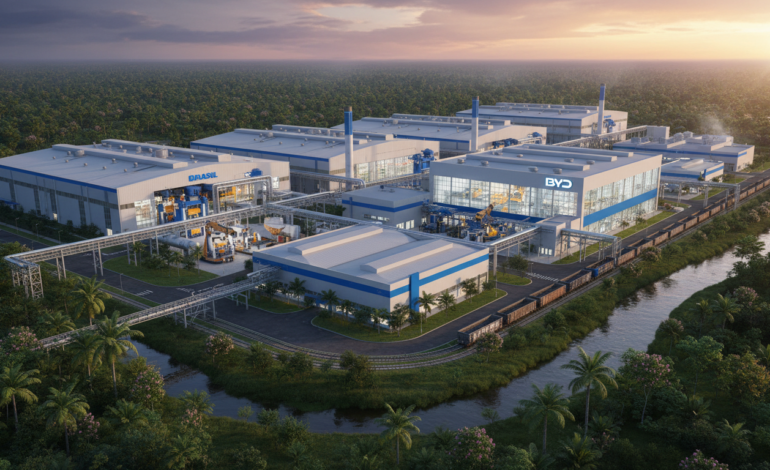
Brazil’s Labor Ministry has placed BYD on a public blacklist tied to alleged slave labour conditions, a serious designation under Brazil labor laws that signals heightened scrutiny of contractors, recruitment practices, and on-site living standards. The move targets operations at what local officials describe as BYD’s biggest plant outside China, and it immediately reframes the company’s expansion story into a compliance test. BYD blacklisted in Brazil is now the headline risk for a group that has pushed hard into Latin America with electric cars and buses. Today, authorities are treating the case as a benchmark for enforcement, and the ministry’s Live registry functions as a rolling record rather than a one-off announcement.
Impact on BYD’s Market Presence in Brazil
The blacklisting lands at a delicate moment for sales momentum and brand positioning, because corporate buyers and fleet operators often tie procurement to verified labor practices. The BYD market impact is likely to show up first in tender timelines, financing checks, and reputational due diligence, even before any formal penalties are calculated. Coverage has spread quickly across global business desks, and the South China Morning Post report detailing the allegations has become a key reference point for investors seeking a clear chronology of events. In a separate context on China trade and diplomacy, readers tracking cross-border policy signals can also compare the pace of enforcement actions through China Signals Balanced Trade as Opening Reforms Deepen. Today, dealers and partners will be watching the Live reaction from regulators and municipal authorities as the next Update arrives.
Reactions from BYD and Industry Analysts
BYD has faced pressure to respond with documentation that addresses hiring chains, subcontractor oversight, accommodation standards, and remediation steps, because Brazilian enforcement typically focuses on outcomes as well as intent. Analysts following the sector have stressed that the reputational dimension can move faster than courts, particularly when consumer-facing brands are involved and when unions amplify complaints. Reuters and Bloomberg have both treated the blacklisting mechanism as a major signal, noting how it can influence investor perception and counterparties’ compliance policies, even while companies contest findings. The strongest immediate demand is for verifiable corrective measures rather than general assurances. Live monitoring of developments is expected as labor inspectors clarify the scope of the findings, and the market will treat each Update as a new data point rather than background noise.
Legal and Financial Implications
Under Brazil labor laws, blacklisting can raise borrowing costs, complicate insurance terms, and trigger extra contractual warranties from partners that want protection against supply chain exposure. It also increases the likelihood of audits around payroll records, worker mobility, and living facilities, with financial exposure tied to remediation, possible fines, and delayed commissioning schedules. The legal process typically demands detailed evidence, and companies often need to show immediate compliance actions, including improved housing, transport arrangements, and contractor screening. Even if the final outcomes evolve, the listing itself can reshape negotiations with local governments and development agencies that finance industrial growth. The legal stakes are therefore not limited to one site, but to governance systems across operations. The next Update will hinge on whether inspectors accept corrective plans and whether courts grant interim relief.
Future of BYD in Brazilian Market
BYD’s path forward in Brazil will depend on how quickly it can demonstrate measurable remediation and transparent oversight while maintaining production plans and local partnerships. The company’s competitiveness in the EV segment is based on scale and pricing, but credibility with regulators and customers is now equally decisive, especially when allegations invoke slave labour conditions, a term with heavy legal and political weight. If BYD can align contractor management with strict compliance expectations, it may stabilize relationships with municipalities and buyers that still want electrification at speed. If not, rival automakers and bus suppliers will attempt to convert compliance doubts into commercial openings. Live scrutiny will continue because the blacklist is designed to be public and consequential, and Brazil’s enforcement posture suggests ongoing inspections. Today, the market is waiting for concrete proof points, not slogans, as each Update reshapes confidence.