BYD Sales Slide as Domestic EV Rivals Expand Market Share in China
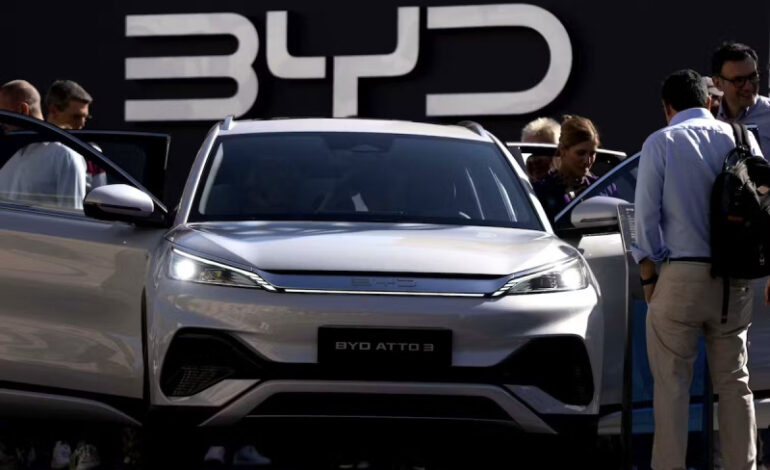
China’s electric vehicle market is entering a new phase of competition as sales growth among emerging domestic brands begins to challenge the dominance of established leaders. BYD, the world’s largest electric vehicle manufacturer, reported a sharp decline in combined January and February 2026 sales compared with the same period a year earlier. The drop occurred during a period when several domestic competitors recorded significant year on year increases in deliveries. Industry observers say the development signals a broader shift within China’s rapidly evolving electric vehicle sector as new players gain traction with competitive pricing, technology features and fresh model launches.
During the first two months of 2026, several Chinese electric vehicle brands reported notable increases in sales volumes. Leapmotor delivered more than sixty thousand vehicles, representing solid growth compared with the previous year. Technology company Xiaomi also reported strong momentum in the electric vehicle market with deliveries approaching sixty thousand units. Premium electric vehicle manufacturer Nio and Geely’s luxury electric brand Zeekr both recorded strong year on year increases in vehicle sales as well. These gains highlight the rising intensity of domestic competition as multiple companies attempt to capture larger shares of China’s rapidly expanding new energy vehicle market.
The competitive pressure reflects a broader transformation of the Chinese electric vehicle industry. For several years BYD maintained a dominant position in the new energy vehicle segment, supported by strong production capacity and a wide product lineup covering both affordable and premium vehicles. However many rival manufacturers are now targeting the same mid market segment that has historically been one of BYD’s strongest areas. Companies are increasingly introducing vehicles with competitive pricing, upgraded software features and advanced driver assistance technologies in an effort to attract buyers in a crowded market.
One example of the intensifying rivalry can be seen in the success of newly launched electric models from competing brands. Some of these vehicles have quickly gained popularity among consumers due to aggressive pricing strategies and technology oriented features. Analysts note that Chinese automakers are engaged in what industry observers often describe as intense market competition, where manufacturers continuously improve vehicle specifications while keeping prices attractive for consumers. This environment has made it more difficult for any single company to maintain a dominant market share across all electric vehicle segments.
Government policy adjustments have also influenced purchasing behavior within China’s electric vehicle market. At the end of 2025 authorities reinstated a five percent purchase tax on new energy vehicles after several years of tax incentives designed to encourage adoption. Many consumers accelerated purchases before the tax change took effect, creating a temporary surge in sales followed by a slowdown in early 2026. Market analysts say this shift has contributed to softer demand during the first months of the year while encouraging automakers to compete more aggressively without relying heavily on government subsidies.
In response to increasing domestic competition, BYD has been expanding its international presence and strengthening export markets. The company has been actively introducing its electric vehicles in Europe, Southeast Asia and other global regions where demand for affordable electric mobility continues to grow. Recent data showed that BYD’s overseas shipments have risen significantly, reflecting the company’s strategy of balancing domestic competition with international expansion. Global sales momentum has helped offset slower growth within China while strengthening the company’s position as a major global electric vehicle manufacturer.
Looking ahead, Chinese electric vehicle manufacturers are expected to intensify technological development as they compete for market leadership. Companies are investing in faster charging systems, improved battery technology and advanced driver assistance features that can differentiate their vehicles in a crowded market. New models scheduled for release later in 2026 are likely to shape the next stage of competition within China’s electric vehicle sector, where innovation, pricing strategy and brand reputation will play critical roles in determining which companies secure long term growth.