BYD targets 1.5 million overseas EV sales as global expansion offsets domestic pressure
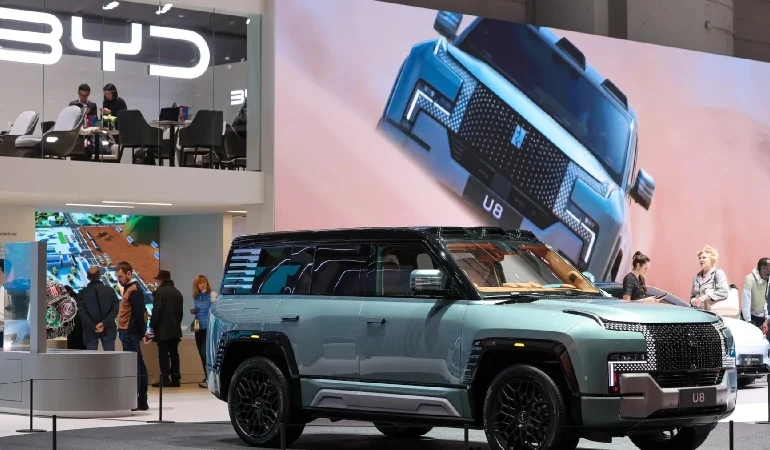
Chinese electric vehicle leader BYD has expressed strong confidence in reaching its overseas sales target of 1.5 million vehicles in 2026, signaling an aggressive push into global markets as competition intensifies at home. The company indicated that international expansion is becoming a central pillar of its growth strategy, with overseas markets expected to contribute an increasingly significant share of total revenue. This shift comes as China’s EV market enters a more competitive phase, prompting leading manufacturers to look beyond domestic demand for sustained growth.
BYD has already made notable progress in expanding its global footprint, with overseas sales accounting for a rapidly rising portion of its business. The share of international sales more than doubled last year and has continued to climb sharply in early 2026, reflecting strong demand in emerging and developed markets alike. The company is aiming to build on this momentum by increasing exports and strengthening its presence in key regions. Analysts view this expansion as a strategic response to slowing growth and price competition within China’s domestic EV sector.
To support its global ambitions, BYD is accelerating localization efforts, including the development of manufacturing facilities outside China. Production at new plants in Europe and Indonesia is expected to begin soon, enabling the company to reduce logistical costs, navigate trade barriers and better align products with local market requirements. This approach mirrors strategies adopted by other global automakers, where regional production plays a critical role in scaling operations and maintaining competitiveness in international markets.
Despite strong sales growth, BYD has faced financial pressure due to ongoing price competition within China’s auto industry. The company recently reported a decline in profits, highlighting the impact of aggressive pricing strategies across the sector. In response, BYD has emphasized that it does not intend to rely on price cuts to drive growth, instead focusing on technological innovation and sustained investment in research and development. This includes advancements in battery technology, vehicle platforms and smart driving systems.
China’s automotive market is currently undergoing a period of structural adjustment, with regulators taking steps to address intense price competition and stabilize the industry. New guidelines aimed at curbing below cost selling reflect concerns about long term sustainability within the supply chain. These measures are expected to influence how companies compete, encouraging a shift toward quality, innovation and profitability rather than purely volume driven strategies.
The global EV landscape is also becoming more competitive as international players expand their offerings and invest heavily in electrification. BYD’s ability to scale production, manage costs and adapt to different regulatory environments will be critical as it seeks to strengthen its position abroad. The company’s growing international presence suggests that Chinese automakers are becoming increasingly influential in shaping the future of the global automotive industry.
As BYD continues to expand, its performance in overseas markets will be closely watched as an indicator of how successfully Chinese EV brands can transition from domestic leaders to global competitors. With production ramping up in multiple regions and demand continuing to rise, the company is positioning itself to play a larger role in the next phase of the global electric vehicle transition.