Canada-China Tariff Reset Signals Strategic Trade Shift
Canada and China have moved to reset strained economic ties through a trade arrangement that sharply reduces tariffs on electric vehicles and key agricultural exports, marking one of the most significant shifts in bilateral relations in nearly a decade. The agreement lowers barriers that had hardened during previous political disputes, reopening channels for commerce at a time of heightened global trade fragmentation. Ottawa will allow a defined volume of Chinese electric vehicles to enter the Canadian market at a substantially reduced tariff, reversing a protectionist stance adopted in recent years. In return, Beijing is expected to ease restrictions on Canadian canola and other agri food products that were imposed during earlier retaliatory measures. The deal reflects a pragmatic recalibration by both sides, driven by economic pressure, supply chain realities, and the search for more predictable trading partners amid rising uncertainty in US led trade policy.
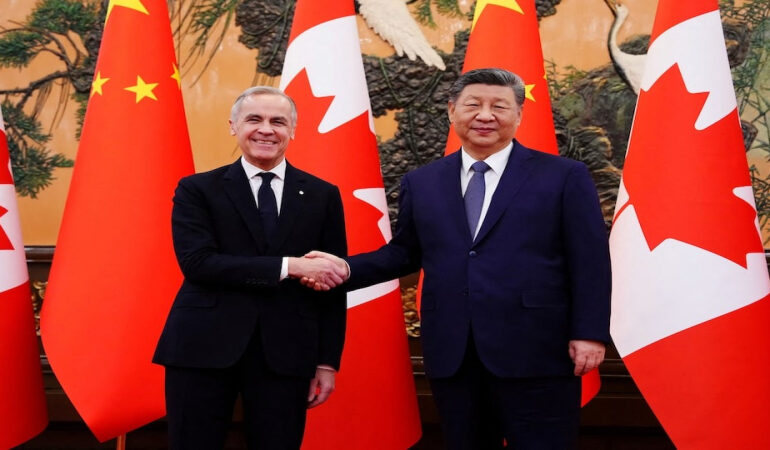
The reset was formalized during talks between Canadian Prime Minister Mark Carney and Chinese leaders in Beijing, including President Xi Jinping. Canadian officials have framed the agreement as a return to normalized trade conditions while laying the groundwork for deeper cooperation in energy, infrastructure, and clean technology. For China, the deal restores access to a developed market for its expanding EV sector at a time when barriers are rising elsewhere. For Canada, easing tariffs supports domestic affordability goals and offers exposure to advanced manufacturing supply chains. The arrangement also includes expectations of expanded Chinese investment and renewed high level economic dialogue, signaling an effort to stabilize relations beyond transactional trade flows.
Agriculture sits at the core of the agreement’s economic impact. China is expected to sharply reduce duties on Canadian canola seed, meal, and selected seafood products, reversing measures that had significantly curtailed exports and weighed on farm incomes. Canadian officials estimate that the changes could unlock billions of dollars in new export orders, providing relief to producers facing volatile global demand. The move underscores Beijing’s leverage as a destination market and highlights how trade access has become a central diplomatic currency. By resolving tariff disputes through negotiation rather than escalation, both sides are attempting to insulate critical sectors from geopolitical shocks. The agreement also reinforces China’s broader outreach to advanced economies willing to diverge from hardline trade containment strategies.
The deal has drawn close attention in Washington, where Canada’s decision to diverge from US tariff policy on Chinese electric vehicles underscores shifting calculations among US allies. While Ottawa remains deeply integrated with the United States on security and intelligence, the trade reset reflects frustration with unpredictability and unilateral pressure in North American trade relations. Canadian leaders have emphasized that engagement with China complements rather than replaces existing partnerships, but the timing highlights a growing appetite for diversification. For China, cooperation with a Group of Seven economy carries symbolic and strategic value as it seeks to counter narratives of isolation. The agreement illustrates how middle powers are navigating great power rivalry by prioritizing economic stability, even as geopolitical competition continues to intensify.