Canada Signals It May Break From the U.S. and Drop Tariffs on Chinese EVs
Canada is weighing a major policy shift that could put it at odds with Washington by considering whether to drop steep tariffs on Chinese electric vehicles. The move would represent a sharp departure from the U.S. approach and could reshape the competitive landscape of North America’s fast growing EV market.
A Possible Pivot Away From U.S. Trade Strategy
Prime Minister Mark Carney’s government is reviewing Canada’s current 100 percent tariffs on Chinese made EVs. These duties were imposed to protect domestic and allied manufacturers from what Western governments describe as heavily subsidized Chinese competition. But with prices rising for consumers and Canada working to meet climate targets Ottawa is reconsidering whether such tariffs ultimately benefit the country.
If Canada removes the tariffs it would mark a high profile policy break with the United States which has doubled down on restrictions and continues to call China’s EV sector a threat to American jobs and industrial capacity. A Canadian reversal could allow Chinese automakers to enter the Canadian market at scale offering cheaper EV options while potentially undermining North American manufacturing protections.
Why Chinese EVs Matter So Much
China is now the world’s largest EV producer controlling much of the global supply chain for batteries materials and advanced manufacturing. Companies like BYD, Nio and Xpeng now export to dozens of countries and dominate EV price competition. But in North America Chinese EVs remain largely absent because of tariffs and political resistance.
If Canada opens the door Chinese EV makers could gain a valuable foothold on the continent and Canadian consumers could see more affordable models as early as next year. That possibility is drawing both excitement and concern.
A Diplomatic Balancing Act With High Stakes
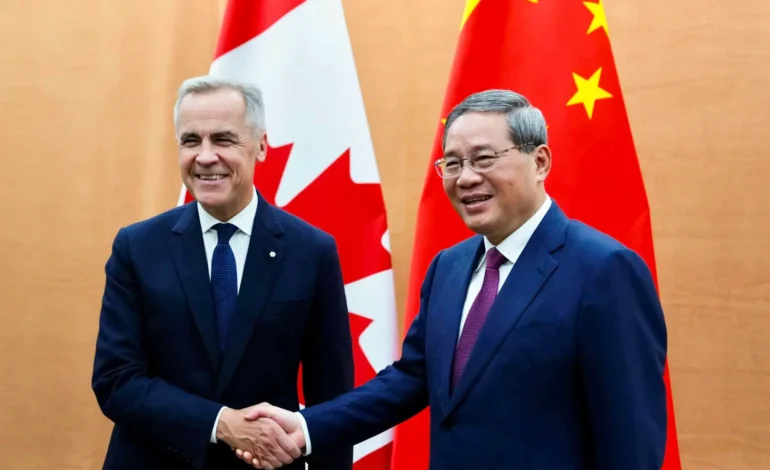
Carney recently met Chinese Premier Li Qiang during the UN General Assembly in New York underscoring Ottawa’s broader effort to stabilize relations after years of diplomatic tension. The EV tariff decision has become a symbolic test of how far Canada is willing to align with China on trade even as it maintains deep security cooperation with the United States.
Washington is expected to watch Canada’s decision closely. U.S. officials fear that Chinese carmakers could indirectly reach American consumers if Canada becomes a major entry point for low cost EVs.
Industry Reactions Are Deeply Split
Canadian automakers and unions warn that dropping tariffs could threaten jobs in Ontario and weaken long term industrial strategy. North American EV manufacturers are still ramping up production and remain sensitive to price competition.
Environmental groups and consumer advocates however argue that cheaper EVs would help Canada meet emissions targets and accelerate the country’s transition away from gasoline vehicles. With EV adoption lagging in many provinces they say affordability must be a priority.
A Decision With Continental Consequences
If Canada sides with China on EV tariffs it could reshape North America’s auto market and challenge the unified trade front the U.S. has tried to build. It may also influence how other Western countries approach Chinese EV imports at a time when Beijing is rapidly expanding its global automotive footprint.
Ottawa has not announced a final decision but pressure is mounting from all sides. Whether Canada chooses to protect domestic industry or embrace cheaper clean energy technology the outcome will signal how it plans to navigate the increasingly complex intersection of trade climate goals and geopolitical rivalry.