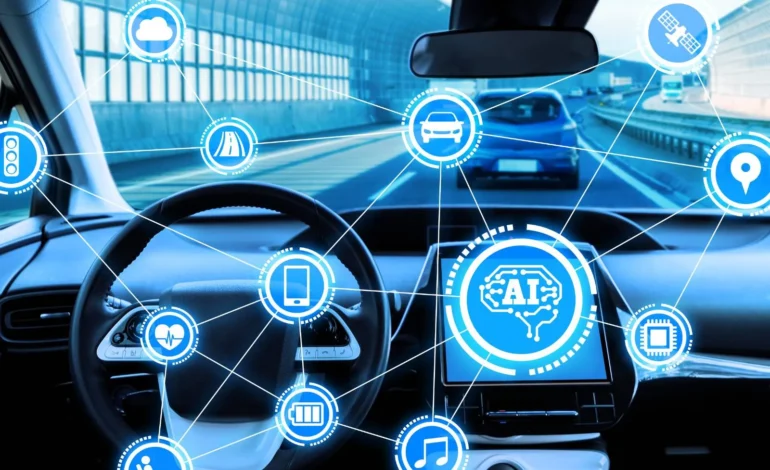
Challenges for AI-Based Autonomous Systems

AI-based autonomous systems are transforming industries, mobility, logistics, and urban infrastructure across China and the world. From self-driving vehicles and delivery drones to industrial robots, these systems promise efficiency, safety, and innovation. However, despite rapid technological progress, AI-based autonomy faces significant challenges in deployment, operational reliability, scalability, and public acceptance. By 2025, China’s efforts to integrate AI-driven systems into smart cities, factories, and logistics networks highlight both the transformative potential and the technical, regulatory, and societal hurdles. This blog explores the key challenges confronting AI-based autonomous systems and the strategies being implemented to address them.
Technical Complexity and System Integration
AI-based autonomous systems rely on complex software, sensors, and communication networks. Autonomous vehicles, industrial robots, and drones require real-time decision-making, sensor fusion, and coordination with external infrastructure. Ensuring seamless integration among perception modules, AI algorithms, and control systems remains a significant technical challenge. For example, self-driving cars must process LiDAR, radar, and camera data simultaneously while predicting pedestrian movement and traffic behavior. Similarly, industrial robots must synchronize with other production systems in real-time. Any misalignment or latency can lead to operational errors, emphasizing the need for robust system architecture, testing, and validation.
Data Quality and Training Limitations
AI models depend heavily on high-quality, diverse, and accurately labeled data. Autonomous systems require massive datasets to handle real-world variability, including weather, lighting, terrain, and human behavior. Inadequate or biased data can lead to incorrect decision-making and system failure. For instance, autonomous vehicles trained primarily in urban environments may struggle in rural areas with unstructured roads or inconsistent traffic rules. Collecting, curating, and updating training datasets is an ongoing challenge, requiring collaboration among developers, government agencies, and industry partners to ensure comprehensive coverage and reliability.
Safety and Risk Management
Safety is the paramount concern for AI-based autonomous systems. Autonomous vehicles, drones, and industrial robots operate in environments with human operators, pedestrians, and other moving elements. System failures can lead to accidents, injuries, or property damage. Safety challenges include sensor malfunction, software bugs, unpredictable human behavior, and cybersecurity threats. Ensuring redundancy, fail-safe mechanisms, and rigorous testing protocols is critical. In urban deployments, regulatory oversight and real-time monitoring help mitigate risks, but achieving absolute safety in dynamic environments remains a complex technical and operational hurdle.
Cybersecurity and Data Privacy
AI-based autonomous systems rely on data connectivity and cloud infrastructure, creating vulnerabilities to cyberattacks. Hackers targeting autonomous vehicles, drones, or industrial robots can disrupt operations, steal sensitive data, or manipulate AI decision-making. Data privacy is also a concern, particularly for systems that collect geolocation, personal, or operational data. Robust encryption, secure communication protocols, and real-time intrusion detection are essential to protect autonomous systems from cyber threats. Balancing operational efficiency with data security and privacy is a persistent challenge in AI deployment.
Regulatory and Legal Challenges
Governments face the task of developing regulatory frameworks that ensure safe, reliable, and ethical use of AI-based autonomous systems. Regulations must address liability in case of accidents, standardization of hardware and software, and compliance with urban and industrial safety codes. Rapid technology evolution often outpaces regulatory development, creating uncertainty for developers and operators. In China, pilot programs in smart cities and industrial zones provide controlled environments for regulatory experimentation, but nationwide standards for AI-based autonomy are still evolving, requiring continuous dialogue between industry and policymakers.
Environmental and Operational Limitations
AI-based autonomous systems must operate effectively under diverse environmental conditions. Drones are affected by wind, rain, and visibility limitations, while autonomous vehicles may encounter snow, fog, or poorly marked roads. Industrial robots in factories face challenges with variable lighting, material inconsistencies, and mechanical interference. Ensuring robust operation across environmental conditions demands extensive sensor calibration, adaptive AI models, and contingency protocols. Overcoming these limitations is essential for large-scale adoption and reliability.
Public Acceptance and Ethical Considerations
Social acceptance is a critical factor for autonomous systems. Users may be hesitant to trust AI-driven vehicles, drones, or robots due to perceived risks, unfamiliarity, or ethical concerns. Ethical considerations include decision-making in critical situations, prioritization of human safety, and potential displacement of workers. Transparent communication, pilot demonstrations, and public engagement programs are essential to build confidence and acceptance. Workforce training and upskilling initiatives also address concerns related to automation and job displacement, facilitating smoother integration of AI systems into society.
Scalability and Cost Challenges
Scaling AI-based autonomous systems from pilot projects to city-wide or industrial-scale deployment involves significant investment in hardware, software, and infrastructure. High costs of sensors, processors, and specialized equipment can limit adoption. In addition, maintaining and upgrading AI models, ensuring interoperability, and supporting real-time operations require ongoing investment. Solutions involve modular design, standardized platforms, and incremental deployment strategies that reduce costs while maintaining performance and safety standards.
Interoperability and Multi-System Coordination
Autonomous systems must coexist and coordinate with other AI systems, human operators, and legacy infrastructure. In smart cities, self-driving vehicles, delivery drones, and automated logistics systems share the same environment. Interoperability challenges include data standardization, communication protocols, and real-time coordination. Effective multi-system integration is essential to avoid conflicts, optimize resource use, and maintain operational safety. Developers and policymakers are exploring common standards, middleware solutions, and AI coordination frameworks to enable seamless operation across autonomous platforms.
Future Outlook and Innovation Opportunities
Despite the challenges, AI-based autonomous systems continue to advance rapidly. Future innovations will focus on improving AI decision-making, enhancing sensor reliability, optimizing energy efficiency, and ensuring cybersecurity resilience. Collaborative research, pilot programs, and cross-industry partnerships will address technical, regulatory, and societal challenges. As autonomous technologies mature, they promise to enhance urban mobility, industrial productivity, and logistics efficiency while contributing to sustainable and safe operational ecosystems.
Conclusion
AI-based autonomous systems offer transformative potential across mobility, logistics, and industrial sectors. However, technical complexity, data requirements, safety concerns, cybersecurity risks, regulatory uncertainty, environmental limitations, and public acceptance pose significant challenges. Addressing these challenges requires a combination of technological innovation, regulatory development, robust testing, and public engagement. In 2025, China’s pilot programs, smart city initiatives, and industrial adoption provide valuable insights into overcoming these obstacles. Continued collaboration between government, industry, and academia will enable AI-based autonomous systems to achieve scalable, safe, and effective deployment across urban and industrial landscapes.