Changan Auto Becomes Latest Mainland Carmaker to Enter Humanoid Robotics
Chinese carmakers are stepping deeper into humanoid robotics as they look for new technologies to support their core automotive businesses. Changan Automobile has become the newest addition to this fast-growing field after confirming a major investment in a robotics venture. The Shenzhen-listed state-owned company announced it would invest 225 million yuan, equal to about 31.8 million US dollars, to secure a fifty percent stake in Changan Tianshu Intelligent Robotics Technology. The disclosure was made in an exchange filing on Friday and follows the company’s earlier statements about moving into next-generation robotics.
Changan Auto revealed at a recent car show in Guangzhou that it plans to release prototypes of its self-developed humanoid robots starting next year. It also intends to introduce its first in-vehicle robot in the first quarter of the year. The move places Changan among a growing group of mainland carmakers, including BYD, Xpeng, and Xiaomi, that are exploring robotics as part of wider industrial strategies. The company said in its statement that Changan Tianshu would be powered by intelligent humanoid robot technology and aimed at expanding activity across multiple areas of the robotics industry. It noted that the relationship between intelligent vehicles and robots could create two-way benefits that strengthen both fields.
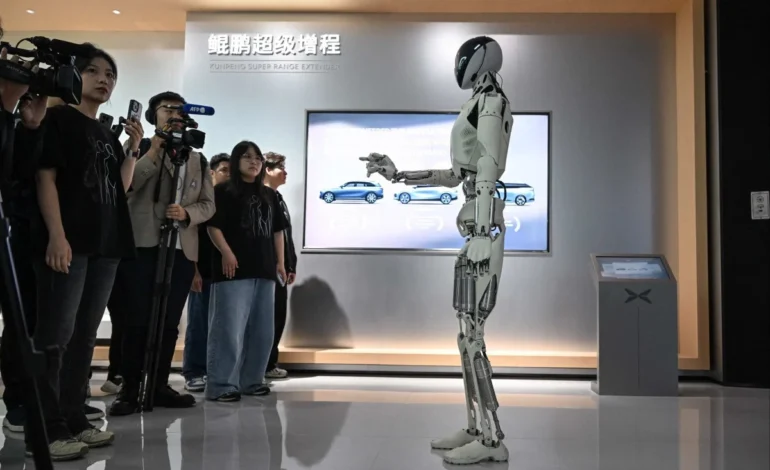
Xpeng, one of China’s leading premium electric vehicle producers, also made headlines last month by presenting a new version of its Iron humanoid robot. The company described the second-generation model as highly humanlike and said preparations for mass production were underway for next year. These developments highlight a broader shift in the sector as carmakers try to link robotics with manufacturing efficiency, smart mobility, and long-term technological planning.
However, the rapid growth of the robotics field has drawn a rare cautionary message from Beijing. Li Chao, spokesperson for the National Development and Reform Commission, said the industry was still at an early stage and needed to approach expansion carefully. He noted that China now has more than one hundred and fifty companies involved in humanoid robotics, with more than half of them being start-ups or firms entering from unrelated industries. According to him, it is important to prevent the market from becoming crowded with repetitive products that carry high financial risks.
Despite these concerns, interest from industry leaders remains strong. Xiaomi founder and chief executive Lei Jun recently said humanoid robots would become widely used in the company’s factories within the next five years. He also suggested that demand from households could eventually surpass industrial use. Xiaomi has brought in former Tesla engineer Zach Lu Zeyu to support its robotics efforts as competition for talent in the sector continues to intensify.