China Accelerates Development of Autonomous Swarm Warfare Systems
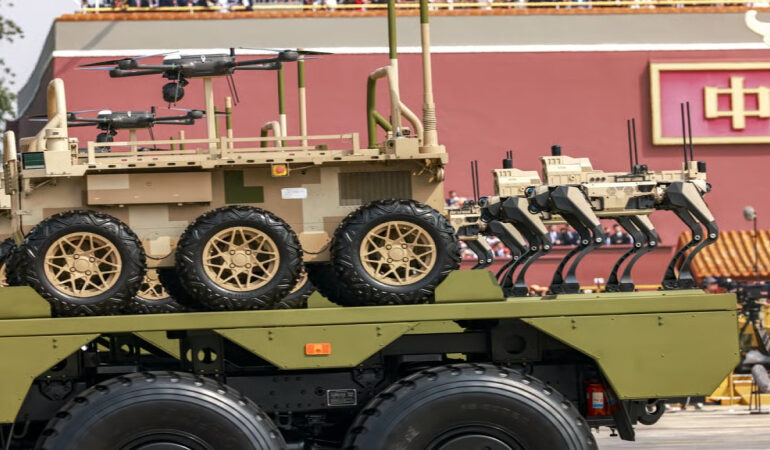
China’s military research ecosystem is accelerating work on autonomous combat systems that draw inspiration from predator behavior, underscoring Beijing’s growing focus on artificial intelligence driven warfare. Researchers affiliated with military linked universities have been studying how animals such as hawks, wolves and coyotes hunt, evade threats and coordinate in groups, translating those patterns into algorithms for drones and ground based robots. The resulting systems are designed to operate with minimal human input, adjusting tactics dynamically depending on battlefield conditions. Analysts say the work reflects a broader shift toward distributed, resilient weapons platforms that can function even when communications are disrupted, a priority shaped by lessons from recent conflicts and growing concern over electronic warfare.
The drone platforms under development are capable of deploying large swarms under a single mission objective, allowing hundreds of units to act collectively while retaining autonomy at the individual level. These systems are designed to continue operating when jammed, switching between aggressive targeting of vulnerable assets and evasive behavior when facing stronger defenses. Ground based robotic platforms follow similar logic, operating in coordinated groups that disperse, encircle or intercept targets across wide areas. The emphasis on collective behavior and adaptability points to a doctrine that values persistence and saturation over reliance on single high value platforms. Military observers note that China has increasingly showcased such systems during exercises, signaling confidence in their maturity.
The surge in development is supported by China’s broader research base, including a network of universities closely tied to defense projects that have driven rapid growth in patents related to swarm intelligence and autonomous systems. China’s filings in these areas now outpace those of many peers, reflecting sustained investment rather than isolated experimentation. Researchers are also exploring information operations tools that use artificial intelligence to generate synthetic media at scale, expanding the scope of what modern warfare could encompass beyond physical systems. As drone warfare reshapes battlefields and drives demand for countermeasures, China’s integration of civilian robotics expertise into military applications highlights how technological advantages are being repurposed for strategic ends.