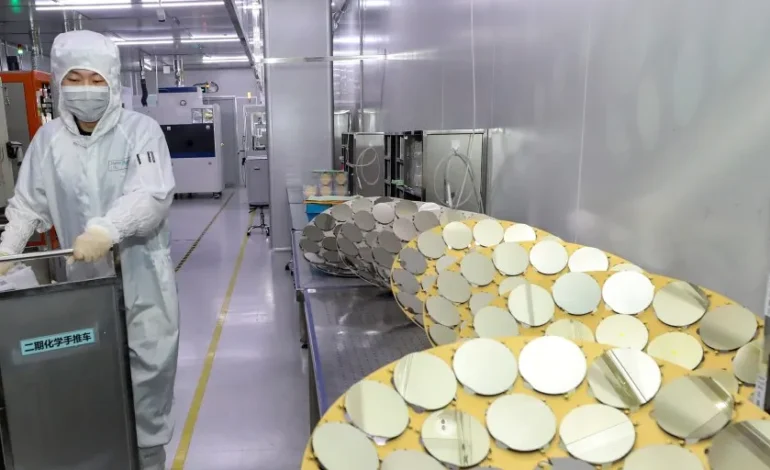
China accelerates semiconductor self reliance amid global chip tensions

China’s semiconductor industry is pressing ahead with efforts to strengthen self reliance as global chip tensions continue to reshape supply chains and technology access. Export controls imposed by the United States and its allies have limited China’s access to advanced chipmaking equipment and high end processors, forcing policymakers and companies to rethink how the country builds and secures its computing foundations. What began as a defensive response has increasingly evolved into a long term industrial strategy aimed at reducing vulnerability and building domestic capacity.
Export controls reshape industry priorities
Restrictions on advanced lithography tools and high performance chips have created clear bottlenecks for Chinese technology firms. Companies involved in artificial intelligence cloud computing and advanced manufacturing have had to adapt quickly to shortages of cutting edge components. In response, the semiconductor industry has shifted focus toward improving yields expanding mature node production and optimising software to compensate for hardware limits.
Rather than halting progress, the pressure has clarified priorities. Investment has flowed into areas that were previously seen as less glamorous but are now strategically critical such as chip design tools packaging technologies and manufacturing equipment.
State backing and long term planning
Government support remains a central pillar of China’s semiconductor push. National and local authorities have increased funding for chip research production facilities and talent development. Semiconductor projects are often embedded within broader regional development plans linking chips with artificial intelligence electric vehicles and industrial automation.
This policy driven approach reflects an understanding that semiconductors are not a short cycle industry. Building competitive capability requires sustained investment over many years along with tolerance for slow returns and technical setbacks.
Progress across the chip value chain
While advanced logic chips remain the most challenging area Chinese firms have made progress across other parts of the semiconductor value chain. Memory chips power management semiconductors sensors and analog chips have all seen expanded domestic output. These components are essential for consumer electronics industrial equipment and vehicles and form the backbone of many modern products.
Packaging and testing have emerged as particular strengths. Advanced packaging techniques allow manufacturers to combine multiple chips into a single module improving performance without relying solely on smaller transistors. This has become an important workaround in the absence of the most advanced fabrication tools.
Design innovation under constraints
Chinese chip designers have also adapted by focusing on efficiency and application specific performance. Rather than competing directly with the most powerful foreign processors many domestic designs are tailored to specific workloads such as data centres image processing or edge computing.
This approach reduces dependence on raw computing power and allows firms to deliver practical solutions for local customers. Over time these design capabilities are helping to build a more resilient ecosystem where software hardware and systems are developed together.
Talent and ecosystem challenges
Despite progress challenges remain significant. Semiconductor manufacturing is highly complex and requires deep pools of experienced engineers. China continues to invest heavily in education and training but developing senior level expertise takes time. Competition for talent is intense both domestically and globally.
There are also coordination challenges across the ecosystem. Successful semiconductor industries rely on close collaboration between equipment makers material suppliers chip designers and manufacturers. Aligning incentives and standards across these players remains a work in progress.
Global implications of China’s push
China’s drive for semiconductor self reliance is influencing global markets. As domestic capacity expands Chinese firms are increasingly competitive in mid range chips potentially reshaping pricing and supply dynamics worldwide. At the same time geopolitical tensions mean technology decoupling remains a risk with parallel ecosystems emerging in different regions.
For global companies this environment creates both uncertainty and opportunity. Some firms benefit from China’s growing demand for equipment and materials while others face barriers linked to export controls and regulatory scrutiny.
A long journey rather than a quick fix
China’s semiconductor strategy is best understood as a long term transformation rather than a rapid catch up effort. While the gap in the most advanced chips remains wide the foundations of a more self sufficient industry are being laid. Incremental gains in manufacturing design and supply chain resilience are gradually reducing exposure to external shocks.
As global chip tensions persist China’s approach is likely to remain pragmatic and patient. The emphasis is less on headline breakthroughs and more on building an ecosystem capable of supporting the country’s technological ambitions over decades rather than years.