China Advances AI Driven Aerial Refuelling System as Military Modernisation Accelerates
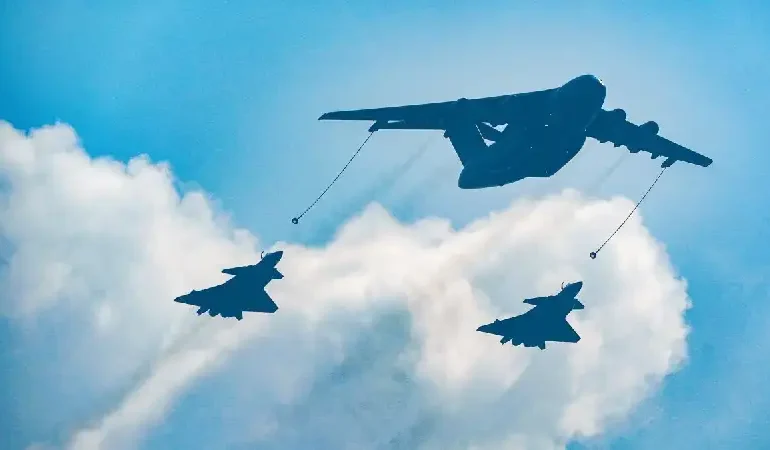
China’s military has introduced a new artificial intelligence supported system designed to enhance the efficiency and coordination of aerial refuelling operations, signalling continued progress in defence technology modernisation. The announcement comes at a time of heightened global attention on military logistics following recent incidents involving refuelling aircraft. By integrating AI into mission planning and execution, China aims to improve the speed and accuracy of complex airborne operations, reinforcing its broader strategy to develop smarter and more adaptive defence capabilities.
The system focuses on task dispatch and operational coordination, allowing refuelling missions to be managed more dynamically in real time. This is particularly important in scenarios where multiple aircraft must operate across varying conditions and timelines. AI assistance can optimise routing, fuel allocation and mission sequencing, reducing the risk of human error while improving overall efficiency. The development highlights how advanced computing technologies are increasingly being applied to critical military functions, where precision and reliability are essential.
The timing of the announcement has drawn attention as it follows a recent incident involving a military refuelling aircraft in a conflict zone. While the two events are not directly connected, the comparison underscores the importance of operational safety and technological reliability in modern air forces. Analysts note that integrating AI into logistical operations can provide a significant advantage by enabling faster decision making and more responsive mission adjustments, especially in complex or high pressure environments.
China has been steadily expanding its use of artificial intelligence across various defence applications, including surveillance, autonomous systems and command operations. The addition of AI supported refuelling coordination reflects a broader effort to modernise infrastructure that supports combat readiness. These developments align with national priorities to strengthen military capabilities through innovation, ensuring that both frontline systems and supporting logistics benefit from technological upgrades.
As global military powers continue to invest in next generation technologies, the role of AI in operational support is expected to grow. Systems that enhance coordination and reduce risk are becoming increasingly valuable as missions become more complex and interconnected. China’s latest move indicates a focus not only on expanding capability but also on improving efficiency and resilience within its defence network, positioning it to operate more effectively in a rapidly evolving strategic environment.