China and India Cut Power Emissions as Clean Energy Expansion Offsets Coal Use
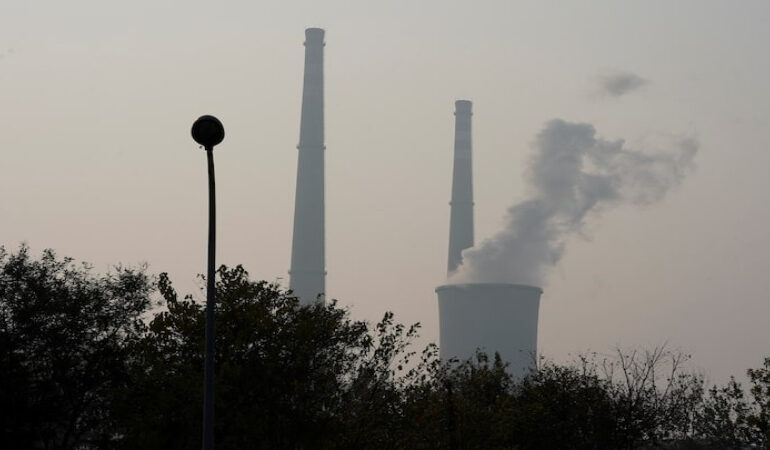
China and India have recorded a rare simultaneous decline in emissions from electricity generation, marking a turning point in the global power sector after decades of coal driven growth. Data from energy researchers shows that the two countries, which together account for the largest share of global coal consumption, reduced power sector emissions in 2025 as new clean energy capacity outpaced rising electricity demand. This development helped stabilise global emissions even as coal use rebounded sharply in the United States. The shift reflects structural changes underway in Asia’s energy systems, where large scale solar, wind and hydro additions are beginning to materially alter generation mixes. For both China and India, the decline signals the impact of years of investment in renewables, grid expansion and policy support aimed at reducing reliance on fossil fuels without constraining economic growth.
China’s power sector emissions fell modestly in 2025, driven by record additions of renewable capacity that were sufficient to meet incremental demand. Analysts point to a surge in solar and wind installations, alongside continued expansion in nuclear and hydropower, as key factors behind the decline. While coal remains central to China’s energy security strategy, its role in meeting new demand is shrinking. This has allowed overall emissions from electricity generation to edge lower even as consumption continues to rise. The trend supports expectations that China’s power sector emissions are approaching a plateau, with future growth increasingly decoupled from coal. The scale of China’s clean energy build out also has global implications, influencing technology costs and supply chains well beyond its borders.
India recorded a sharper percentage decline in power emissions over the same period, helped by a combination of strong renewable additions and slower than expected growth in electricity demand. Solar capacity has expanded rapidly, supported by falling costs and government procurement programmes, while wind installations have also recovered. Despite this progress, coal continues to underpin India’s power system and remains essential for grid stability. The International Energy Agency expects India’s coal use for power generation to rise gradually later in the decade as demand accelerates, even if renewables continue to scale. This underscores the challenge facing policymakers as they balance development needs with climate commitments in a fast growing economy.
The combined decline in emissions from China and India helped offset a significant increase in U.S. power sector emissions, where higher coal output pushed pollution levels higher in 2025. Together, the three countries account for roughly 60 percent of global electricity emissions, meaning shifts in their energy trajectories have outsized impact on global trends. Researchers note that while coal use in the United States and China is expected to taper over time, India’s path will be more complex due to rising demand. Still, the latest data suggests that accelerated clean energy deployment in Asia can materially influence global emissions outcomes, even as fossil fuel use fluctuates elsewhere. The results reinforce the central role of China and India in shaping the pace and direction of the global energy transition.