China Approves Hands Off Driving Tests for Xpeng and Li Auto as EV Market Slows
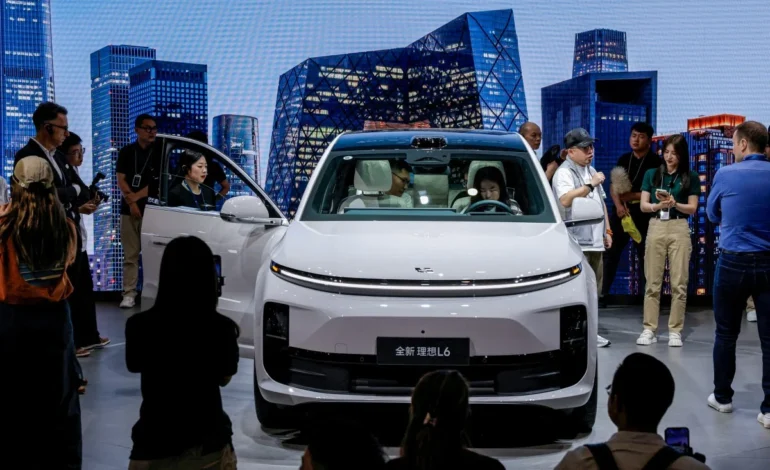
China has taken another step toward expanding autonomous driving on public roads, granting two major electric vehicle makers approval to test advanced hands off driving systems in select cities. Xpeng and Li Auto have both received licences to trial their level three autonomous driving technologies in designated urban areas, signaling growing regulatory support for next generation vehicle features at a time when the domestic car market is losing momentum.
The approvals come as Chinese authorities look for new ways to stimulate innovation and consumer interest in the highly competitive electric vehicle sector. With sales growth slowing and price competition intensifying, advanced driver assistance and self driving capabilities are increasingly seen as key differentiators that could help automakers stand out.
According to industry officials familiar with the decision, Xpeng will be permitted to conduct level three autonomous driving tests on specific roads in Guangzhou, the southern city where the company is headquartered. Li Auto, often viewed as one of Tesla’s strongest domestic challengers, has been cleared to run similar tests in selected areas of Beijing, its home base. Level three systems allow vehicles to handle most driving tasks under certain conditions without constant human input, although drivers must still be ready to take control when prompted.
The move follows closely on the heels of a separate regulatory decision announced just a day earlier. China’s Ministry of Industry and Information Technology approved two additional carmakers, Changan Automobile and BAIC, to begin assembling new models equipped with level three self driving systems. Together, the decisions point to a broader push by Beijing to accelerate real world testing and commercialization of more advanced autonomous technologies.
For automakers, regulatory approval is a crucial milestone. China has traditionally taken a cautious approach to self driving deployment, prioritizing safety and controlled testing environments. Allowing multiple companies to test hands off driving in major cities suggests that regulators are becoming more confident in the maturity of the technology and the ability of companies to manage risks.
Xpeng, which has backing from Volkswagen Group, has invested heavily in software driven features and intelligent driving systems as part of its brand identity. Li Auto has similarly focused on technology rich vehicles, combining long range electric powertrains with increasingly sophisticated driver assistance capabilities. Both companies see autonomy as central to their long term competitiveness, not only in China but potentially in overseas markets as well.
The timing of the approvals is also significant. China’s car market has shown signs of fatigue this year, with weaker consumer demand and ongoing price wars squeezing margins. By encouraging adoption of advanced driving features, policymakers may be hoping to spark renewed interest among buyers while also strengthening China’s position in autonomous vehicle development.
Industry analysts caution that level three autonomy remains complex and will require careful monitoring during testing. Public understanding of system limits, clear handover protocols, and robust safety oversight will be critical as trials expand. Even so, the latest approvals suggest that China is moving steadily toward a future where hands off driving becomes a practical option rather than a distant promise.
As testing progresses in Guangzhou and Beijing, the performance of Xpeng and Li Auto’s systems is likely to be closely watched by regulators, competitors, and consumers alike, shaping the next phase of China’s autonomous driving roadmap.