China Approves New Ethnic Unity Law to Strengthen National Integration Framework
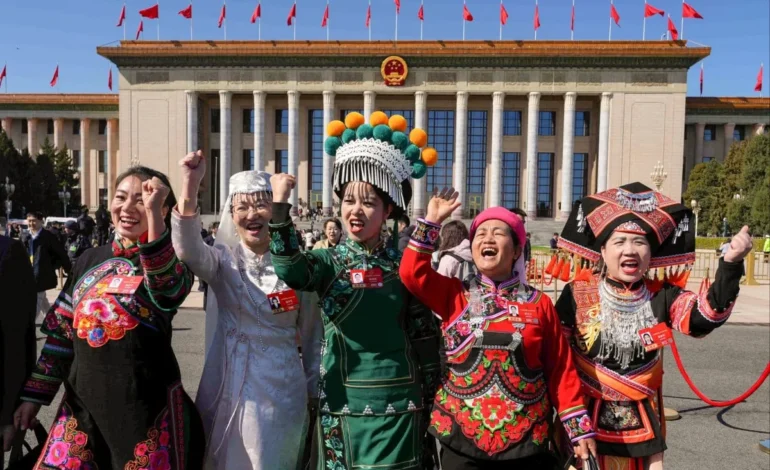
China has formally adopted a new law designed to promote ethnic unity and strengthen national integration across its diverse population. The legislation was approved by the National People’s Congress at the conclusion of the country’s annual policy meetings in Beijing. Lawmakers voted overwhelmingly in favor of the measure which officials say aims to reinforce social cohesion and build stronger connections among China’s different ethnic communities. The law establishes a formal legal structure intended to guide policies on ethnic relations while encouraging a shared national identity across the country’s fifty six recognized ethnic groups.
The legislation known as the Law on Promoting Ethnic Unity and Progress outlines a series of principles aimed at fostering cooperation and integration among different ethnic communities. Chinese authorities say the framework is intended to strengthen unity and stability by promoting cultural exchange economic development and educational opportunities in regions with diverse populations. The measure also places emphasis on encouraging communication between ethnic groups and supporting policies that improve social integration in areas where minority communities live alongside the majority population.
Officials say the law reflects a broader effort by the Chinese government to respond to changing global political and ideological dynamics. Policymakers in Beijing have increasingly emphasized the importance of maintaining cultural confidence and national cohesion as international competition intensifies. According to scholars and policy advisers the new legislation provides a statutory basis for initiatives designed to reinforce national unity while countering external narratives that Chinese officials believe misrepresent the country’s ethnic policies.
The adoption of the law also follows years of policy initiatives aimed at supporting economic development in minority regions such as Xinjiang Tibet and Inner Mongolia. Government programs in these areas have focused on improving infrastructure expanding employment opportunities and strengthening educational systems. Authorities argue that economic growth and improved living standards can help reduce regional disparities and create stronger connections between minority communities and the broader national economy.
During the legislative session ethnic minority delegates joined other representatives at the Great Hall of the People to participate in discussions surrounding the bill. The proposal received overwhelming support from lawmakers with thousands voting in favor and only a small number opposing or abstaining. The strong backing reflects broad political consensus within the legislature on the importance of maintaining national unity and social stability across China’s vast and culturally diverse territory.
Experts say the law also reflects Beijing’s effort to establish a clearer legal framework for policies affecting ethnic relations. While China has long promoted unity among its ethnic groups through political campaigns and development programs the new legislation codifies these principles within a formal legal structure. Analysts believe the law will guide future policymaking by providing legal authority for government initiatives related to cultural integration education and community development.
China’s leadership has repeatedly emphasized the importance of ethnic unity as a foundation for long term national stability. Government statements frequently highlight the idea that cooperation among ethnic groups contributes to social harmony economic progress and national development. Officials argue that promoting a shared identity while respecting cultural diversity can strengthen the country’s resilience during a period of global uncertainty and geopolitical competition.
The law is expected to influence a wide range of policies including educational programs public communication initiatives and regional development strategies. Authorities say these measures will focus on encouraging mutual understanding and stronger connections among communities across the country. As the legislation moves into implementation government agencies and local administrations are likely to introduce programs aligned with the new framework in order to advance the goals of social cohesion and national integration.