China Auto Sales Drop in February as Holiday Slowdown and Export Risks Weigh on Market
China’s automotive market recorded a sharp slowdown in February as domestic sales declined significantly due to fewer business days during the Lunar New Year holiday period and the gradual removal of electric vehicle incentives. Data released by industry authorities shows that wholesale vehicle sales fell 15 percent during the month. Domestic demand dropped more sharply, with sales inside China plunging 34 percent to around 950000 vehicles. The decline highlights the challenges facing the country’s automotive sector as manufacturers adjust to changing policies, seasonal disruptions and evolving market conditions in the world’s largest car market.
Despite the fall in domestic sales, China’s overall vehicle production and distribution figures were partially supported by strong export growth. Vehicle exports surged 58 percent compared with the same period last year, reaching about 590000 units during February. China has rapidly expanded its presence in global automotive markets over the past several years as domestic automakers push aggressively into overseas regions. Many Chinese manufacturers are exporting both traditional vehicles and electric models as they seek to capture new markets and strengthen global competitiveness.
However, the outlook for exports has become more uncertain as geopolitical tensions and global conflicts raise concerns about future demand. Industry analysts warn that instability in the Middle East could affect China’s vehicle export performance in the coming months. The region accounted for roughly one fifth of China’s automobile exports in the previous year, making it a significant destination for Chinese automakers. Any disruption to regional trade or economic activity could therefore reduce demand for vehicles shipped from China.
Industry officials note that the timing of the Lunar New Year often creates volatility in China’s automotive sales data during the first quarter of each year. The holiday period temporarily reduces manufacturing activity and dealership operations while also shifting consumer purchasing patterns. This year’s calendar resulted in three fewer business days in February compared with the same period last year, contributing to the sharp monthly decline in vehicle sales across several segments of the market.
Sales trends during the first two months of the year also reflect structural changes within China’s electric vehicle sector. Domestic sales of electric and plug in hybrid vehicles fell around 30 percent during the January to February period compared with the same timeframe last year. The drop follows adjustments to government support programs, including the expiration of certain tax incentives and reductions in subsidies aimed at encouraging purchases of lower cost green vehicles. These policy changes are pushing automakers to compete more aggressively on pricing, technology and product innovation.
Chinese car manufacturers are also dealing with the aftermath of an intense price competition cycle that has affected profit margins across the industry. Many companies engaged in deep discounting campaigns during the past year to attract buyers and increase market share. Regulators have recently urged manufacturers to reduce aggressive price cuts in order to stabilize the market and maintain sustainable competition among producers.
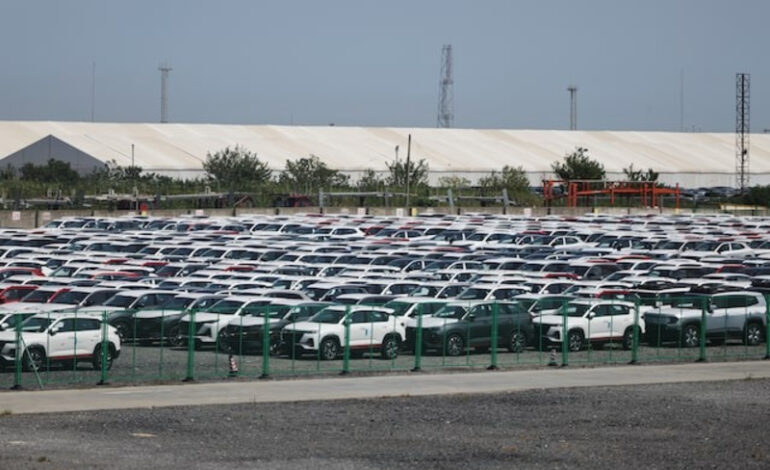
Another challenge facing the industry is rising inventory levels as production continues to exceed immediate consumer demand. Data from the passenger vehicle association shows that unsold vehicle inventory climbed to approximately 3.57 million units by the end of January. The large stockpile reflects both weaker domestic demand and the rapid expansion of production capacity among Chinese automakers seeking to dominate the global electric vehicle market.
Automotive companies across China are now closely monitoring both domestic policy developments and international trade conditions as they plan their strategies for the rest of the year. While export growth has provided an important buffer against weaker domestic sales, analysts say continued geopolitical uncertainty and policy changes could influence market performance throughout 2026.