China Chip Industry Calls for National Effort to Build Domestic ASML Equivalent
China’s leading semiconductor executives have called for a coordinated national effort to develop a domestic alternative to advanced chip manufacturing equipment produced by global industry leaders. The proposal reflects growing urgency within China’s technology sector as restrictions on semiconductor exports and manufacturing tools continue to reshape global supply chains. Industry leaders argue that China must strengthen its own chip equipment capabilities in order to ensure long term technological independence and maintain progress in advanced semiconductor production despite increasing international technology controls.
Executives from several major semiconductor companies and research institutions have suggested that China’s chip ecosystem currently remains too fragmented to effectively compete at the highest levels of global semiconductor manufacturing. According to industry voices, numerous smaller companies operating independently have diluted resources that could otherwise be concentrated on developing breakthrough manufacturing technologies. By consolidating expertise and directing investment toward a unified national objective, leaders believe China could accelerate the development of advanced lithography equipment and other critical chip fabrication tools.
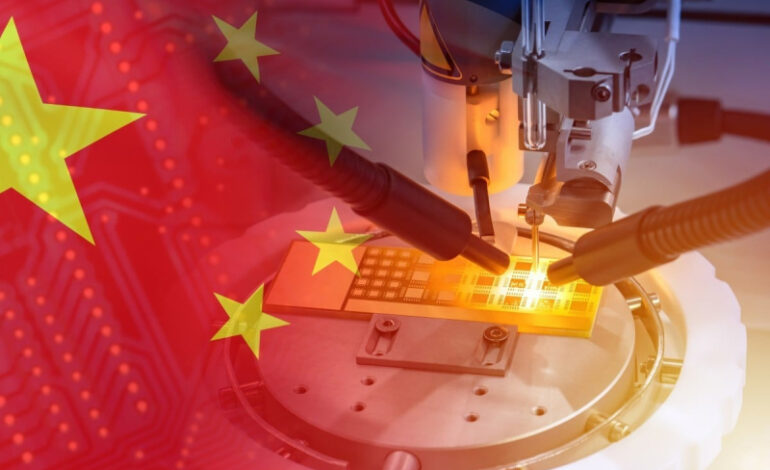
Lithography technology plays a central role in modern semiconductor production because it enables manufacturers to etch extremely small circuits onto silicon wafers. The most advanced machines are capable of producing chips used in artificial intelligence systems, high performance computing and advanced mobile devices. Access to such equipment has become a key point of geopolitical tension as export restrictions limit the availability of certain technologies to Chinese semiconductor manufacturers.
China’s domestic chip industry has made substantial progress over the past decade, with companies expanding capabilities in memory production, semiconductor design software and fabrication services. Firms such as Semiconductor Manufacturing International Corporation have increased manufacturing capacity and improved process technology, while other companies have invested heavily in research related to chip design and equipment development. Despite these advances, experts say China still faces significant challenges in replicating the most sophisticated manufacturing tools currently produced by specialized equipment makers.
Industry executives argue that stronger coordination between companies, research institutes and government funding programs could accelerate progress in this area. A national strategy focused on semiconductor equipment development could bring together expertise from across the industry while providing stable long term investment support. Such an approach would mirror earlier technology initiatives in China that successfully combined state support with private sector innovation to develop competitive domestic industries.
The semiconductor sector has become one of the most strategically important industries in the global economy because advanced chips power everything from artificial intelligence platforms to telecommunications infrastructure and electric vehicles. As geopolitical competition intensifies, many countries are expanding efforts to secure domestic semiconductor supply chains and reduce dependence on external technology providers. China’s push to develop its own advanced chip manufacturing tools reflects this broader shift toward technological self reliance.
Analysts say that building a fully competitive semiconductor equipment ecosystem will require sustained investment, deep technical research and long term collaboration across the entire chip industry. While progress may take years, industry leaders believe that concentrating national resources on core manufacturing technologies could gradually strengthen China’s semiconductor capabilities and help the country maintain momentum in the rapidly evolving global technology landscape.