China Condemns U.S. Seizure of Foreign Oil Tanker as Breach of International Law
China has sharply criticised the United States over what it described as the arbitrary seizure of a foreign oil tanker, warning that such actions represent a serious violation of international law and threaten the principles that underpin global maritime order.
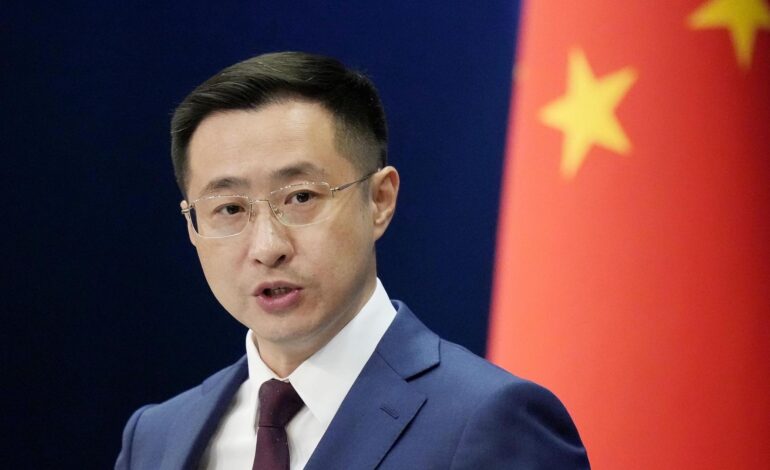
Speaking at a regular press briefing on Monday, Chinese foreign ministry spokesperson Lin Jian responded to questions about a recent operation by the United States Coast Guard, which seized an oil tanker on December 20. A White House official later claimed the vessel was part of a so called shadow fleet, a term often used by Western governments to describe ships suspected of evading sanctions.
Lin said China firmly opposes illegal unilateral sanctions that lack a basis in international law and are not authorised by the United Nations Security Council. He added that actions taken under such pretexts undermine the authority of international institutions and weaken trust among states. According to Lin, the seizure violated the purposes and principles of the United Nations Charter and infringed on the sovereignty and security of other countries.
Beijing has repeatedly argued that unilateral enforcement actions at sea risk escalating tensions and disrupting global trade routes. Chinese officials say maritime governance should be based on multilateral rules and consensus rather than decisions made by individual countries acting alone. Lin warned that what he described as unilateral bullying sets a dangerous precedent, particularly at a time when international shipping is already under pressure from regional conflicts and economic uncertainty.
The United States has increasingly targeted vessels it believes are involved in sanctions evasion, especially in relation to energy exports. American officials argue that such measures are necessary to enforce international restrictions and protect national security interests. However, critics say the lack of transparency surrounding these operations raises legal and ethical concerns, especially when seizures occur in international waters or involve ships flagged by third countries.
China’s response reflects broader frustration among several nations over the growing use of unilateral sanctions and enforcement actions without clear international mandates. Legal experts note that under international maritime law, the seizure of foreign vessels is generally restricted to specific circumstances such as piracy, slavery, or explicit authorisation by the United Nations Security Council. Outside those conditions, such actions can be contested as unlawful.
While Beijing did not specify the ownership or flag of the seized tanker, it called on Washington to respect international law, stop abusing sanctions, and avoid actions that could further destabilise the global maritime system. Lin urged the United States to resolve disputes through dialogue and established legal frameworks rather than coercive measures.
The incident adds to already strained relations between China and the United States, with disagreements spanning trade, technology, security, and geopolitics. Analysts say maritime disputes and sanctions enforcement are becoming another flashpoint, reflecting deeper divisions over how global rules should be interpreted and enforced.
As international shipping lanes remain vital to the world economy, observers warn that continued unilateral actions risk increasing uncertainty for commercial operators and could invite retaliatory measures. China’s statement signals that such cases will continue to draw strong diplomatic responses as debates over international law and maritime governance intensify.