China Develops High Speed Software to Transform Hypersonic Weapon Design
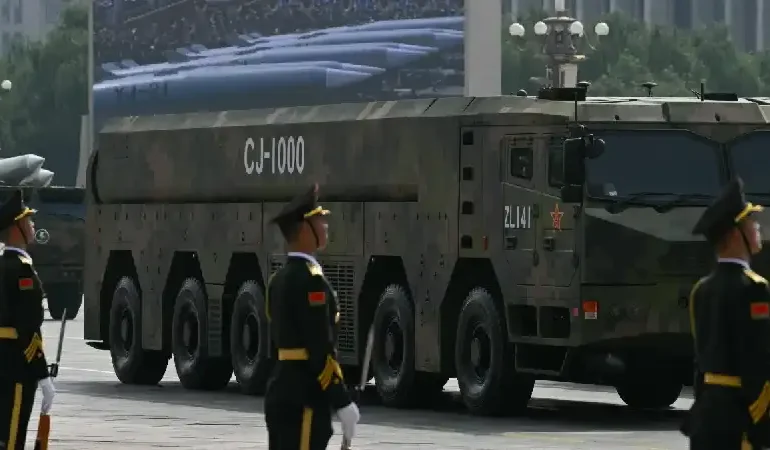
China has unveiled advanced simulation software capable of dramatically reducing the time required to design hypersonic propulsion systems, marking a major step forward in defense related computing capabilities. Researchers say the system can simulate the complex physics of supersonic fuel combustion in about one week, a task that previously required years of processing on high performance supercomputers. The breakthrough reflects China’s growing investment in cutting edge engineering tools that support next generation aerospace and defense technologies, particularly in the development of high speed missile systems.
The software was developed by a research team at the Institute of Mechanics under the Chinese Academy of Sciences, led by scientist Yao Wei. It has already been used to conduct detailed simulations of scramjet engines, a critical component in hypersonic flight where combustion occurs in supersonic airflow. These engines are essential for achieving sustained speeds above Mach 5, making them central to modern hypersonic weapon systems. The ability to simulate such environments quickly allows engineers to test and refine designs far more efficiently than before.
Experts say that simulating supersonic combustion is one of the most complex challenges in aerospace engineering due to the extreme temperatures, pressures, and fluid dynamics involved. Traditional simulation methods required enormous computational resources and extended processing time, often limiting the pace of development. By significantly reducing simulation time, the new software enables faster iteration cycles, allowing engineers to explore a wider range of design configurations and improve system performance more rapidly.
The development highlights the increasing role of advanced software in modern defense innovation. Rather than relying solely on physical testing, which can be costly and time consuming, simulation driven design is becoming a core approach in aerospace engineering. This shift allows for more precise modelling of real world conditions and accelerates the transition from concept to deployment. In the context of hypersonic technology, where speed and accuracy are critical, such tools provide a strategic advantage.
China’s progress in this area is part of a broader effort to enhance its capabilities in high speed aerospace systems. Hypersonic weapons have become a focal point of global competition, with multiple countries investing heavily in research and development. These systems are valued for their ability to travel at extremely high speeds while maintaining maneuverability, making them difficult to detect and intercept using existing defense systems.
The introduction of faster simulation tools may also influence the global pace of innovation in hypersonic technology. As development cycles shorten, countries and companies can bring new designs to testing and production more quickly, potentially reshaping competitive dynamics in the sector. The integration of advanced computing methods into engineering workflows is expected to continue driving progress across both military and civilian aerospace applications.
Industry observers note that while the technology offers significant advantages, it also raises questions about how rapidly advanced systems can be developed and deployed. As nations continue to invest in hypersonic capabilities, the role of software and computational efficiency is becoming increasingly important. China’s latest breakthrough underscores how digital tools are redefining the boundaries of what is possible in high performance engineering and strategic defense systems.