China Develops Ultra Low Temperature Lithium Battery That Operates at Minus 34 Degrees Celsius
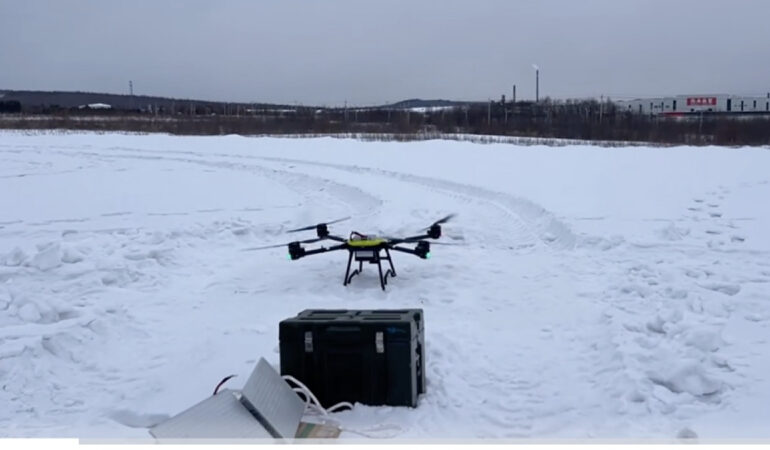
Chinese researchers have developed an ultra low temperature lithium battery capable of operating at temperatures as low as minus 34 degrees Celsius, marking a breakthrough for energy supply in extreme cold environments. The new battery completed on site testing in Mohe, Heilongjiang Province, demonstrating its ability to power drones and robotic systems under harsh winter conditions.
The project was led by a research team headed by Academician Chen Zhongwei at the Dalian Institute of Chemical Physics under the Chinese Academy of Sciences. According to the team, conventional lithium batteries experience sharp performance declines in freezing conditions, often suffering from reduced activity, shortened range or complete failure. These limitations have long restricted the deployment of drones, inspection equipment and emergency communication systems in high latitude and high altitude regions.
The newly developed battery is supported by a proprietary artificial intelligence based power management system designed to optimize energy output in low temperature settings. Researchers said the system helps maintain stable performance by adjusting operating parameters in real time, mitigating the effects of cold on electrochemical reactions.
During field testing in Mohe, one of China’s coldest cities, the battery was left in an environment of minus 34 degrees Celsius for more than eight hours without external insulation. After this exposure, it retained over 85 percent of its effective capacity. The battery then powered an industrial grade drone through long endurance flights and multiple mission simulations, meeting operational requirements without performance interruption.
The breakthrough addresses a longstanding challenge in cold region operations where energy reliability is critical. Applications include forest fire monitoring, power line inspection, border surveillance and emergency response communications. In such scenarios, equipment failure due to battery freezing can pose safety risks and disrupt essential services.
Researchers said the technology could also support broader industrial and commercial use. Logistics drones operating in winter conditions, inspection robots in mountainous terrain and special purpose robotic systems used in infrastructure maintenance may benefit from the enhanced cold resistance. Beyond industrial equipment, the team indicated that the battery and AI management system could eventually be adapted for consumer electronics, improving reliability of portable devices in cold climates.
The development aligns with China’s broader focus on strengthening energy technology capabilities and enhancing the reliability of advanced equipment in challenging environments. By addressing the limitations of lithium battery chemistry at low temperatures, the research contributes to improved operational flexibility for unmanned systems.
If commercialized at scale, the ultra low temperature battery could provide a practical solution for regions worldwide that face extreme winter conditions. Its successful field validation demonstrates progress in combining materials science and artificial intelligence to overcome environmental constraints that have historically limited lithium battery performance.