China Eases UK Travel Rules in Bid to Reset Ties
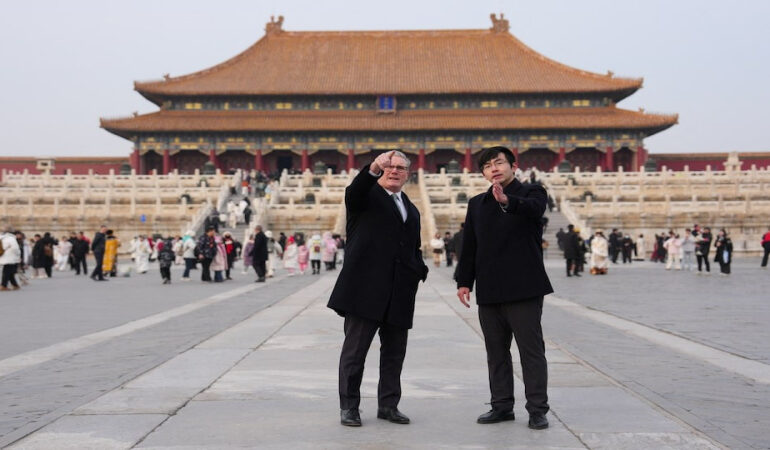
China has agreed to relax visa requirements for British citizens, allowing short term visa free travel during a high profile visit to Beijing by UK Prime Minister Keir Starmer, a move seen as part of a broader effort to stabilise economic and diplomatic relations. Under the new arrangement, British passport holders will be able to enter China for stays of up to 30 days without a visa, a change London has framed as a tangible boost for business mobility. The decision was announced following talks with Chinese President Xi Jinping and comes as both sides seek to rebuild engagement after years of strained ties. UK officials view easier travel access as a practical step to encourage commercial activity and signal openness amid global economic uncertainty.
The visa easing forms part of what Britain has described as a new partnership aimed at expanding cooperation in services, a sector that underpins much of the UK economy. British companies have long complained that travel barriers made it harder to manage operations and pursue growth opportunities in China. Allowing executives, consultants, and specialists to move more freely is expected to support expansion across finance, legal services, healthcare, education, and professional services. Britain currently exports roughly 13 billion pounds worth of services to China each year, with demand continuing to rise despite political frictions. For London, unlocking further growth in overseas services markets is a priority as it looks to revive momentum in a sluggish domestic economy.
Alongside the travel agreement, both governments have committed to exploring a potential bilateral services framework through a joint feasibility study. Such an arrangement could eventually provide clearer rules and greater certainty for British firms operating in the Chinese market. While the initiative stops short of a full trade deal, it reflects a pragmatic approach focused on areas of mutual economic interest rather than headline grabbing political breakthroughs. For Beijing, improved access for British professionals supports its own push to attract foreign expertise and investment at a time when confidence among international businesses has been uneven. The move also fits with China’s recent efforts to selectively ease entry rules for certain countries as part of a wider push to revive cross border activity.
The announcement highlights a cautious recalibration in UK China relations, balancing economic engagement with ongoing strategic differences. While London remains aligned with allies on issues ranging from security to human rights, the Starmer government has signaled a willingness to pursue targeted cooperation where commercial benefits are clear. For China watchers, the visa move suggests Beijing is open to incremental confidence building measures with major European economies, even as geopolitical tensions persist elsewhere. The effectiveness of the policy shift will ultimately depend on whether businesses translate easier travel into sustained investment and whether broader political headwinds allow the partnership to deepen over time.