China Expands Renewable Energy Grid Across Western Provinces
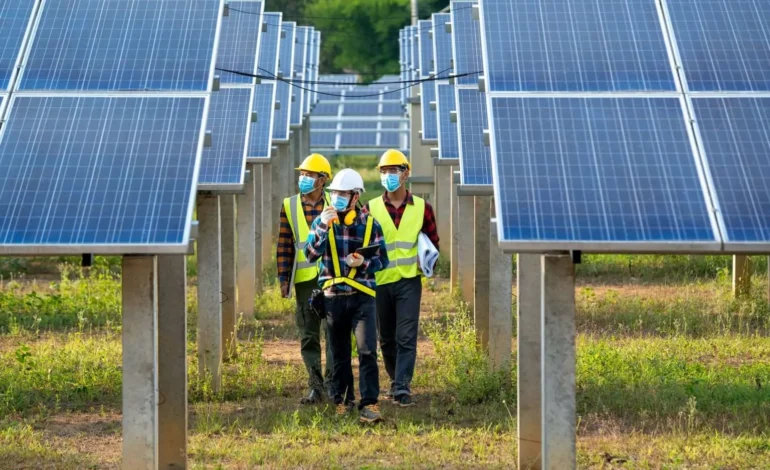
China is rapidly expanding its renewable energy grid across western provinces, with new solar and wind projects coming online at record pace. The National Energy Administration (NEA) announced that more than 120 gigawatts (GW) of renewable capacity were added in 2025, with nearly half located in Xinjiang, Gansu, Qinghai, and Inner Mongolia. Officials said the expansion aims to strengthen national energy security, support industrial transformation, and ensure progress toward the country’s 2060 carbon neutrality target.
The western energy corridor is emerging as a key component of China’s green transition strategy, combining vast land availability with advanced grid integration technologies to transmit clean electricity to the country’s industrial centers in the east.
Large-Scale Renewable Projects Drive Regional Growth
The NEA confirmed the completion of multiple large-scale renewable complexes, including the Hami Solar-Wind Hybrid Base in Xinjiang and the Qinghai High-Altitude Energy Hub, each capable of generating over 10 GW of power.
These projects are connected to ultra-high-voltage (UHV) transmission lines capable of delivering clean energy to Beijing, Shanghai, and Guangdong.
Officials said the initiative not only diversifies China’s energy mix but also reduces dependence on coal-fired generation, which still accounts for around 55 percent of total electricity production.
In Gansu, the Desert-to-Power Project has converted over 300 square kilometers of unused land into renewable energy zones equipped with AI-managed turbines and photovoltaic systems. These projects are designed to supply stable electricity while reducing carbon emissions and creating green jobs in remote areas.
“The renewable grid expansion in western China represents a major structural shift in how we produce and distribute energy,” said Li Chunhua, director of the NEA’s Renewable Development Bureau. “It supports both ecological protection and economic revitalization.”
Policy Support and Financial Innovation
Beijing’s 14th Five-Year Energy Plan identifies renewables as the backbone of the nation’s future growth model. The central government has issued tax incentives, low-interest loans, and green bonds to accelerate construction of new projects and related infrastructure.
In 2025 alone, over 500 billion yuan in green financing was allocated to renewable energy expansion, supported by both state-owned banks and private investors.
Financial innovation is also playing a role. The Industrial Bank of China has launched renewable-linked securities that tie investor returns to energy output and emission reductions, a model that aligns with China’s broader green finance agenda.
The NEA said that future projects will integrate blockchain-based monitoring systems to verify emission credits in real time, allowing more transparent reporting to international climate bodies.
“The combination of technology, policy, and finance is what makes China’s renewable push so effective,” said Zhang Yi, senior energy economist at the Chinese Academy of Social Sciences. “It ensures accountability while attracting sustainable investment.”
Regional Cooperation and Technological Innovation
Western provinces are also emerging as testbeds for next-generation technologies such as grid-scale battery storage, hydrogen production, and digital energy management.
In Qinghai, engineers have installed one of the world’s largest lithium-sodium hybrid storage facilities, designed to stabilize electricity supply during periods of fluctuating solar output.
Inner Mongolia’s wind corridors are being connected to industrial hydrogen plants that convert surplus electricity into clean fuel for heavy transportation and manufacturing.
The Ministry of Science and Technology said that renewable projects are being integrated into the national AI-driven smart grid, enabling real-time demand forecasting and adaptive distribution. This coordination has already improved efficiency and reduced transmission losses across long-distance UHV lines.
Green Power Backbone of China’s Future Economy
Analysts expect China’s renewable capacity to surpass 1,800 GW by the end of 2026, consolidating its position as the global leader in green energy generation.
The western grid expansion not only advances environmental goals but also supports regional economic development through industrial diversification and job creation.
Experts believe the ongoing investments will lay the groundwork for a new era of sustainable growth, where digital infrastructure, renewable energy, and industrial innovation converge to power China’s low-carbon future.